Inspect the load path
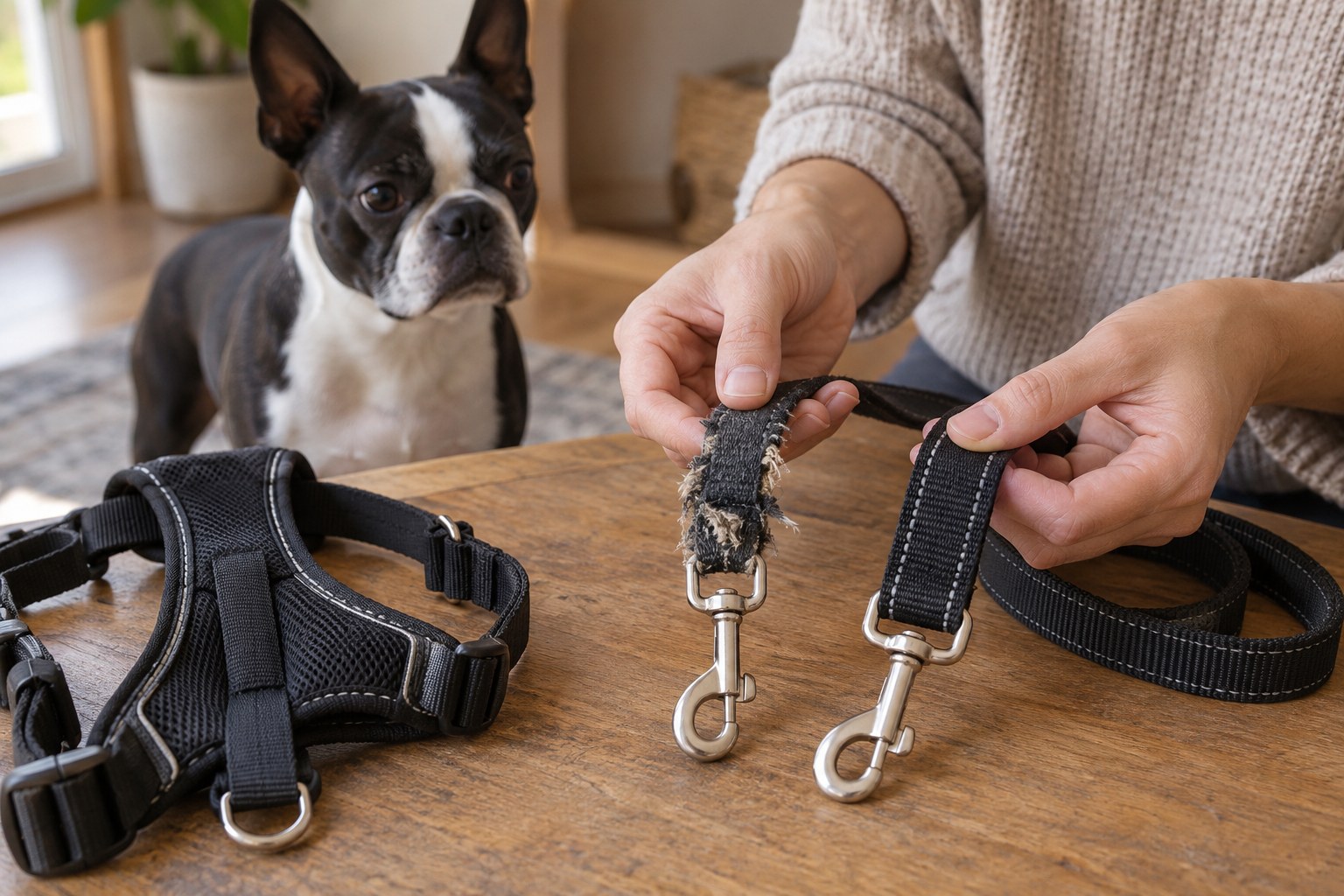
Lay the collar, harness and leash out under good light. Follow the route from your hand through webbing, stitching, clips and attachment rings. Look on both sides of padded areas and at the points that rub against hardware. Check gates and buckles separately; material can look tidy while a moving part fails to engage consistently.
Use the manufacturer's inspection and replacement guidance for each item. Record frayed stitching, cracks, distortion, sticking mechanisms or adjustment that slips. If you are unsure about a load-bearing component, remove it from use while you ask the maker. Do not keep using it because the defect is on the underside or because the rest of the matching set remains intact.
Record the replacement and retire the worn item
Save the product name, version, size and important measurements. Add the attachment type and any compatibility requirement. A photograph helps, but two versions can look similar while having different fittings. Note what you want to preserve, such as the usable length or a comfortable handle, and what you want to change, such as difficult one-handed operation.
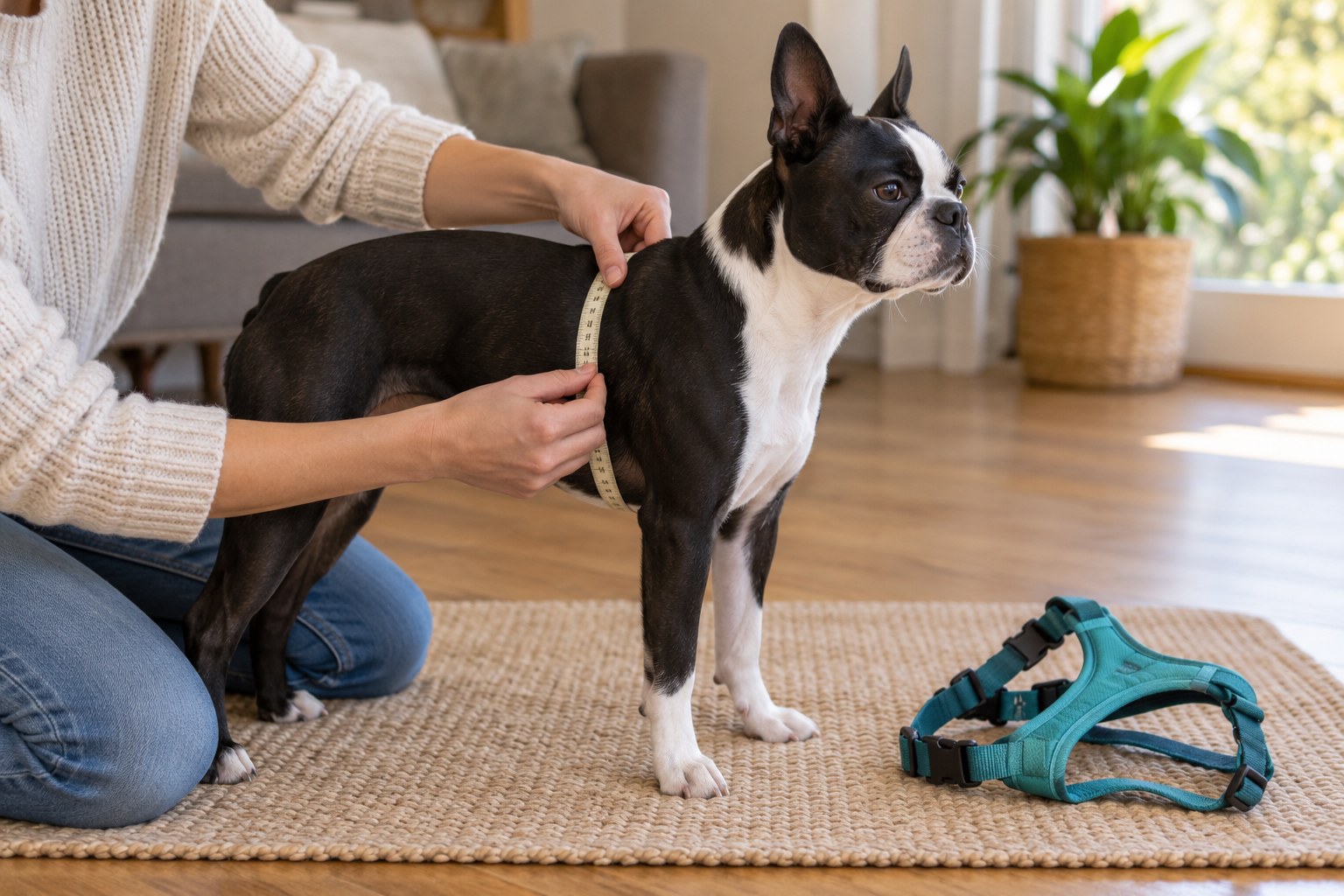
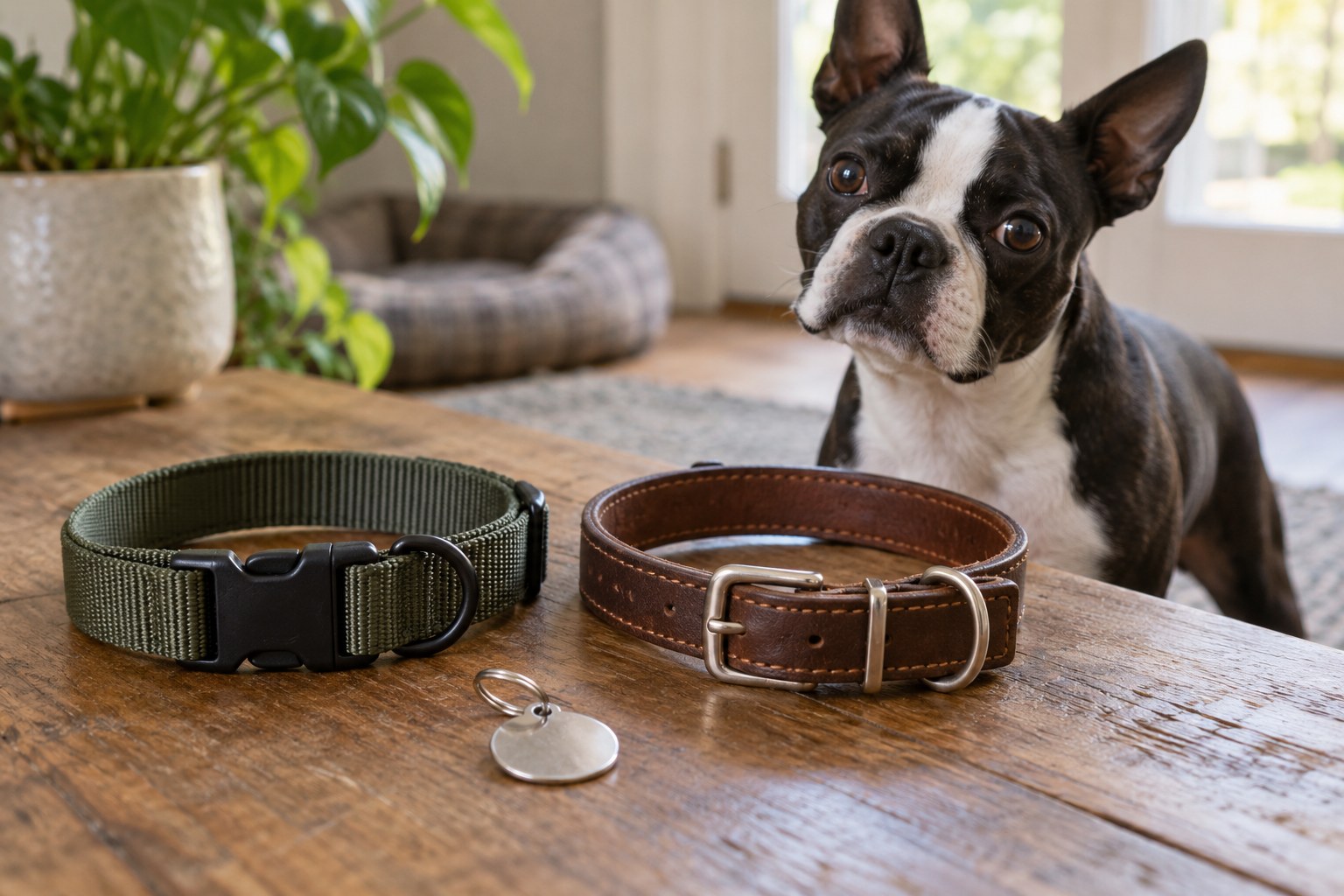
Measure the dog again before ordering a harness or collar replacement. A successful old size is a reference, not proof of current fit. Compare the new product's own chart and instructions. If replacing only one part of the setup, check that its clip or ring works with the remaining equipment without an improvised adaptor.
Put equipment awaiting disposal or assessment in a separate marked place. Do not return it to the everyday hook after taking a photograph of the damage. A spare ready-to-use setup can prevent pressure to use a suspect item, but inspect that spare before relying on it. Stored equipment can also have corrosion, chewing damage or a stiff buckle. Label the spare with its size and check date so another walker can identify it without testing several unfamiliar adjustments at the door.
When the replacement arrives, fit and operate it indoors before an outing. Retain the instructions and add the new details to the record. Transfer identification deliberately and verify its attachment. Dispose of or otherwise retire the worn item appropriately so another household member cannot mistake it for the backup. Finish by checking the complete walking arrangement once more.