New owner notes
The first purchases, conversations and routines of welcoming a dog.
16 articles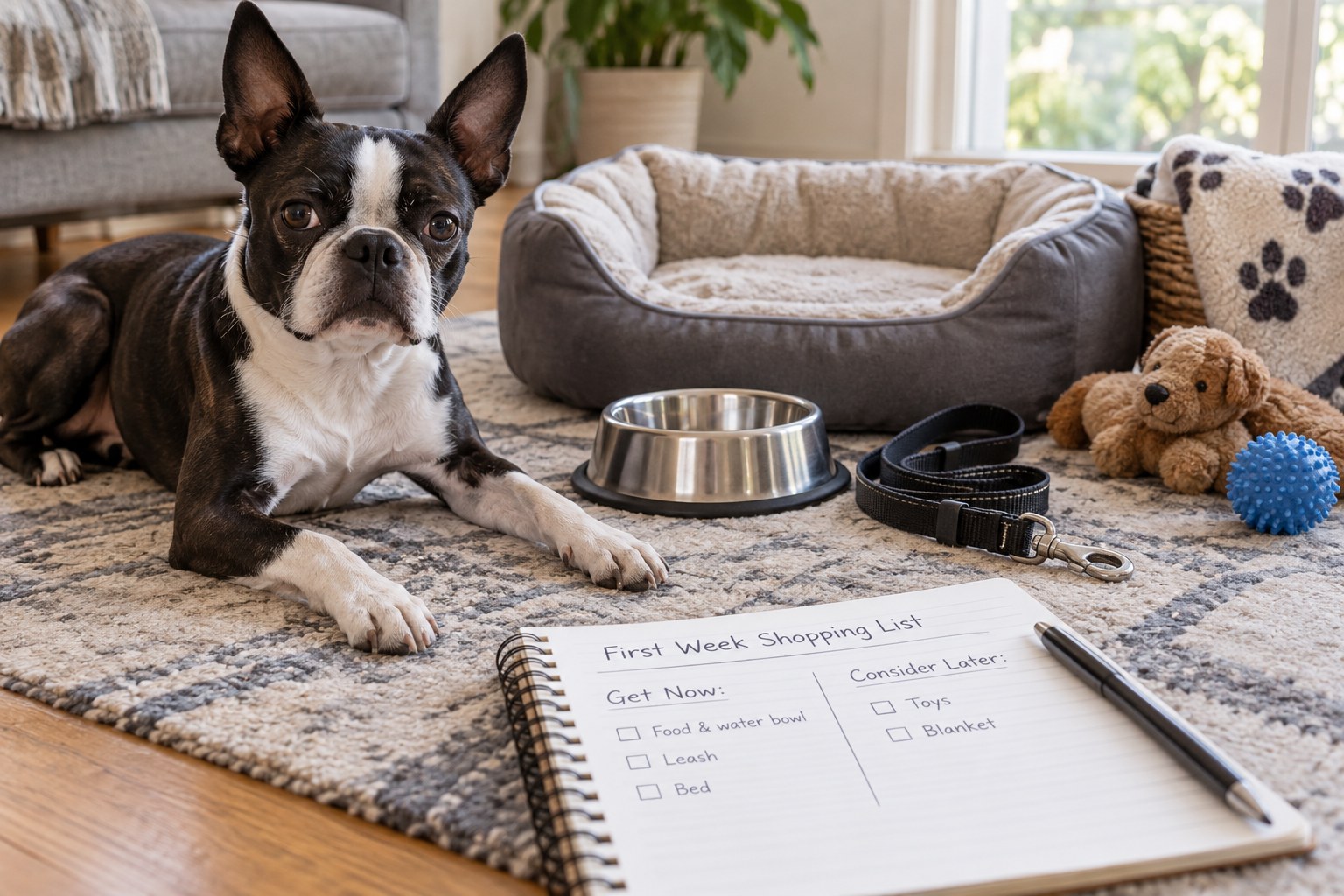
Build a first-week shopping list in stages
A first-week shopping list works better as a sequence of decisions than a trolley full of matching accessories. Buy what supports the arrival, then let the individual dog inform later choices.
Read the story ↗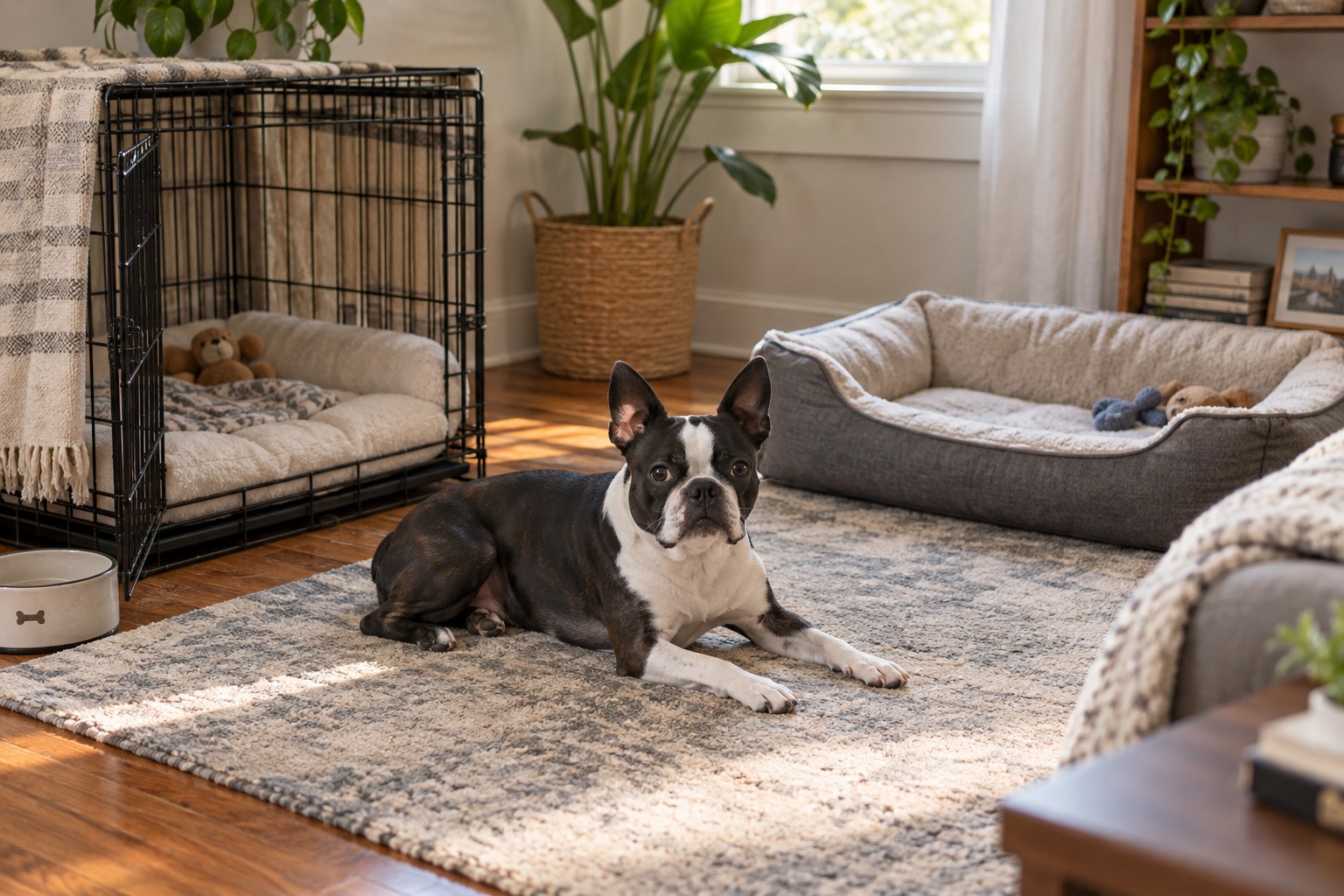
Choose the first sleeping and resting arrangements
The first resting arrangement should give the dog a place to settle and the household a way to leave that space undisturbed. Start with the room and the existing routine before choosing a bed.
Read the story ↗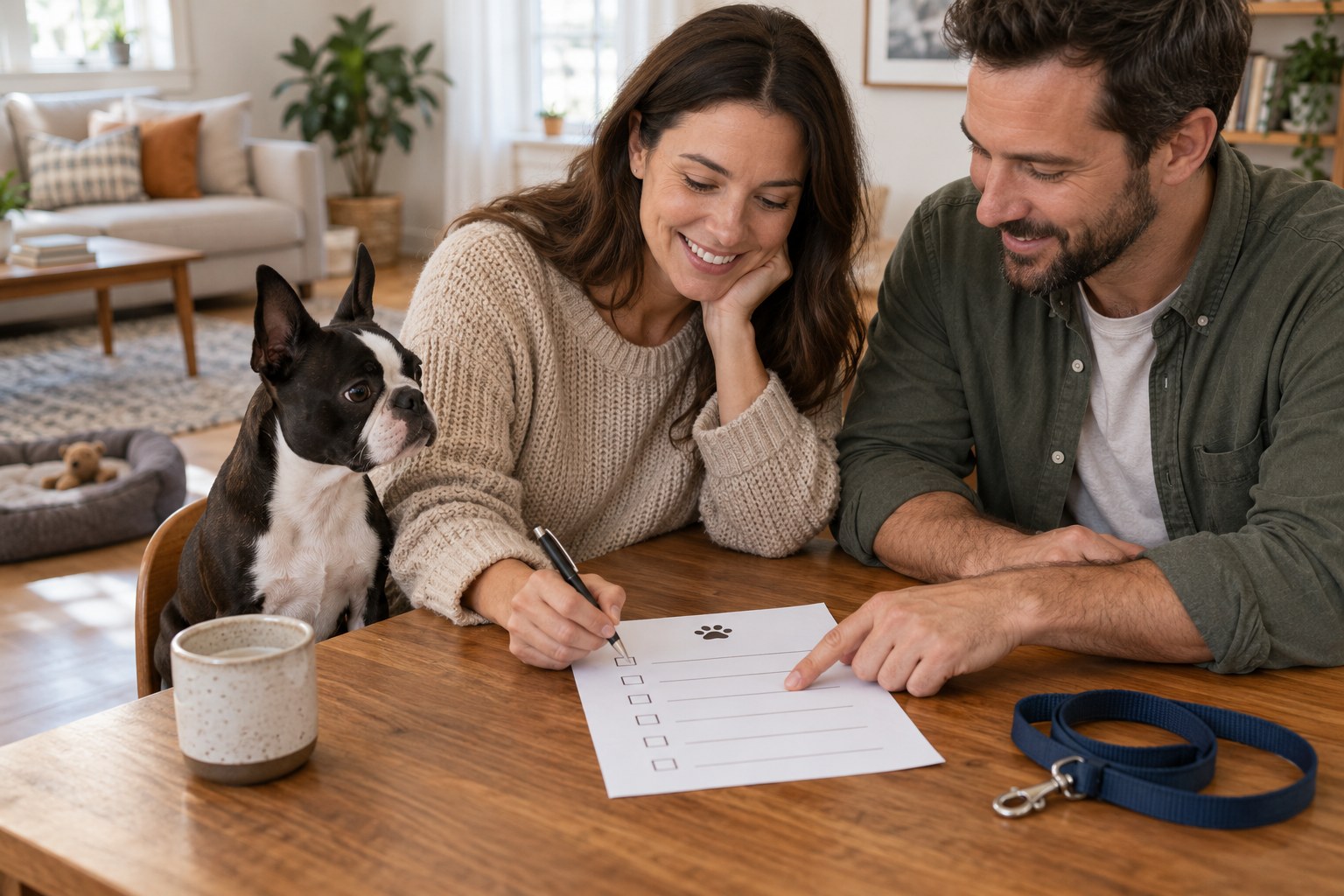
Agree on household rules before the dog arrives
Household rules need to describe what people will do. Before a Boston Terrier arrives, turn vague intentions about good behaviour into a short, consistent plan.
Read the story ↗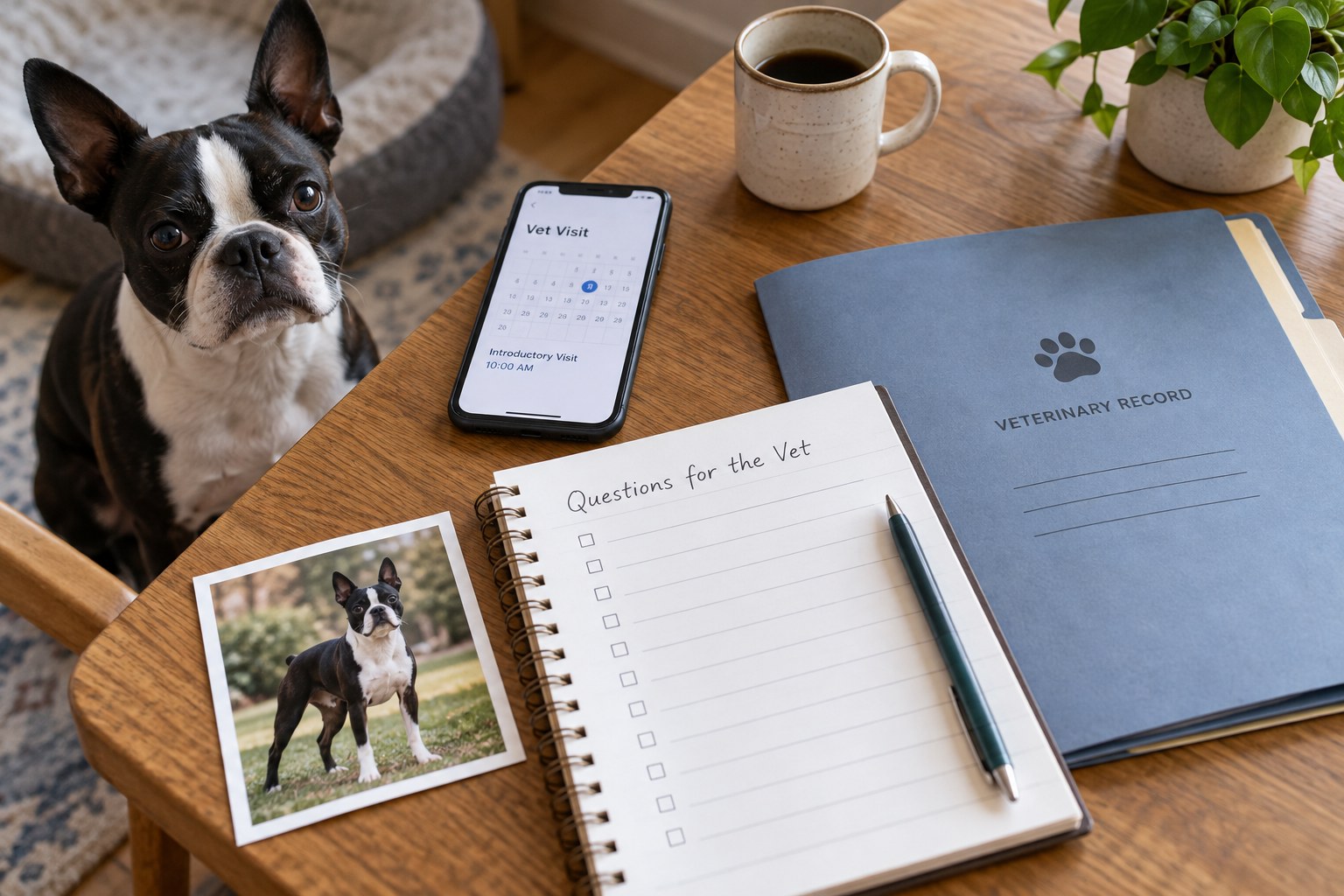
Book an introductory veterinary visit and organise questions
An introductory veterinary appointment is a place to establish individual care with a professional. Organise the records and questions so that the conversation starts with what is actually known about your dog.
Read the story ↗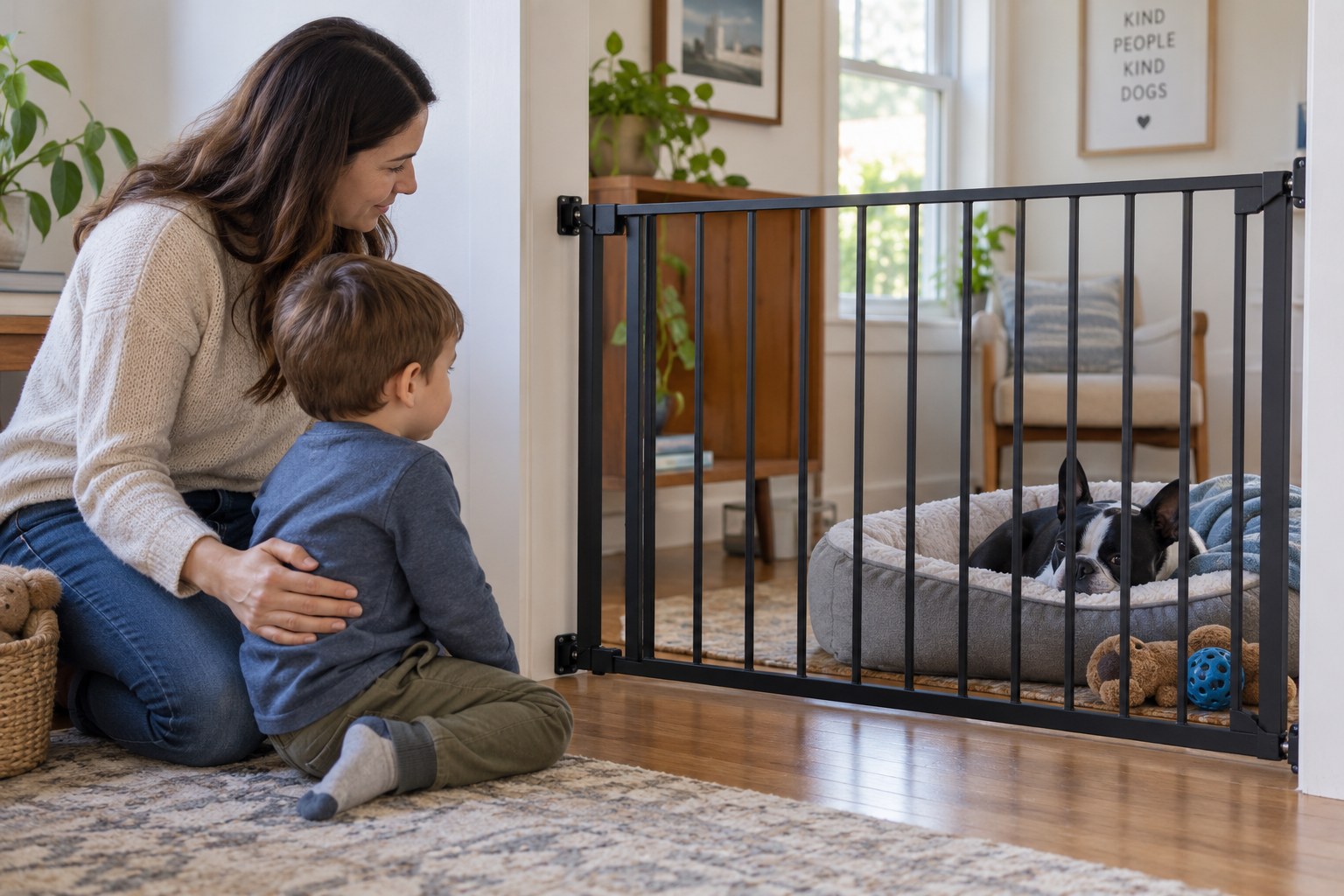
Prepare children for a dog’s need for space
Children can help welcome a dog when adults explain what space, rest and supervised interaction mean in ordinary household situations.
Read the story ↗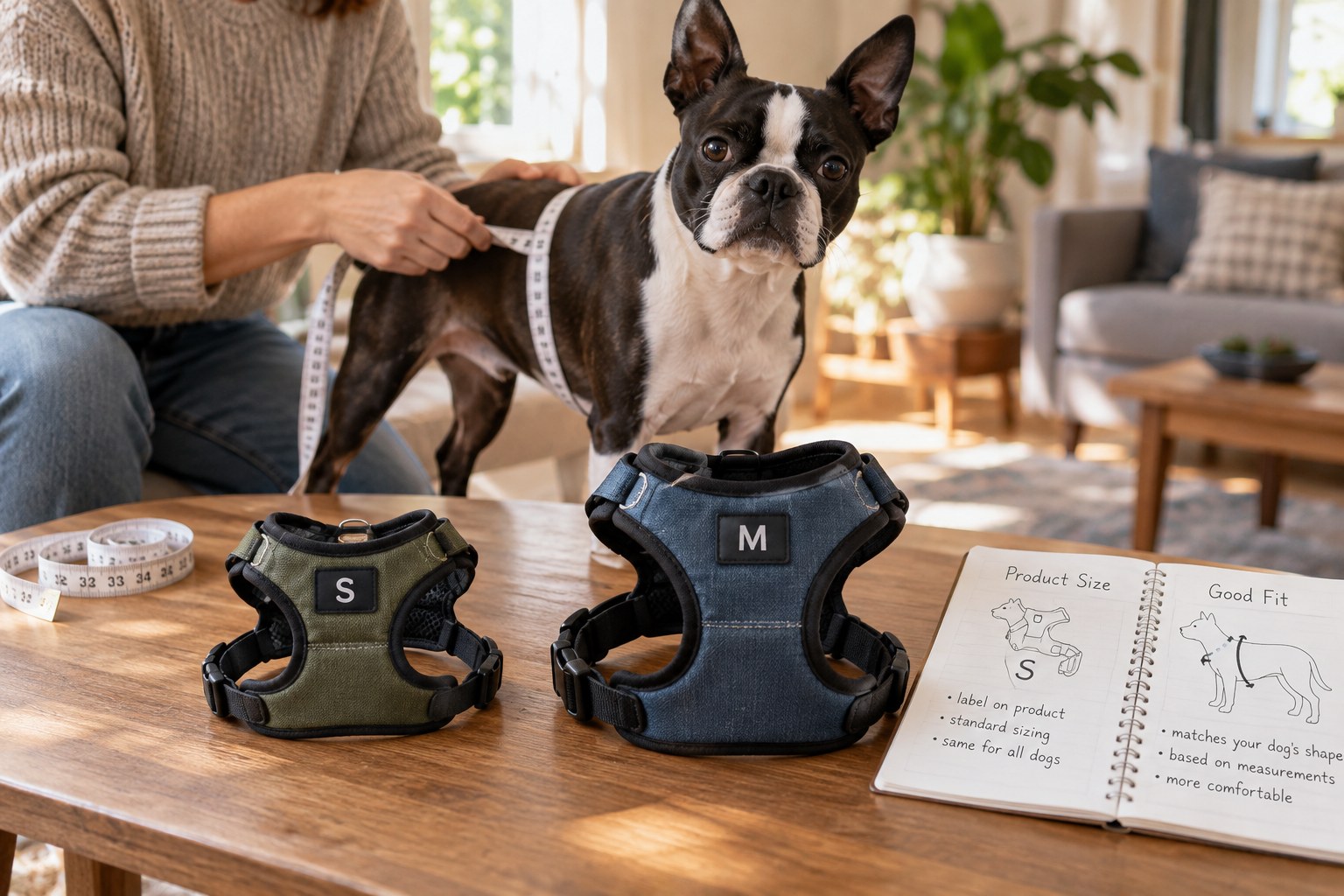
Learn the difference between a product size and a good fit
A size label helps you find a product. Fit is the result of comparing that product’s dimensions, adjustment and shape with the dog and the way it will be used.
Read the story ↗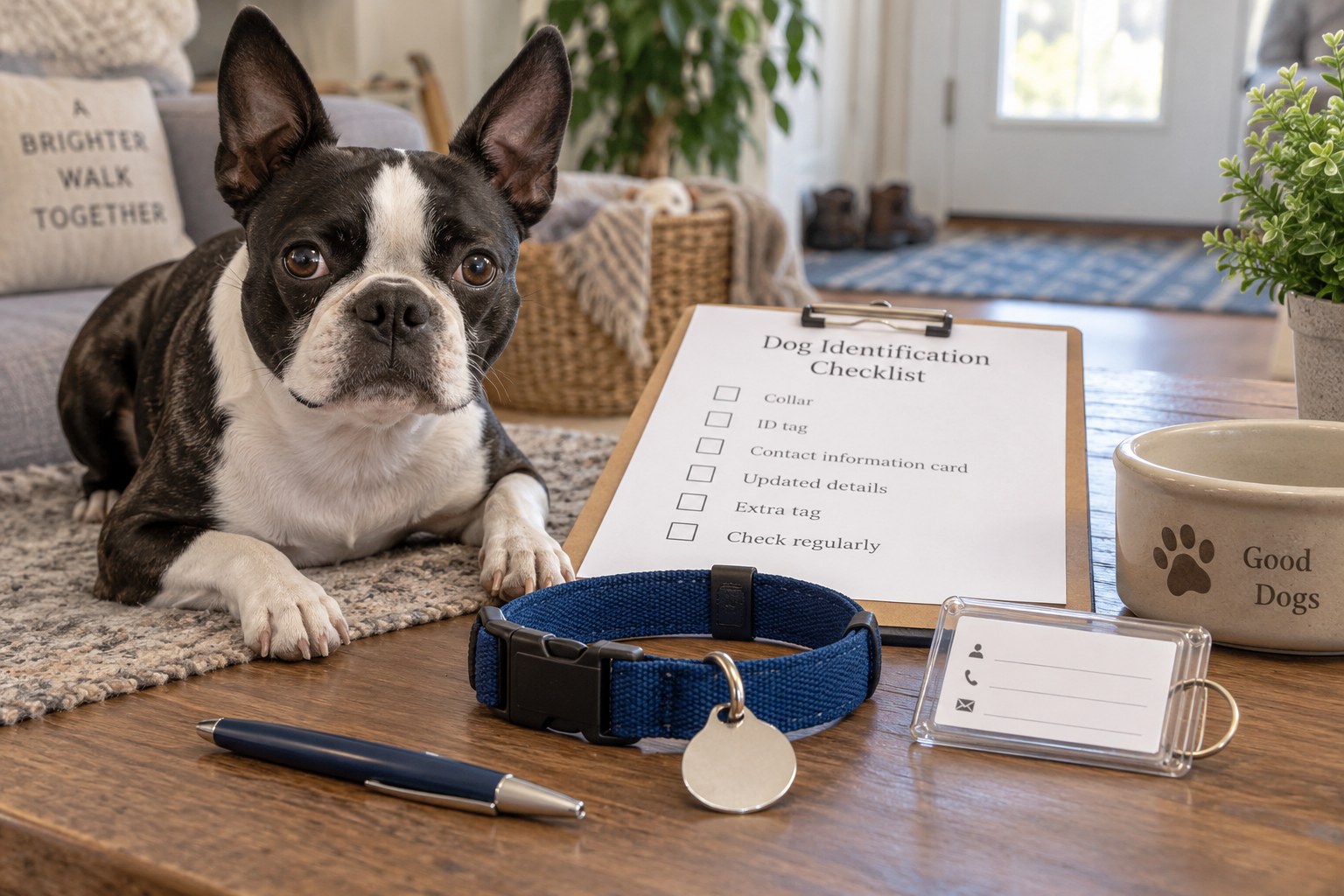
Make an identification and contact-information checklist
Identification works as a connected set of records and contact routes. Check what a finder, veterinary practice or registry would need to reach the right person.
Read the story ↗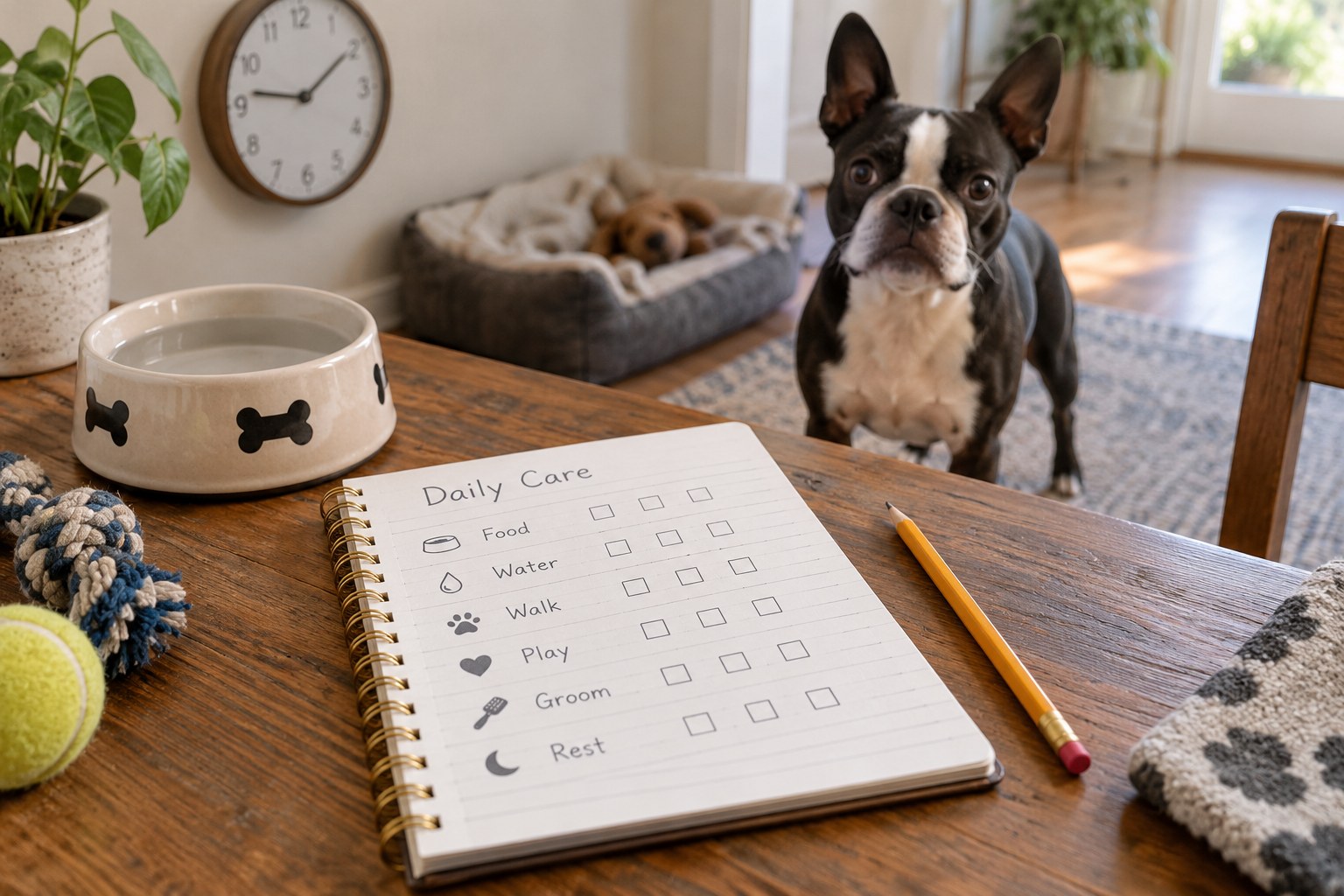
Set up a daily care record that stays usable
A care record should answer the next carer’s question quickly. Start with a few useful fields and leave room for observations rather than creating a diary nobody can maintain.
Read the story ↗
Plan the first short trips outside the home
A first short trip is easier to organise when the destination, journey and return are all familiar to the person handling the dog. Keep the purpose small and the arrangements clear.
Read the story ↗