Name the situations that need an agreement
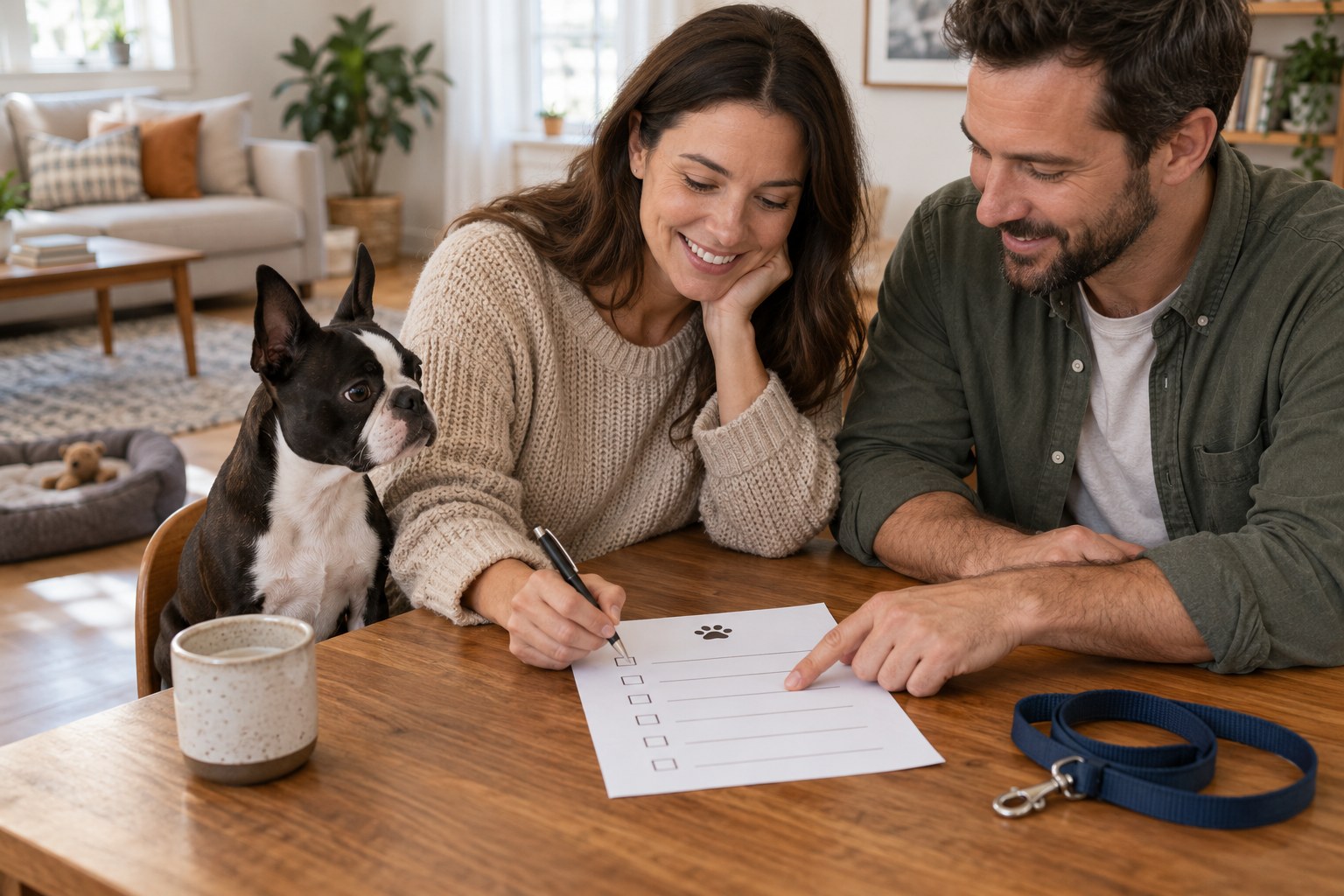
Begin with everyday situations: opening the front door, feeding, settling near the sofa, greeting visitors and leaving the dog with another carer. Ask each household member what they expect to happen. Differences are easier to resolve before the dog encounters several conflicting responses to the same action.
Choose a small number of clear decisions. Will the dog have access to every room? Where will food be prepared? Who checks that the outside door is secured before someone removes the lead? These are arrangements adults can carry out. Avoid presenting an unexplained list of prohibitions as if the dog already understands the household.
Write the human action beside the rule
For each agreement, describe the action that makes it possible. If a room is temporarily out of bounds, identify how access is managed and who checks the barrier. If a particular resting place should remain quiet, explain how visitors and children will be guided away. A rule that depends on everyone noticing the dog at exactly the right moment is likely to be difficult to maintain.
Agree on the words and gestures used for short training tasks, and ask the person handing over the dog which familiar cues it already knows. Keep a written note so that people are not unknowingly using the same word for different actions. Reward arrangements also need coordination: several people offering food independently can make it hard to know what has already been given.
Rehearse a busy moment
Imagine a delivery arriving while one person is cooking and another is preparing a walk. Who handles the door, where is the dog, and what must happen before the walking equipment is removed or attached? Rehearsing a concrete moment reveals gaps that a general promise to be careful will not.
Do the same with a visitor’s arrival. Decide who explains the greeting arrangements and where bags or food should be placed. Give the visitor one simple instruction at a time rather than several contradictory requests. The household plan should reduce the amount of improvisation required when attention is divided.
Keep the plan short enough to use
Put the current agreements in one accessible place and identify a person who will update them after a household discussion. An old version on the fridge and a different version in a group message can recreate the confusion the note was meant to solve. Use dates for significant changes and tell anyone who provides care.
Review the plan when the dog’s needs or your schedule changes. Keep arrangements that work, change those that are impractical and seek suitable training help for problems that need it. Consistency does not mean preserving an unhelpful rule forever. It means the people caring for the dog understand the current approach and can apply it together.