Choose the location before the object
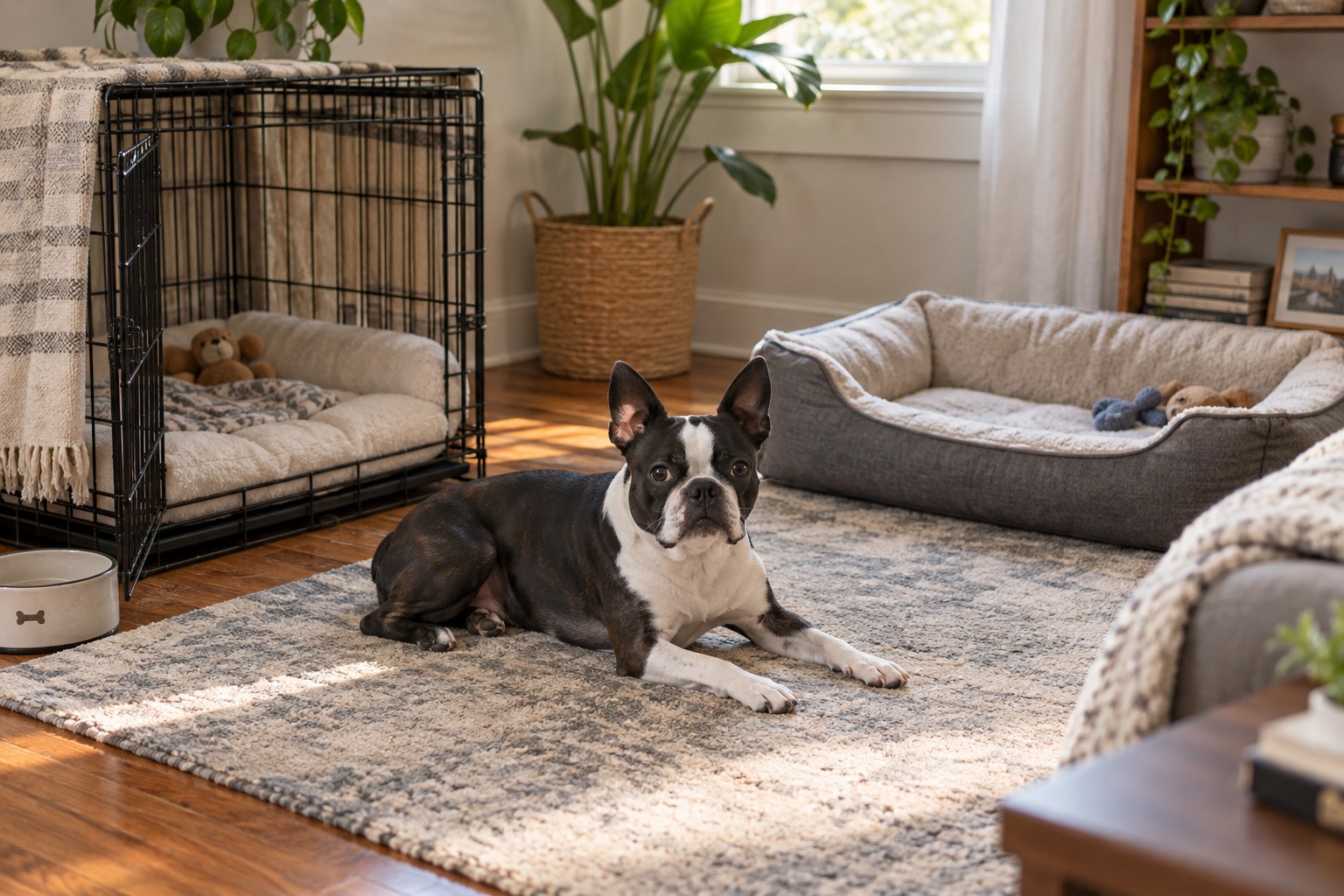
Look for a position away from the main walking route through the room. Check what happens there at ordinary times: a quiet-looking corner may sit beside a door used every few minutes, a loud appliance or a spot that receives strong afternoon sun. Consider the actual household pattern rather than how the bed appears in a photograph.
Ask the person handing over the dog about its current sleeping and resting arrangements. Bring that information into the discussion, without assuming that a different home can reproduce every detail. If you are considering a crate or pen, plan its introduction and use with appropriate guidance; buying a container is not the same as teaching a dog to feel comfortable inside it.
Make the arrangement understandable to everyone
Agree on the boundaries around the resting area. Household members should know that the dog can be left alone there, and children need adult help to follow that rule. Avoid making the bed a stage for greetings or photographs. Its purpose is easier to maintain when ordinary activity can pass at a reasonable distance.
Put necessary supplies where adults can reach them without repeatedly leaning over the resting dog. Keep spare washable covers in a nearby cupboard rather than piled on the bed. Check that leads, cables and loose household items do not trail into the chosen area. The arrangement should function when the room is being used, not only when it is freshly tidied.
Decide who will handle the evening routine and any questions during the night. Write down the handover information and discuss what to do if the dog does not settle as expected. A shared plan is more useful than several people independently changing the location, adding bedding or encouraging interaction each time they hear movement.
Observe before making a major change
Notice where the dog chooses to rest when given suitable options and what interrupts that rest. Record concrete details: the hallway stayed busy, the cover slid on the floor, or the bed was difficult to enter. These observations help distinguish a location problem from an item that does not suit the dog.
Make one considered change at a time where possible, then watch its effect. Do not read a single unsettled evening as proof that every purchase was wrong. Equally, persistent distress should not be dismissed as a timetable the dog must endure; seek individual advice when needed. The aim is a workable, undisturbed resting arrangement, with adjustments based on the dog rather than a fixed idea of how the first nights should look.