Ask the practice how to prepare
Contact the veterinary practice and explain that you are welcoming a Boston Terrier, including its age and handover circumstances where known. Ask how the practice would like to receive existing records and what to bring. Let the practice advise on the timing and type of appointment rather than treating a website checklist as a clinical schedule.
Confirm the address, arrival instructions and the arrangements for bringing the dog inside. If your dog has difficulty with other animals, handling or waiting areas, tell the practice in advance and ask how to manage the visit. This allows a plan to be discussed before you are standing in a busy reception area.
Gather records without filling in gaps
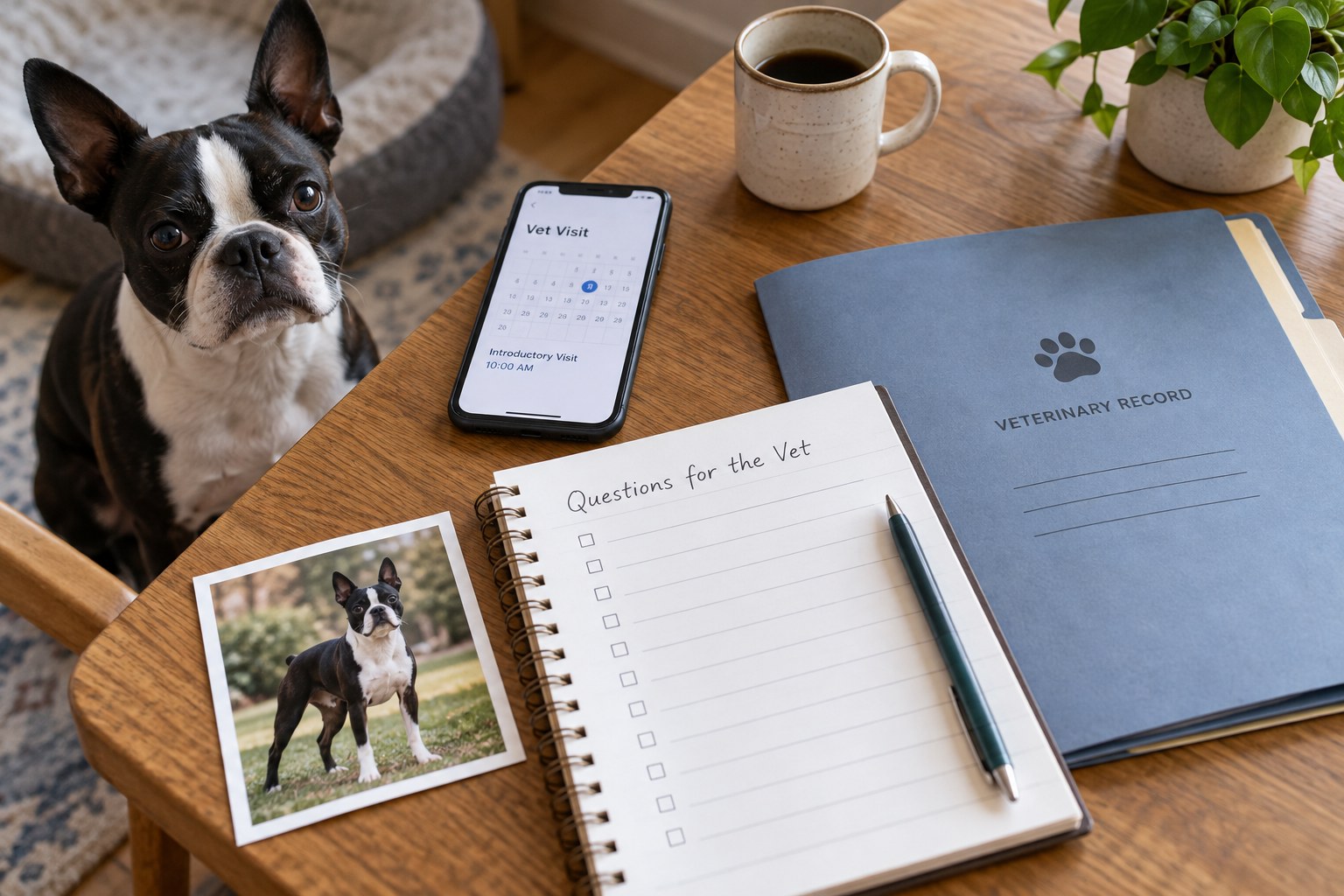
Collect the documents provided by the rescue, breeder or previous veterinary practice. Keep identification, vaccination records, treatment information and relevant care notes in a clearly labelled folder. Preserve the original dates and wording. If a document is missing, mark it as missing instead of reconstructing a treatment history from memory or an informal description.
List any medication, supplement or prescribed diet the dog is currently receiving, using the labels or written instructions supplied. Bring questions about anything unclear to the veterinary team. Do not change a prescribed arrangement simply because an online article uses a different routine or another owner describes a different experience.
Separate observations from interpretations
Write down what you have noticed in ordinary language, with a date and context. For example, describe when a change occurred and what the dog was doing, rather than naming a suspected diagnosis. If a photograph or short video would help explain an observation, ask the practice how it should be supplied. Keep the dog’s comfort ahead of collecting a recording.
Arrange questions by importance so that the main reason for the appointment is clear. General topics can include the individual dog’s preventive care plan, feeding questions, suitable activity, handling and identification records. The clinician can relate those questions to the examination and history. Breed information is background; it does not establish the needs or health status of this particular dog.
Prepare the practical side of the visit
Check the transport and walking equipment you will use, and keep the practice’s arrival instructions available offline. Allow room for the journey and the handover at reception. Bring the documents in a format you can open without searching a large photo library or relying on a message from someone who is not available.
Decide who will describe the history if several household members attend. Other people can add observations, but one organised account helps prevent the same question being answered differently. If a carer has noticed something you have not seen, identify it as their observation and keep their wording distinct from yours.
Leave with a record of the agreed next steps
Before leaving, clarify any instructions you do not understand and ask how to obtain a written summary where appropriate. Record the next action, who will arrange it and the contact route for follow-up questions. Keep professional instructions separate from general household notes so that they are easy to find and are not accidentally altered during routine editing.
An introductory visit does not require you to arrive with every answer. Its value lies partly in identifying what still needs to be confirmed. If your dog appears unwell or you have an urgent concern before the planned appointment, contact a veterinarian promptly rather than waiting for a routine visit because it is already in the calendar.