Start with what must be ready on arrival
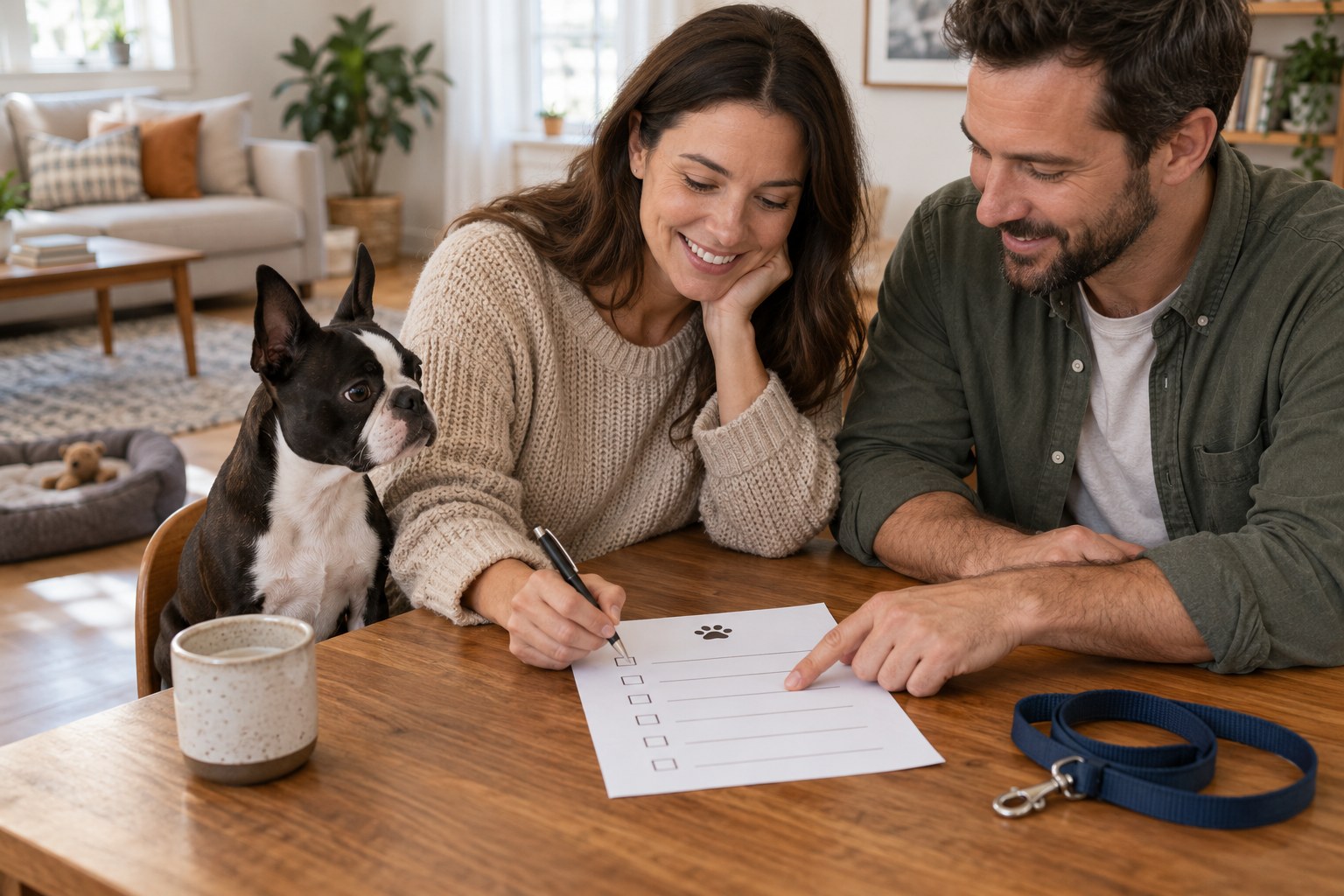
Ask the rescue or breeder what the dog is currently using for food, walking equipment and rest. Record the actual product, size and routine where known. The point is to avoid guessing at the essentials while also avoiding an automatic purchase of everything in a starter bundle. A useful list describes a task, such as providing water or securing the agreed journey home, before naming an item.
Separate supplies you must provide from those coming with the dog. Confirm rather than assume that a harness, bedding or food will be included. Note the handover date and who will bring each item. If transport involves a particular carrier or restraint, resolve that requirement early enough to read its instructions and check that it suits the vehicle and dog.
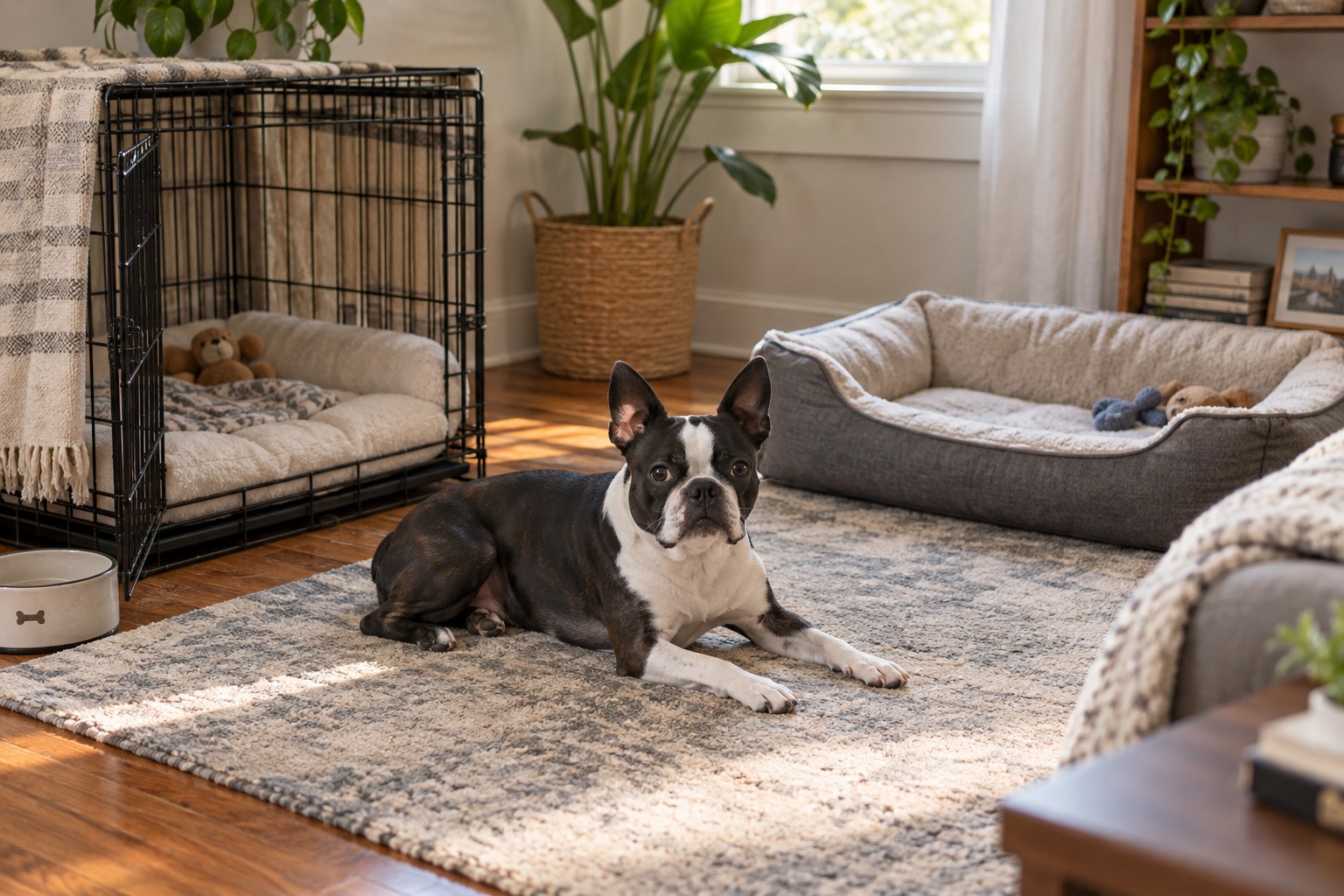
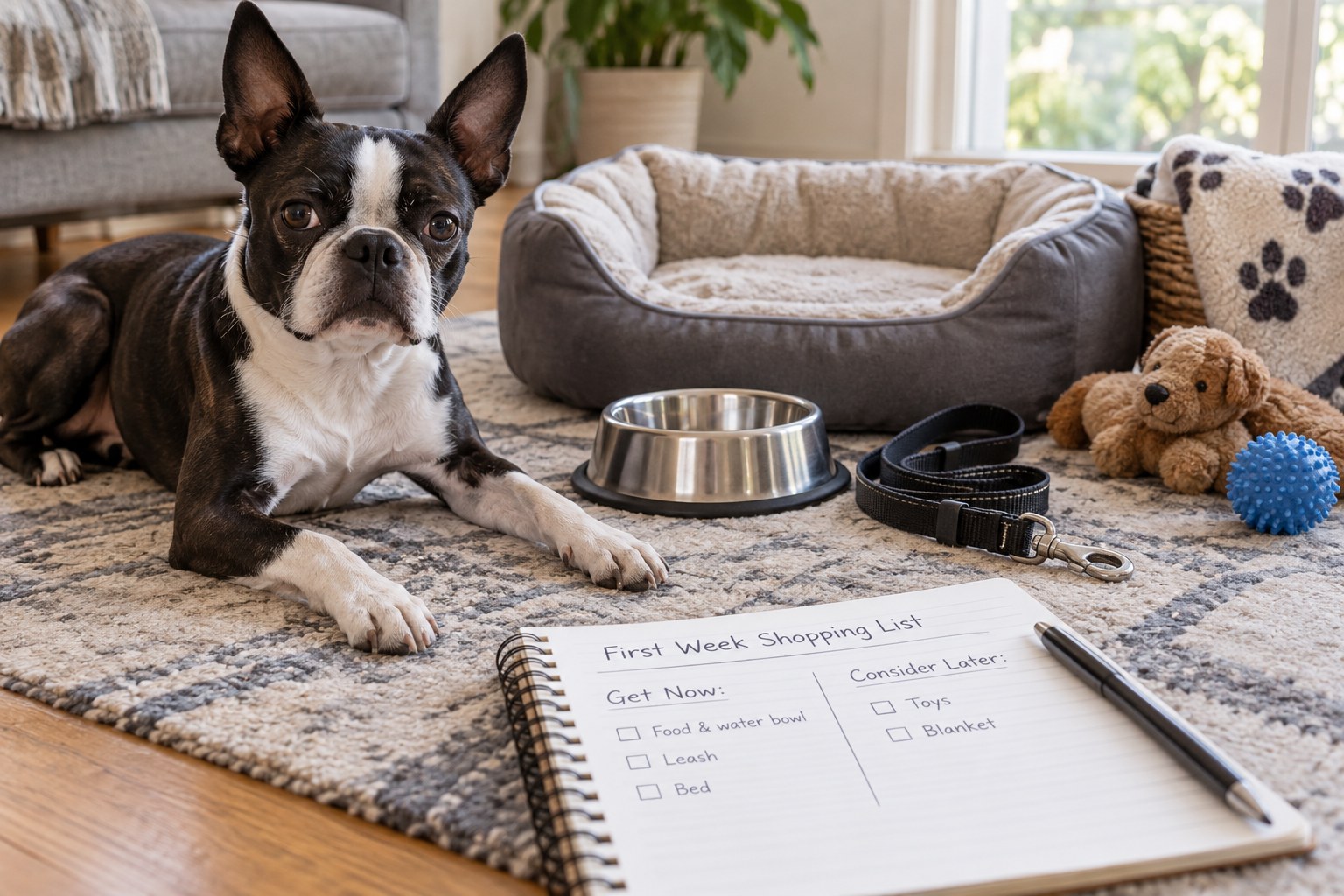
Prepare a place for water, the agreed feeding arrangements, a resting area, identification and the walking or toileting supplies appropriate to the dog. Keep the list specific to your home. A household with existing washable bowls may not need another set just because a new design features a Boston Terrier.
Mark the decisions that still need information
Some products depend on measurements or preferences you do not yet know. Put those on a separate list with the missing information beside them. A coat may require a fresh body measurement. A bed shape may depend on how the dog rests. A toy selection should reflect the dog’s play and the organisation’s handover advice, rather than the toys you find most entertaining in a shop.
For a necessary item with an uncertain size, ask whether a supervised fitting or an appropriate temporary arrangement is possible. Read the seller’s actual return conditions before buying alternatives to try. An unresolved measurement should not disappear under a label such as small breed. Keep the question visible until someone can answer it.
Buy for the routine you can maintain
Consider the cleaning and storage work created by the purchase. Check whether bedding fits your washing arrangements, where used leads will dry and whether a food container can retain the packaging information. An item that only works with a care routine you cannot follow is a poor match even if its appearance suits the room.
Imagine the first ordinary morning: opening the chosen door, finding the lead, preparing the agreed food and leaving the dog space to rest. Walk through these steps before adding decorative purchases. A missing hook or a poorly placed bowl may matter more to that morning than a second set of accessories.
Keep consumables and durable items separate in the budget. Write the expected replacement task rather than inventing a universal monthly quantity. Waste bags, cleaning supplies and food will need replenishment at different rates; a washable mat might not. This distinction helps you see which decisions create continuing work and expense.
Review the deferred list after observing the dog
During the first week, note the specific need before shopping again. If a blanket is repeatedly dragged from a resting spot, examine the arrangement rather than assuming the dog wants a more expensive bed. If an item is hard to clean, identify which feature makes the task awkward. Observations give the next purchase a purpose.
Keep receipts, size charts and care instructions together. Review each deferred item as buy, measure first or no longer needed. The list can shrink as well as grow. A staged approach leaves room to learn about the dog while ensuring that the arrival essentials are settled before the door opens.