Teach the routine before there is a dog to greet
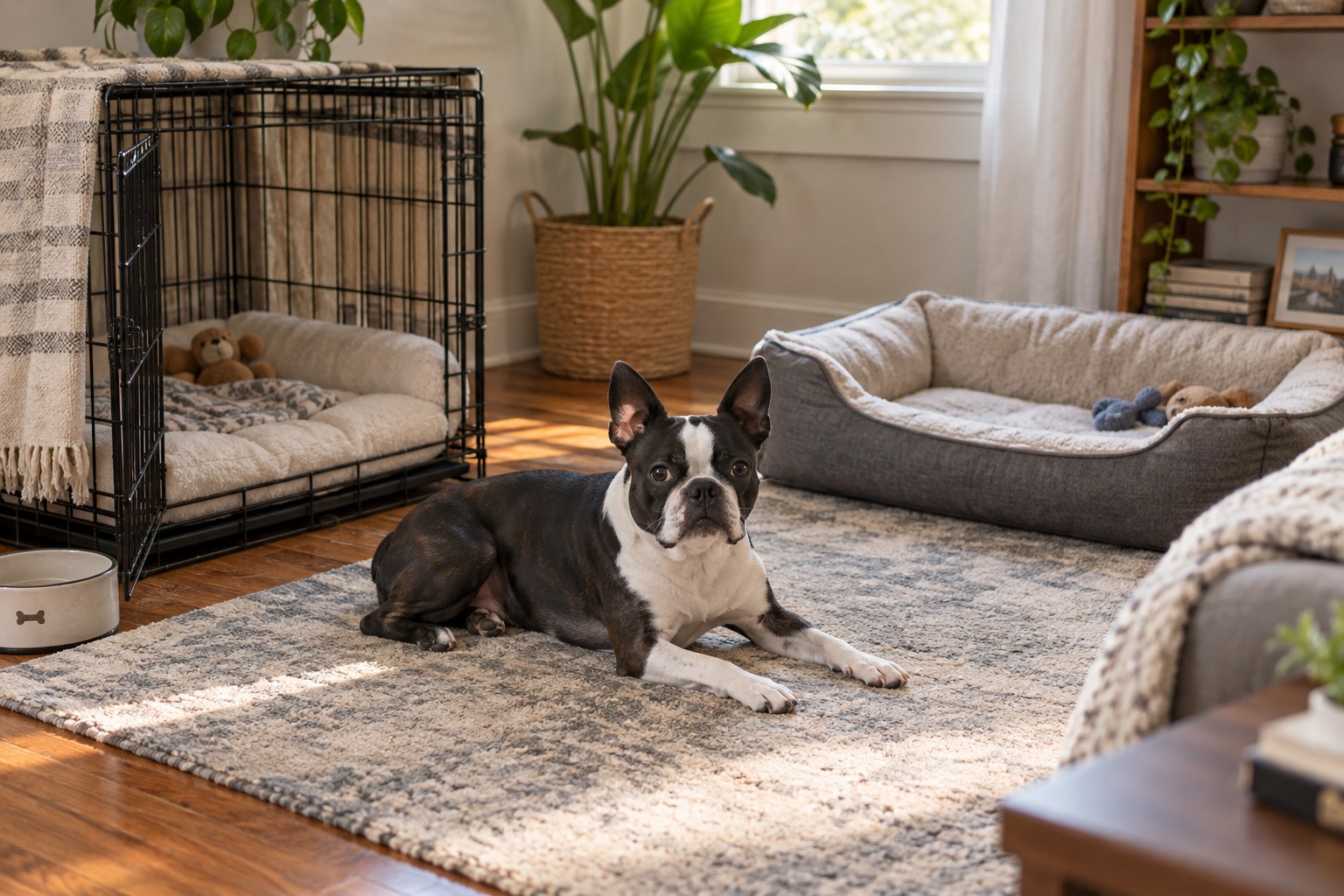
Use an empty resting area to explain the household’s arrangements. Show where the dog will sleep, where food will be prepared and which doors adults will manage. A child can practise walking past a bed without leaning over it, or bringing a question to an adult instead of approaching the dog with an object. These small examples give a clear meaning to otherwise vague instructions such as be gentle.
The American Veterinary Medical Association advises against disturbing a dog that is eating, sleeping or caring for puppies. Translate that into a rule the family can follow: leave the dog alone during those activities and ask an adult before starting an interaction. Do not assume that a Boston Terrier’s size or familiar-looking expression removes the need for supervision.
Discuss photographs and greetings as well as play. A child may want to hold a new dog still for a picture or invite several friends to meet it. Explain that the dog can move away and that adults will decide when a greeting is suitable. Keep the first arrival from becoming an event in which the dog is passed between people.
Choose a few age-appropriate jobs that can be carried out with adult help, such as finding a clean blanket or helping put unused supplies away. Children should not be responsible for interpreting a dog’s discomfort, controlling difficult encounters or administering treatment. Participation can begin with household tasks that do not require handling the dog at all.
Make adult supervision a concrete arrangement
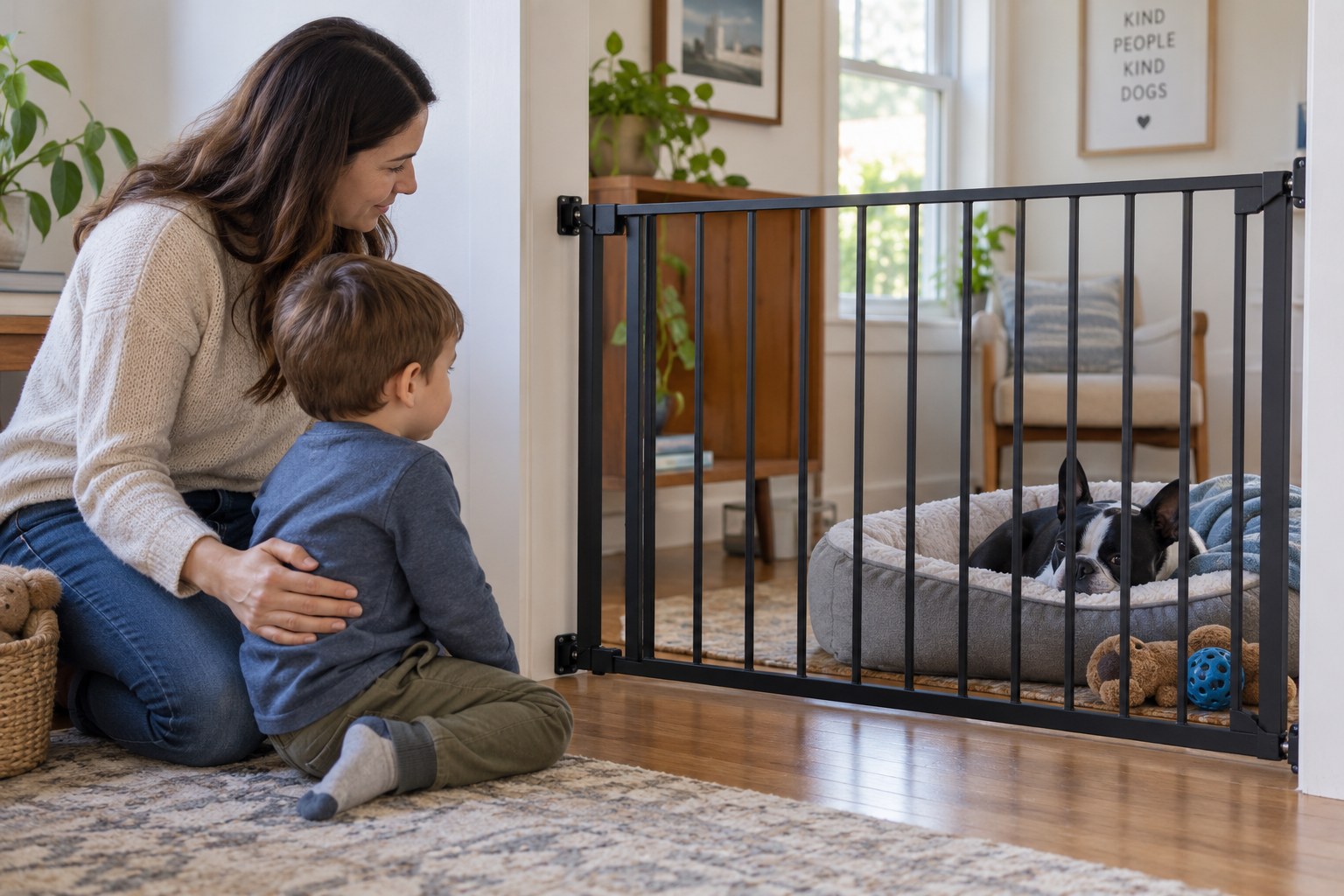
Name which adult is supervising when the child and dog are together. Being somewhere in the same house is different from watching an interaction and being able to respond. Arrange suitable separation when attention must move to cooking, work or another child. Check that the selected barrier or room arrangement actually works in your home before relying on it.
Keep children’s toys and the dog’s items in separate places, and explain that taking something directly from the dog is an adult matter. Avoid asking a child to prove confidence by approaching a resting dog or persisting with a greeting. The plan should allow an interaction to end without anyone feeling that they failed.
After a visit or a busy afternoon, discuss one specific moment rather than delivering a general lecture. Perhaps the room became crowded or the resting place was repeatedly interrupted. Adjust the arrangement and explain the change. Seek appropriate professional guidance if interactions are difficult or you are uncertain how to manage them. A written rule is useful only when the adults provide the space and supervision needed to put it into practice.