Check visible information and the registration separately
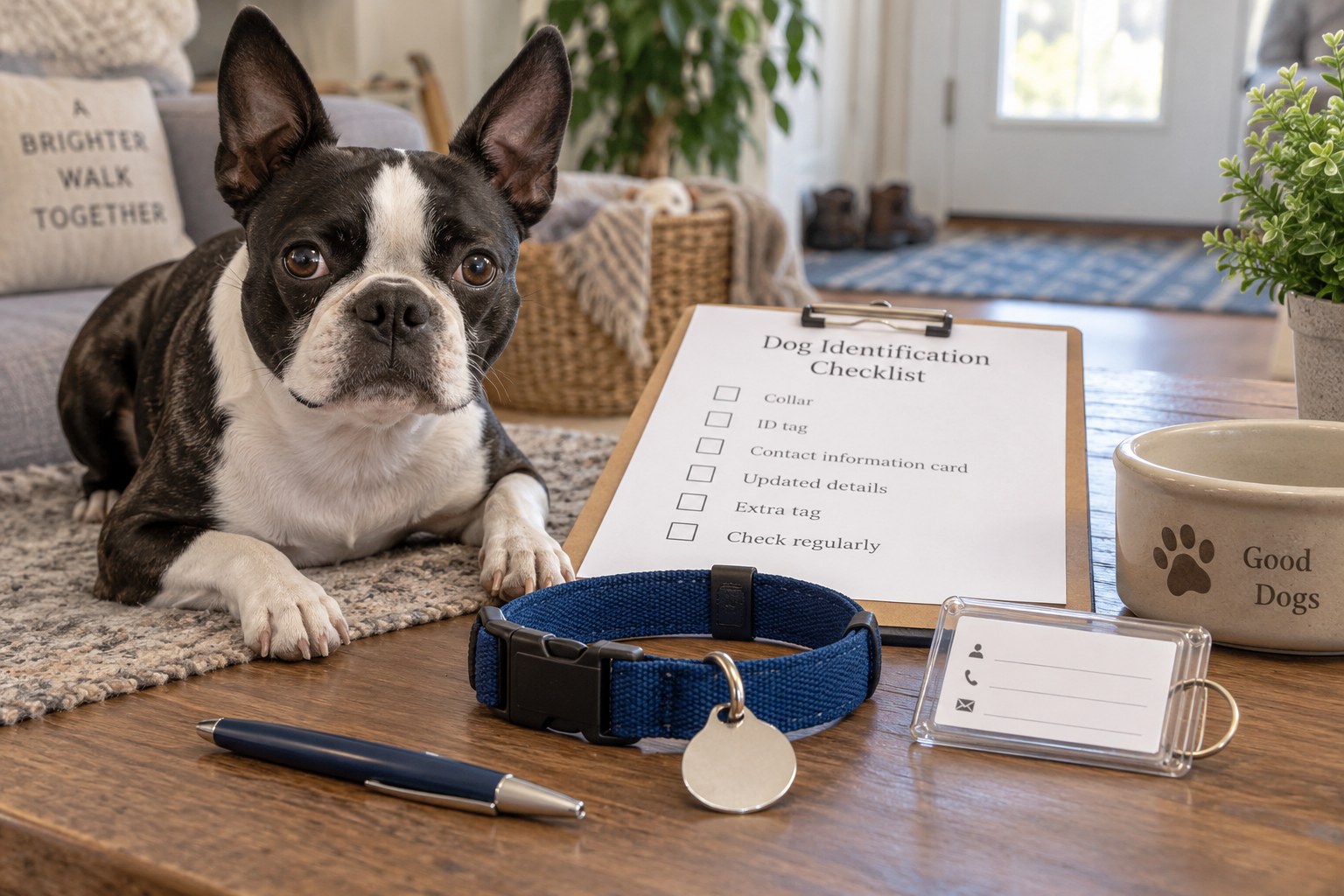
Inspect the dog’s visible identification and confirm that any contact details are current and readable. Check the attachment and the condition of the item as part of the ordinary equipment review. Choose the information required by the rules that apply where you live, and verify local requirements with the responsible authority instead of assuming another country’s example is universal.
A microchip has a different role from a visible tag. The AVMA explains that a chip is scanned for an identification number and that the associated registration needs current contact information. Ask the veterinary practice or responsible registry how to confirm the record for your dog. Do not assume that possessing a number on a handover document means the registration has already been transferred.
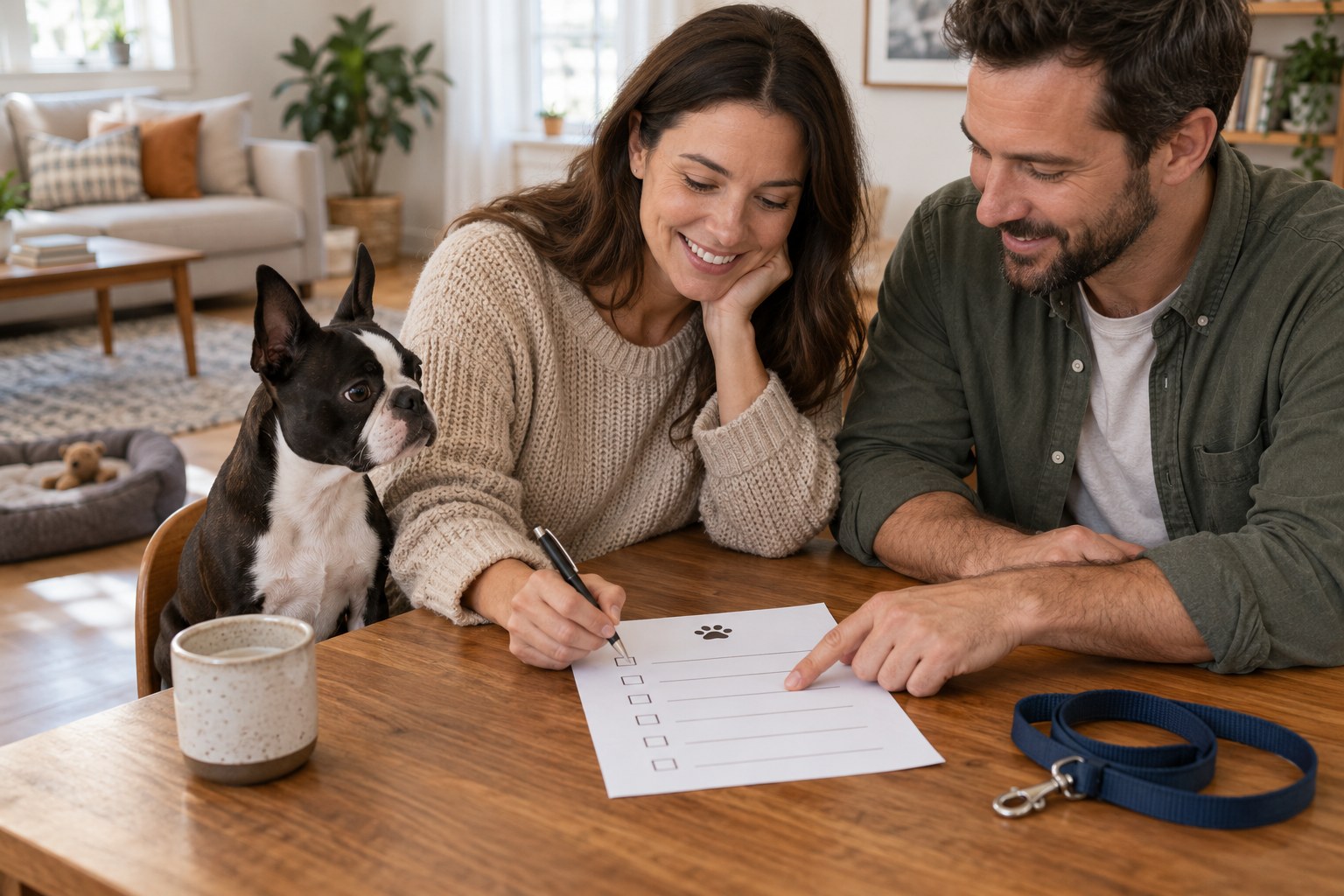
Make a small contact checklist
Record the organisation or registry responsible for each entry, the action required and the date it was checked. Keep sensitive account details in an appropriate secure place, rather than adding them to a public photograph of the dog’s paperwork. A household note can identify where the record is stored without displaying every detail.
Include the person who normally answers the listed phone number and an appropriate alternative where the service allows one. If household members share care, agree who updates the records after a move or a number change. A reminder to update everything is less useful than a list of the particular records that need attention.
Check contact information supplied to the rescue, breeder, veterinary practice or regular carer separately. Updating one service does not demonstrate that another has received the change. Keep confirmation messages with the relevant record so that you can distinguish a completed update from an intention to do it later.
Review after a change, not only after a problem
When you move, change phone numbers or arrange a different main carer, use the checklist before filing the administrative task away. Check the physical tag as well as online records. If the old information remains on an item in daily use, decide how it will be replaced or corrected through the appropriate route.
Keep recent photographs that clearly show the dog, without publishing private contact details or document numbers. A clear image and current records support different parts of identification; neither should be confused with a guarantee about how an incident will unfold. The aim is to make the existing identification arrangements accurate, accessible to the right people and easy to maintain.