Find out what the number describes
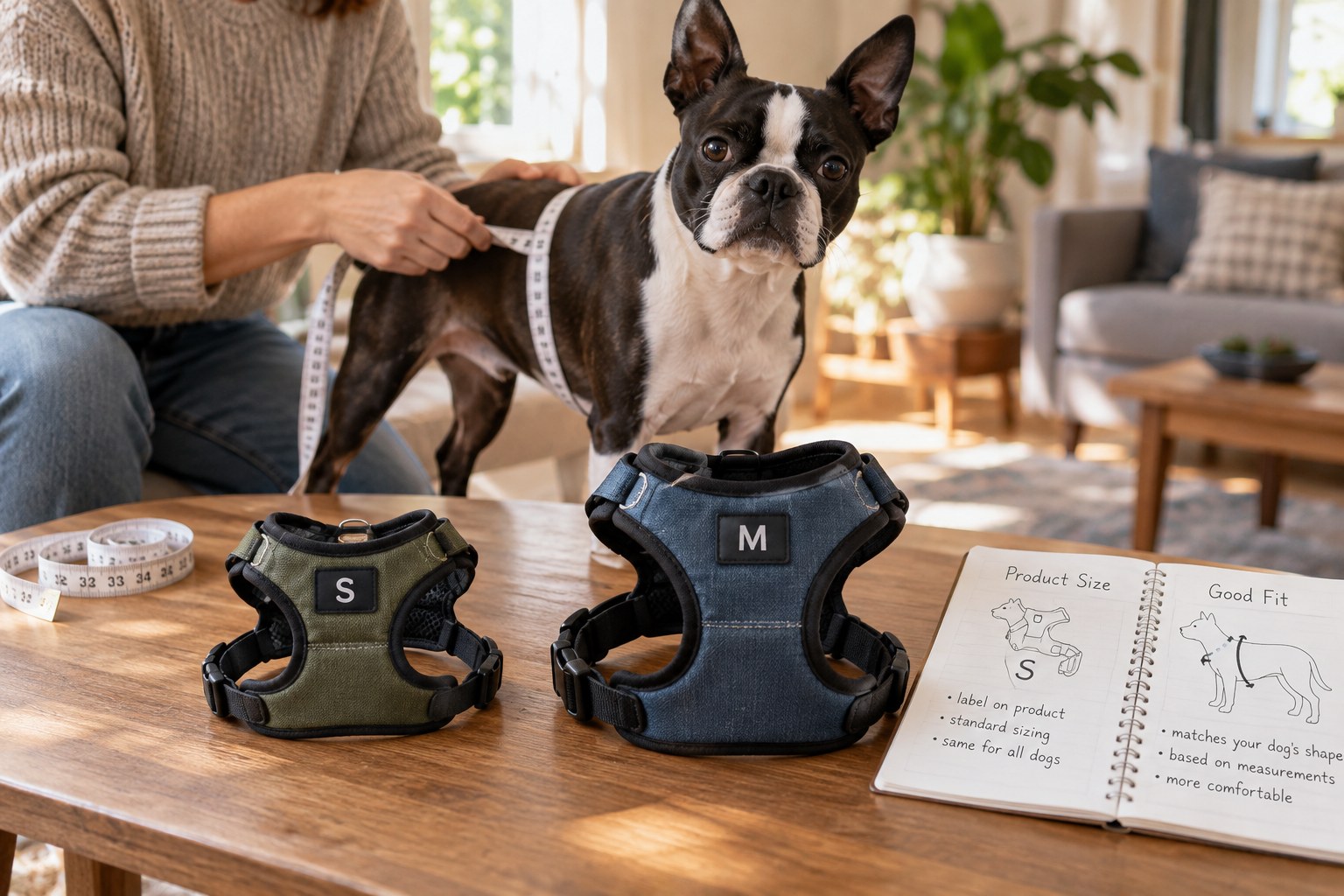
A listing may show a dog’s recommended body measurement, the dimensions of the finished item or a broad breed suggestion. Those are different kinds of information. Read the chart headings and any diagram before comparing numbers. A bed’s outer width, for example, may include a thick bolster and say little about the space available for resting.
Save the unit with the measurement. A copied number without centimetres or inches creates an avoidable ambiguity. If you are comparing several models, put the dimensions under consistent headings and keep the manufacturer’s own chart beside the comparison. Do not transfer a size name from one brand to another as if it were a standard measurement.
Include the product’s shape
Two items with similar dimensions can place their material differently. A coat may cover more of the body, a harness may have a longer chest section, and a carrier may narrow at the top. Look at photographs and diagrams that show those features, then decide which detail needs checking against the individual dog.
For an item worn on the body, use the maker’s measuring and fitting instructions. For an item the dog enters or rests on, examine the usable space and the entry arrangement rather than only the packaging dimensions. A headline measurement is the start of the comparison, not an explanation of all the contact points.
Separate fit from adjustment
Adjustment lets a product change within its design. It does not necessarily change the underlying shape. A harness that twists because its body section is unsuitable may not be resolved by tightening every strap. Likewise, a blanket tucked into a bed does not make the bed’s entrance easier for a dog to use.
Identify the adjustment range and the purpose of each adjustable part. Follow the instructions for securing loose ends or closing buckles, and check the item in the position it will actually be used. If a necessary feature remains unclear, ask the maker about the model rather than copying advice for a vaguely similar product.
Use an ordinary situation as the final check
Check the product calmly in an appropriate setting before depending on it for an outing. Watch the dog’s ordinary movement or use of the item, according to its intended purpose. Keep any trial within the seller’s return conditions and do not treat an unsuitable purchase as something the dog must adapt to because the label appeared correct.
Consider what else will be present during use. A coat under a harness, a blanket inside a carrier or the position of a car seat can alter the arrangement you first checked. Record those conditions with the fit note so that a later comparison is meaningful.
Keep the reason for the choice
Write one short explanation of why the item fits the task: the usable bed area suits the dog’s resting position, the adjustment can be secured as instructed, or the entry is compatible with the intended arrangement. If the only explanation is that the chart says Boston Terrier, return to the details.
Keep the receipt, model name and relevant measurements. Those records help with replacements, but they do not remove the need to check a new version or a changed dog. The useful habit is to compare the actual item and use, with the size label acting as a reference rather than the final verdict.