Decide where the extra length belongs
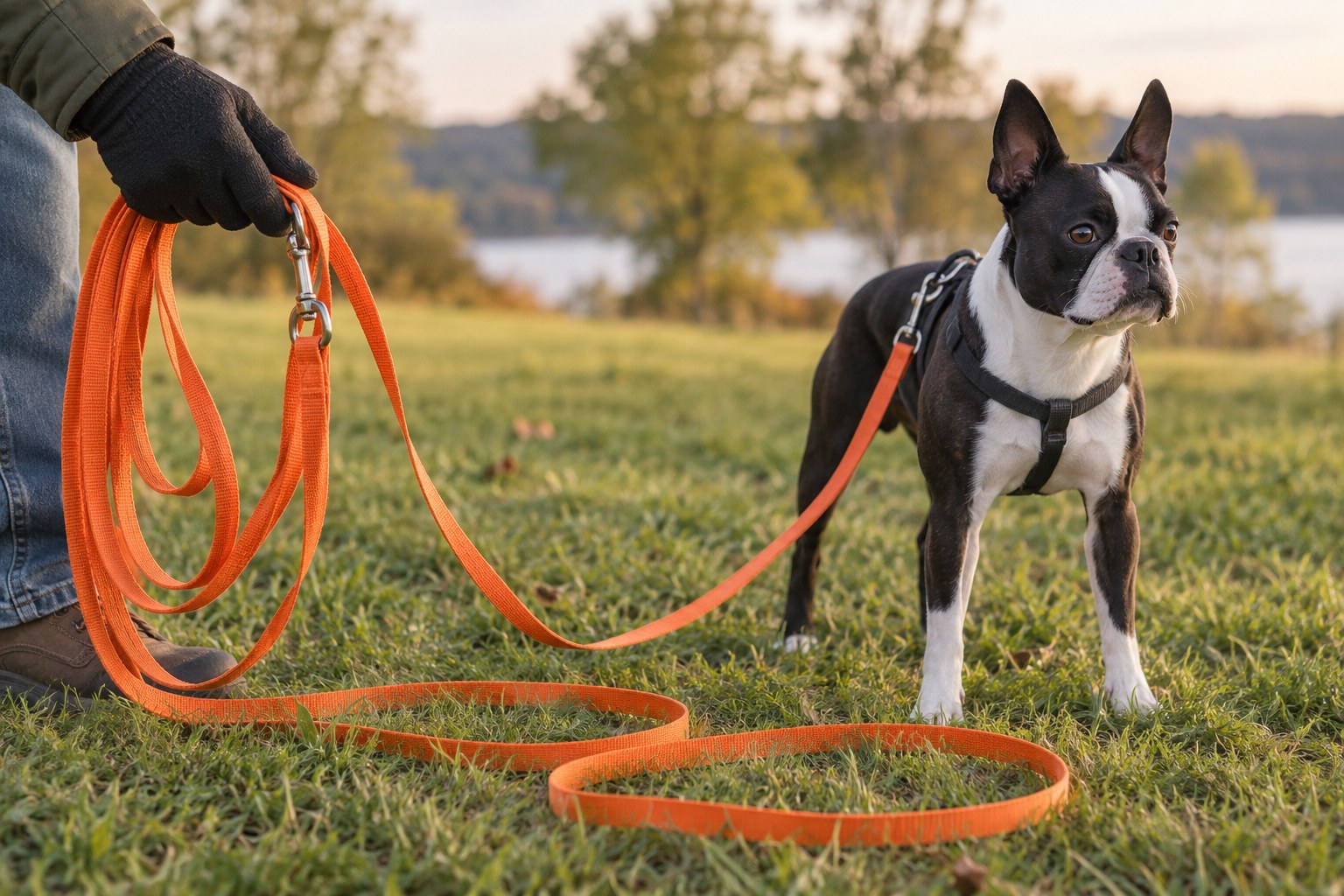
Choose an open area where a line can move without crossing a road, cycle route or busy footpath. Check the site's dog rules and the space around other people and animals. A long line is not an automatic substitute for a short lead in a crowded place. Decide how much distance serves the exercise rather than buying the longest option available.
Compare the line's stated length with its complete construction, including handles and clips. Consider how much material you can gather and carry. If the dog is still learning to return or stay nearby, a shorter working distance may be easier to manage than repeatedly collecting a full line. Seek a qualified trainer's help with the handling technique if it is unfamiliar.
Inspect clips and the attachment arrangement
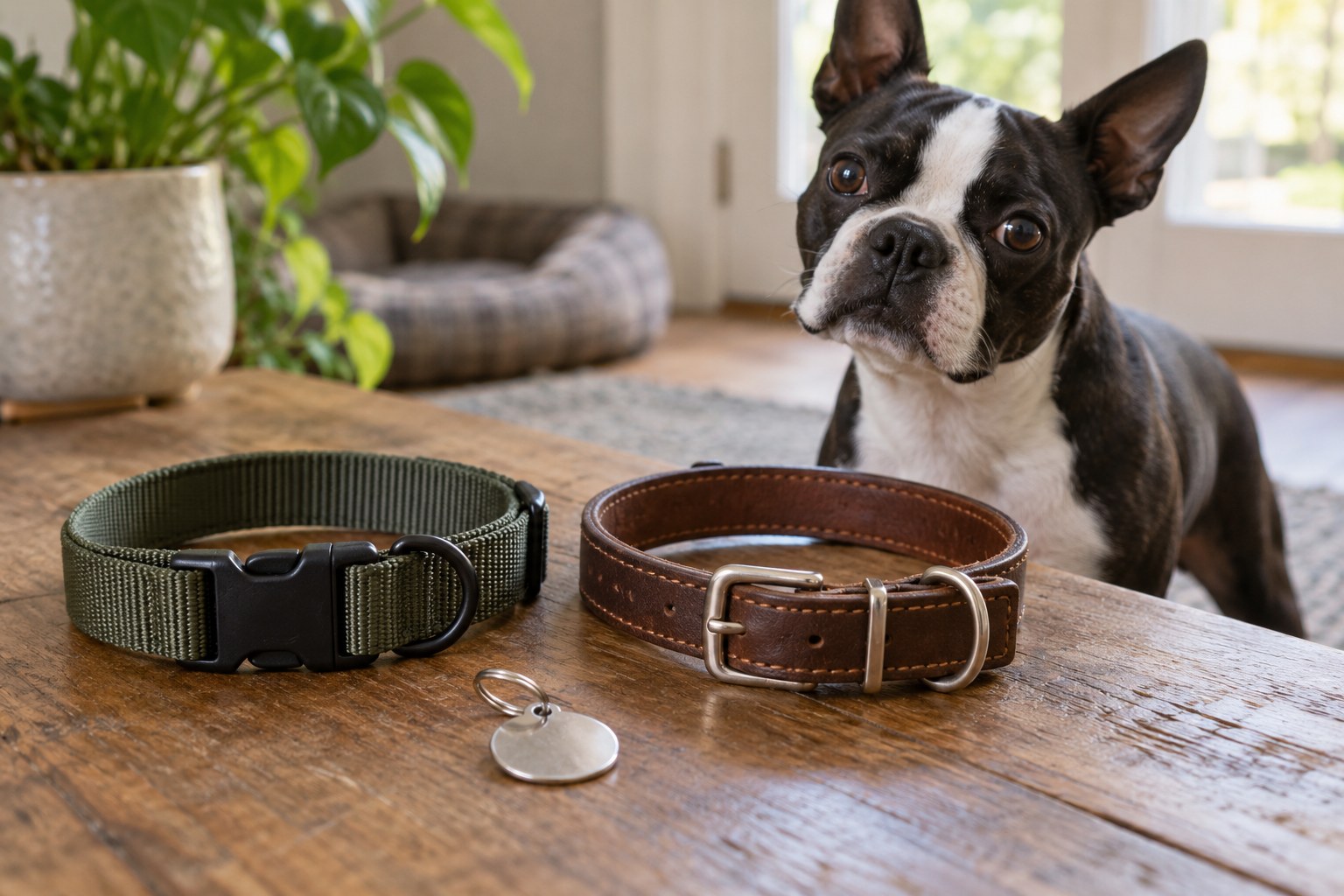
Check that the clip closes fully on the appropriate harness attachment point and is compatible with the equipment's instructions. Compare the weight of the hardware with the size of the dog. Look for a clear explanation of locking mechanisms and test them without the dog before use. Do not improvise an extension by linking several unrelated leads or attaching to a decorative loop.
Run the line through your hands while it is laid out clean and dry. Notice seams, joins and any sharp or stiff spots. If it has a handle, consider where that handle will be when the material is on the ground. Check the maker's advice on use and storage, particularly for a coated line or hardware with moving parts.
Practise gathering before adding distractions
Rehearse in a contained quiet space. Keep spare material organised without wrapping it around hands or limbs, and stay clear of loops on the ground. Manage distance early instead of waiting for the dog to reach the end at speed. Avoid using a long line around furniture, trees or play equipment where it can snag or pull across another person.
After use, lay it out for inspection and follow the cleaning directions. Dry it before putting it away in the method the maker permits. Check the entire length rather than only the section nearest the clip. Record a problem such as a frayed join or sticking gate and remove the line from use while you resolve it; extra length should not make damage harder to notice.
Choose a gathering method that lets you release spare material deliberately without throwing a pile beside the dog. Practise with an empty line before combining it with rewards and movement. Notice which hand manages distance and where the collected material rests when you stop. Keep the clip end visible while rearranging equipment. If you cannot retrieve the spare length without stepping into loops, reduce the working distance and practise the sequence again in a quieter setting. Handling should become more predictable before you add another person, dog or training task.