Find the documents that apply to your home
Read the current lease, building rules and any relevant community agreement. Note conditions about animals, numbers, size, shared areas and alterations such as gates or fencing. Do not rely only on a previous tenant's experience or a conversation about pets in general. Your own agreement and the responsible property's current instructions are the starting point.
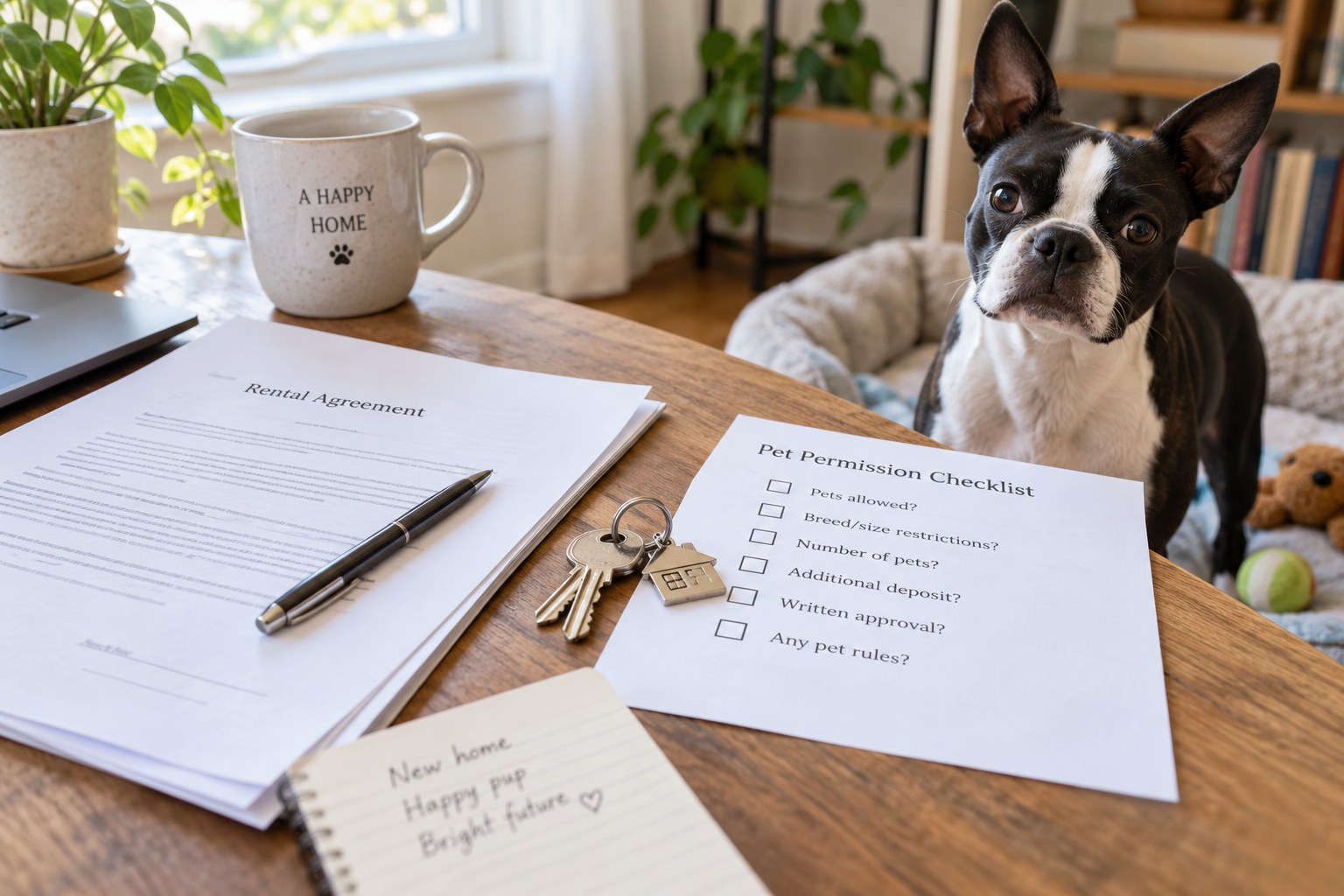
List the exact questions you need answered, including whether approval is required for this adoption and how it is documented. Ask the landlord or responsible manager through the established channel. If wording is unclear or a dispute arises, seek appropriate local housing advice rather than treating an adoption article as legal interpretation. Keep copies of questions and replies with dates.
Check actual costs and procedures directly. A permitted pet may still require a notification or another step, while a vague statement that a building is pet-friendly may not settle the details. Do not invent a fee in your budget or assume an exception applies because the dog is small. Get the answer for your situation.
Include the people who share the address
Discuss daily responsibilities with every adult who lives in the home. Agree where the dog will rest, how shared spaces will work and who handles care during absences. If someone has concerns about noise, cleaning or visiting animals, resolve the concrete arrangement before the adoption conversation. Silence in a family chat is not the same as agreement.
Consider people who regularly enter: a cleaner, support worker, relative or child returning from another household. Explain how arrivals and any separate areas will be managed. You do not need everyone to become a primary caregiver, but they need to understand the boundaries that affect them.
Tell the rescue what is confirmed
State whether you rent or own and provide the permission information the selected organization's current process requests. Use its verified application or contact route; do not send your entire lease or identity documents through an unverified social-media message. Ask which evidence is needed and whether irrelevant private details can be excluded.
If permission remains pending, say so. Ask whether you should wait before submitting an application rather than presenting the matter as settled. Plan for foreseeable changes such as an upcoming move or expiring tenancy, and explain those honestly.
Keep the final permission beside the care plan and adoption documents. Recheck if the household, property or number of animals changes. Resolving these points early lets you discuss the dog's needs with the rescue without a preventable housing uncertainty hanging over the decision.