Draw the opening before measuring it
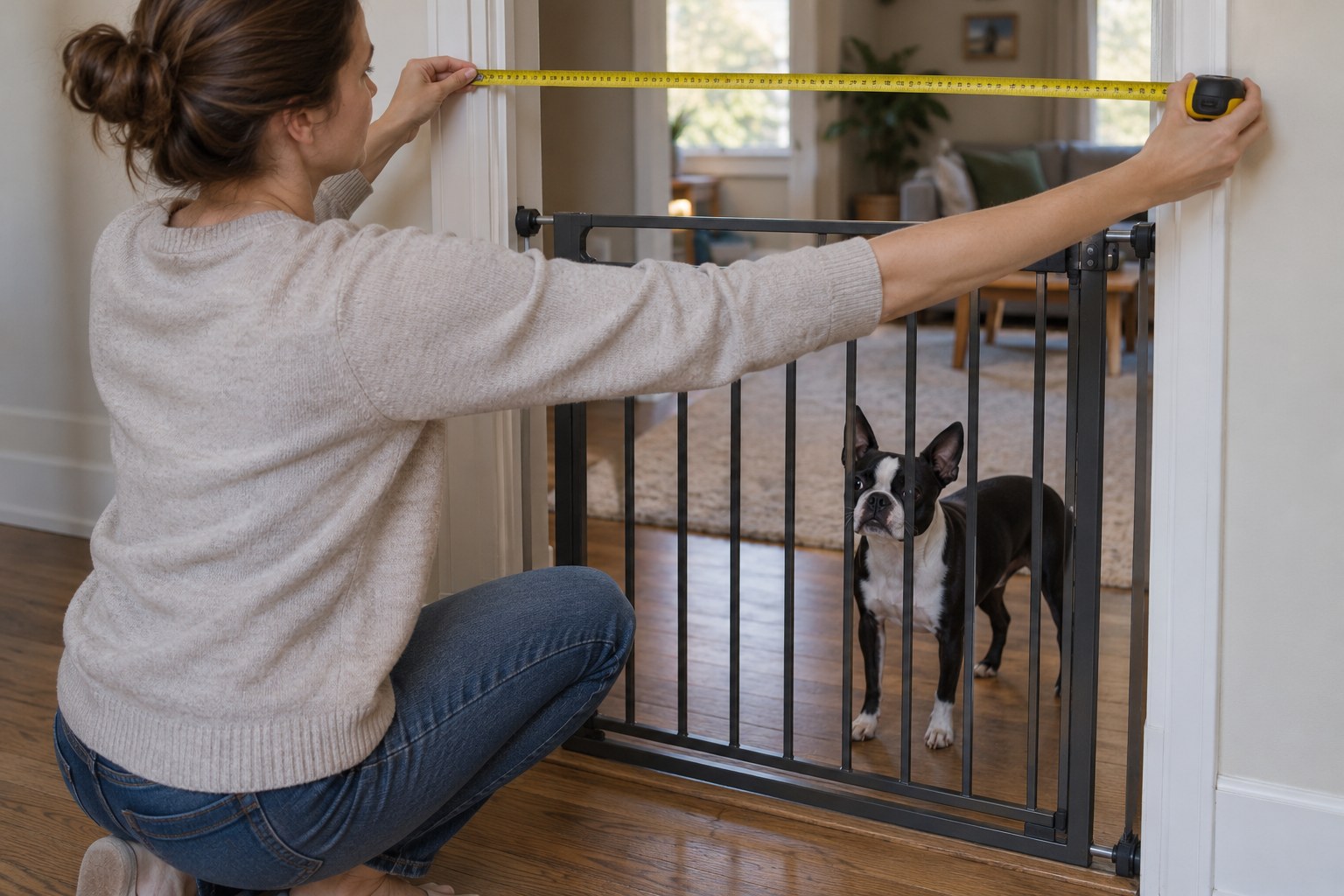
Note skirting boards, door trim, uneven walls and any change in floor height. Measure where the gate's supports will actually meet the opening, using the maker's installation diagram when available. A doorway can have a different usable width near the floor from the width higher up. Photograph both sides so you can ask a specific installation question rather than describing the space as standard.
Identify what the barrier is meant to do. Separating two rooms during supervised household activity differs from blocking a staircase. Read the exact gate's permitted locations and mounting requirements. Do not adapt a doorway-only design to a stair opening or assume an extension from another product is compatible. If the instructions cannot accommodate the surfaces, compare another system.
Make a list of the materials at each mounting point. A painted door frame, plaster wall and banister are not the same installation surface. Read whether fixings or approved adaptors are supplied and what the instructions require behind them. If you rent, resolve permission for any required holes before choosing the gate. Do not replace a required fixing with a different mounting method simply to avoid drilling. Where the opening cannot support the specified arrangement, the useful next step is to change the location or product, not to disguise the mismatch with extra padding.
Check everyday passage
Measure the clear walk-through opening, not just the overall frame. Think about carrying shopping, moving a laundry basket and letting another adult pass. Mark the swing area on the floor and check nearby doors. A low frame bar can change the way you step through; consider whether it creates an awkward route in that location.
Examine the latch sequence without the dog nearby. You should know how to verify it is closed, including on a model that advertises automatic closing. Check whether the door can be left open and how that feature is disengaged. A visible closed position matters more than remembering that you heard a click while walking away.
Review the dog and the installed gate together
Compare the spaces between bars and the gap underneath with the individual dog. Consider climbing, squeezing and pushing rather than height alone. A gate is a management tool, not a reason to assume the dog can be left indefinitely without checks. Introduce it while you can observe what happens on both sides, and change the arrangement if the dog repeatedly challenges it.
Keep the installation manual and record the model of any approved extension. After fitting, check every attachment and operate the door several times as instructed. Recheck after moving the gate, cleaning around its supports or noticing any shift. Do not use furniture, loose boards or household objects to fill a gap that the supplied system leaves unresolved.