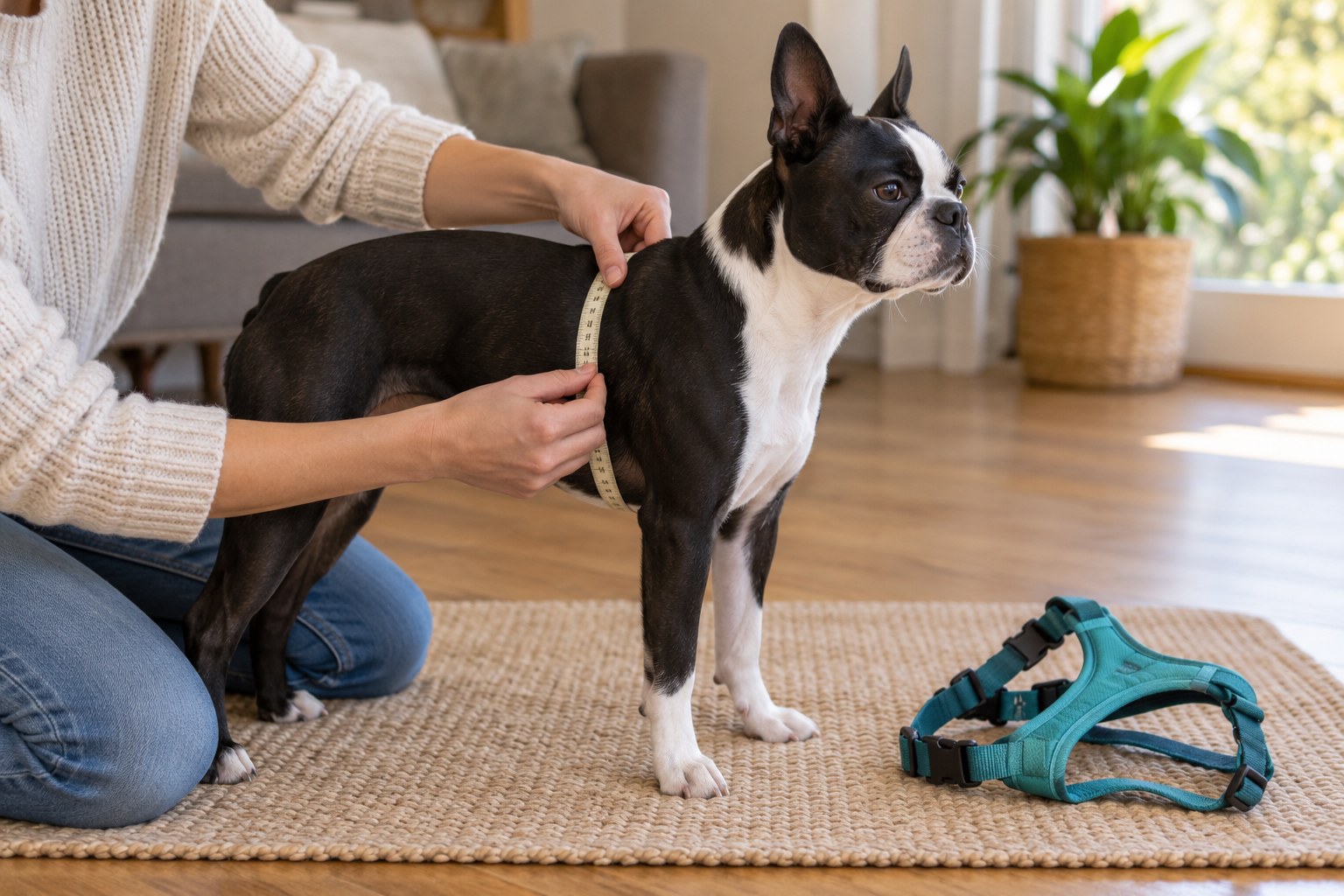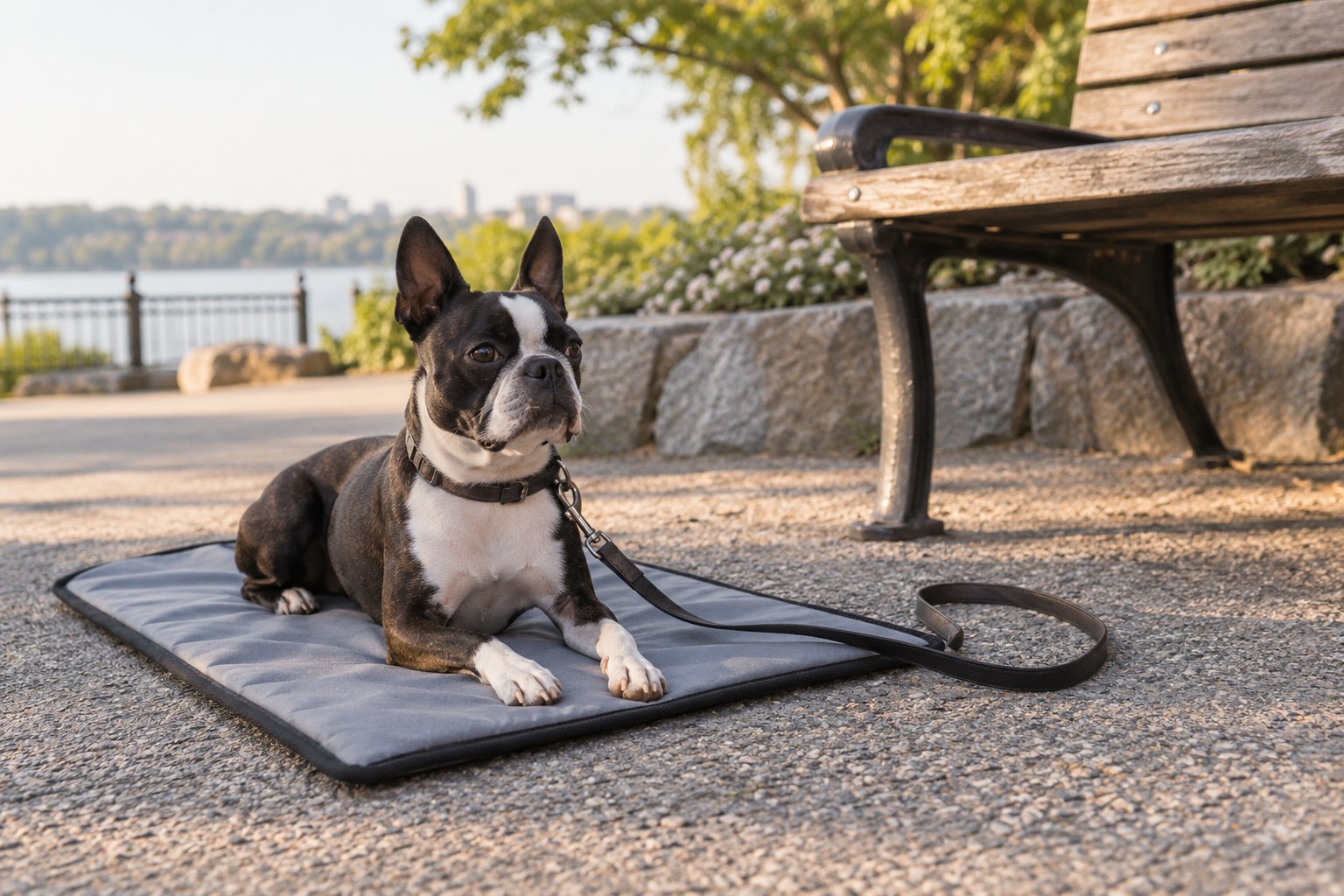
Start with the resting footprint
Measure the area your dog occupies in an ordinary relaxed position. Compare that with the mat's open dimensions and the space available where you intend to use it. A mat that fits under a table may still block a chair leg or walkway. Mark the footprint at home and place a chair beside it to see how the arrangement works when someone stands up.
Examine both surfaces. The upper layer should suit the way the dog rests; the underside should be used only on surfaces the maker considers appropriate. Ask how the mat is secured when folded or rolled, and where straps go when it is open. Keep closures and carrying loops out of the dog's resting area rather than leaving them in an inviting pile beside their paws.
Teach familiarity in an ordinary room
Introduce the mat where there is space and little distraction. Follow your usual reward-based training approach or a qualified trainer's advice. Reward the behaviour you want without physically placing the dog on the mat. Practise the sequence of laying it out, resting briefly and packing it away. The object can become part of a familiar routine, but it does not remove the need to choose an appropriate environment.
Gradually try another quiet location before relying on it in a busy public place. Observe whether the dog can settle with people moving nearby and whether you can manage the lead without tangling it around the mat. If the dog repeatedly leaves or seems uncomfortable, reduce the difficulty and reconsider the setting. Do not use a mat as a reason to prolong an outing the dog is struggling with.
Account for the trip home
Compare the packed shape with your bag and the way you carry other supplies. A roll may be easy to strap outside, while a flat fold may fit inside a tote. Leave room for the mat after it becomes damp or dirty. Consider a separate washable carrying sleeve if the product's instructions permit, rather than putting a used surface against food or clean clothing.
Shake off loose material in an appropriate place and clean the mat as directed after use. Open it fully to dry, then check the seams and carrying fasteners. Keep it accessible for short practice at home. If it appears only during demanding outings, it is harder to maintain a familiar routine around it.