Follow one item through the day
Take a leash, towel or bowl and trace its route from storage to use and back. Note where you usually put it down when returning home. That landing place is the best starting point for a used-gear container. A beautifully organised cupboard across the room will not help if muddy items still accumulate beside the door.
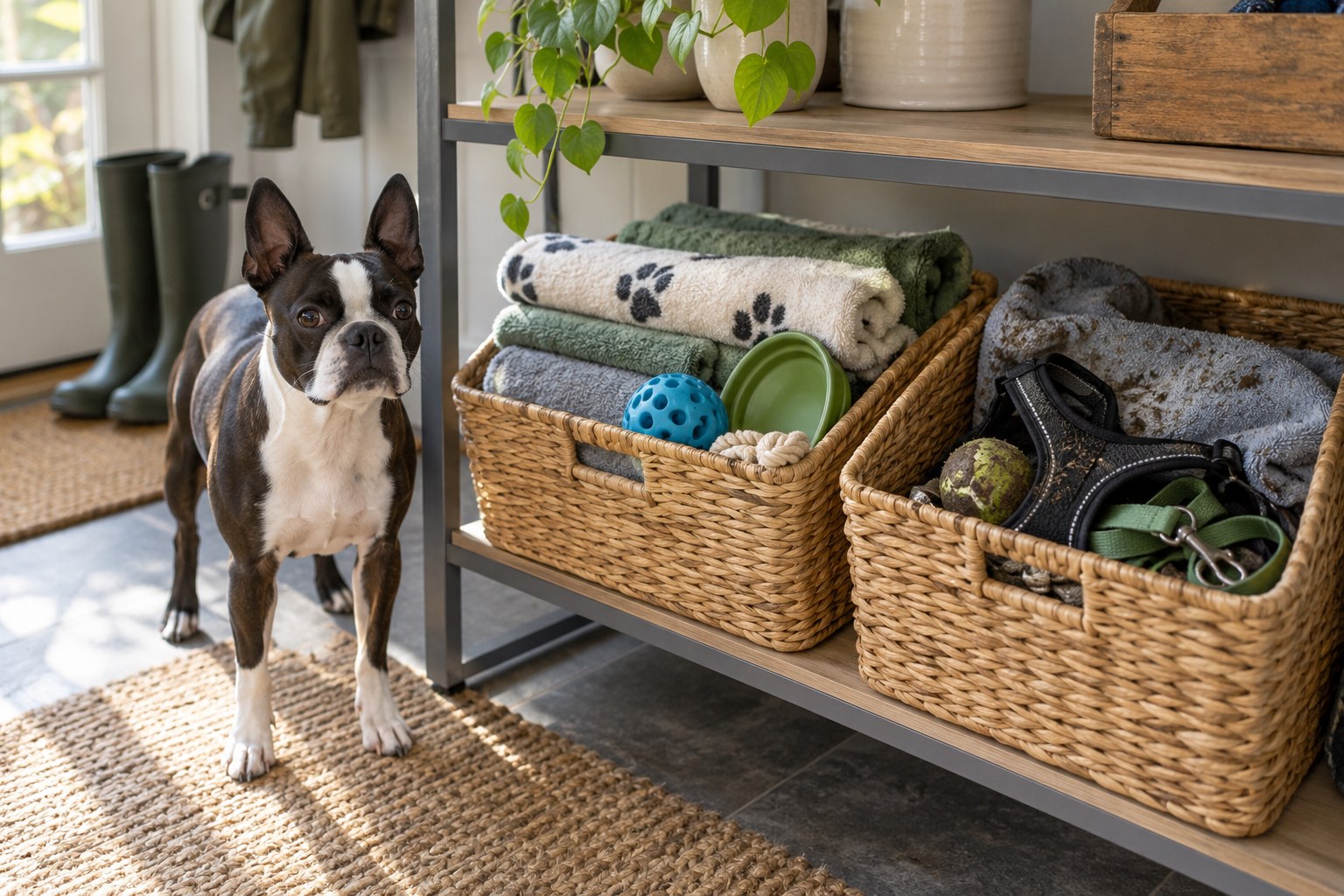
Divide the tasks into ready to use, awaiting cleaning and drying. These need not mean three large boxes. A hook, washable tray and open drying rack may be enough. Choose boundaries that someone else can understand immediately, particularly when several people care for the dog. Labels can be short and literal rather than an elaborate colour system no one remembers. Give the clean shelf enough clearance that another person can return a bowl without touching the used tray below it.
Give moisture somewhere to leave
Follow each item's care instructions before storage. Damp fabric needs an appropriate drying location rather than being folded into a sealed clean bin. CDC recommends following product instructions for pet supplies; a storage system should make that possible. Check whether your chosen tray or basket can itself be cleaned and dried, including beneath liners and around handles.
Keep food, rewards and medication separate from used walking equipment. Use original labels and storage directions where applicable. A single large dog cupboard may contain all these categories, but its shelves or containers should prevent a wet towel from being dropped onto supplies. Do not store cleaning chemicals in the same accessible basket just because they are used on dog items.
Choose visibility over excessive compartments
Arrange the clean area so that the everyday kit is visible when you open it. Put infrequently used equipment behind or above, with model instructions retained nearby. Deep opaque boxes can conceal a spare item until you buy another. A simple inventory note on the lid may be more useful than adding several more containers.
Create a clear space for equipment awaiting inspection or replacement. Keep it out of the ready-to-use area so a damaged lead cannot accidentally return to circulation. During a regular reset, empty the used tray, replenish consumables and inspect attachments. If a category repeatedly overflows, reduce the contents or change the container rather than simply adding another pile beside it.