Judge the artwork at wearing distance
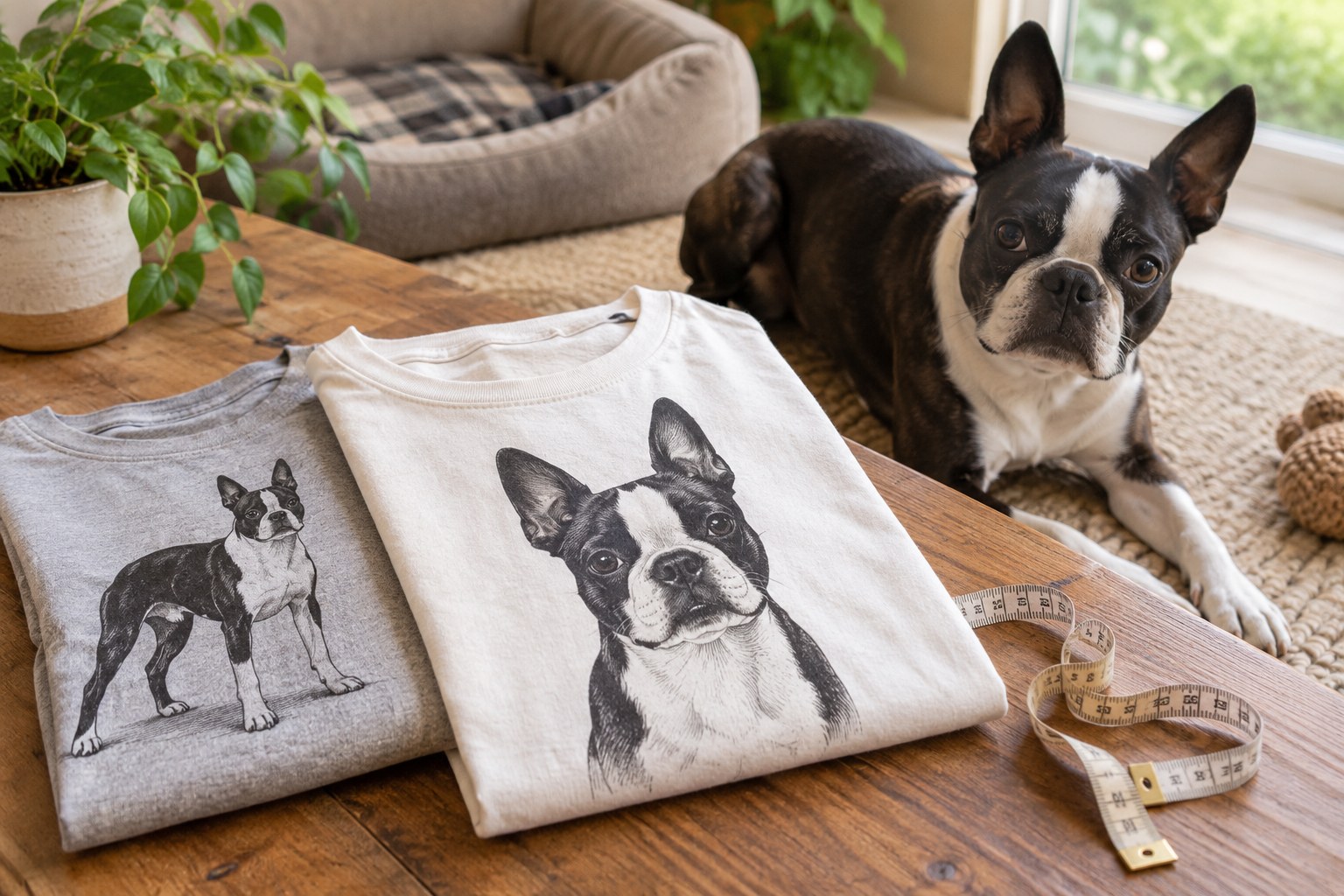
Look at the design as a small whole before zooming into its details. Decide whether the Boston Terrier remains recognisable at the size shown on the shirt. Thin lines, a dark muzzle and small lettering may be difficult to distinguish against certain fabric colours. Compare the actual available colour with the artwork rather than assuming the same graphic reads equally well on every option.
Check where the design sits. A large print can change its apparent proportions across a curved or loose garment, while a small chest design may be almost hidden under an open jacket. Ask for the print dimensions if the listing shows only a digital mock-up. Look for a photograph of a finished item to understand placement without treating a model's fit as your own size reference.
Use a shirt you already wear
Lay a comfortable T-shirt flat and measure the points used in the seller's chart. Common measurements include width and length, but the diagram determines exactly where to measure. Distinguish garment dimensions from body measurements. Compare the cut as well as the numbers: a fitted shirt, a straight shirt and a dropped-shoulder design can have similar widths but feel different when worn.
If you are between sizes, identify which part of the fit matters most instead of automatically sizing up. Consider shoulder position, sleeve length and how you usually wear the hem. Ask the seller about unclear chart details before ordering, especially for a personalised item. Avoid using the recipient's usual size from another brand as the only information for a gift.
For a gift, ask the recipient to compare a shirt they own with the same measurement diagram if possible. You do not need to obtain every body measurement when the seller uses garment measurements. Record the result beside the particular style, since a chart for another shirt in the same shop may differ. If a listing changes sizes between regional storefronts, verify the final checkout label and chart together. Keep your measured reference rather than trying to convert a familiar small or medium through an unrelated chart.
Keep the print and care details together
Read the fibre content and exact care label. Printful publishes different directions for different decoration methods, which is a reminder to check the specific product rather than applying one washing rule to all illustrated shirts. Note whether ironing, drying or washing restrictions affect your usual routine. Do not assume embroidery means the garment can take any wash cycle.
Save the listing, selected colour, size and artwork version with the order confirmation. If the product arrives with a different care label, ask the seller to clarify before washing. Check the print and construction while the item is still in the condition required by the return policy, then keep the instructions accessible for its first wash.