Check the journey's constraints first
Find the pet policy on the transport operator's own website before buying for a particular route. Look for carrier dimensions, permitted locations, booking requirements and any distinction between ordinary pets and assistance animals. Save the page for planning, but check again before travelling because conditions can change. A seller's claim that a carrier is 'transport approved' cannot speak for every operator or service.
Consider the route to the vehicle as well. Stairs, narrow ticket barriers and a walk from the stop affect how you will carry the dog and your other belongings. Work out which hand holds tickets or opens doors. If the bag has a shoulder strap, compare the packed weight and strap placement rather than judging comfort from an empty display model.
If your journey includes a transfer, check every operator involved. A bag that meets one service's dimensions may not meet another's, and a ticket for the person may not settle the animal arrangements. Write a short journey note with the relevant policy links and the contact channel for questions. Keep the distinction between a carrier used for public transport and a restraint system used in a car; a convenient travel bag does not establish that it is intended to secure the dog during a vehicle journey.
Measure the space the dog will use
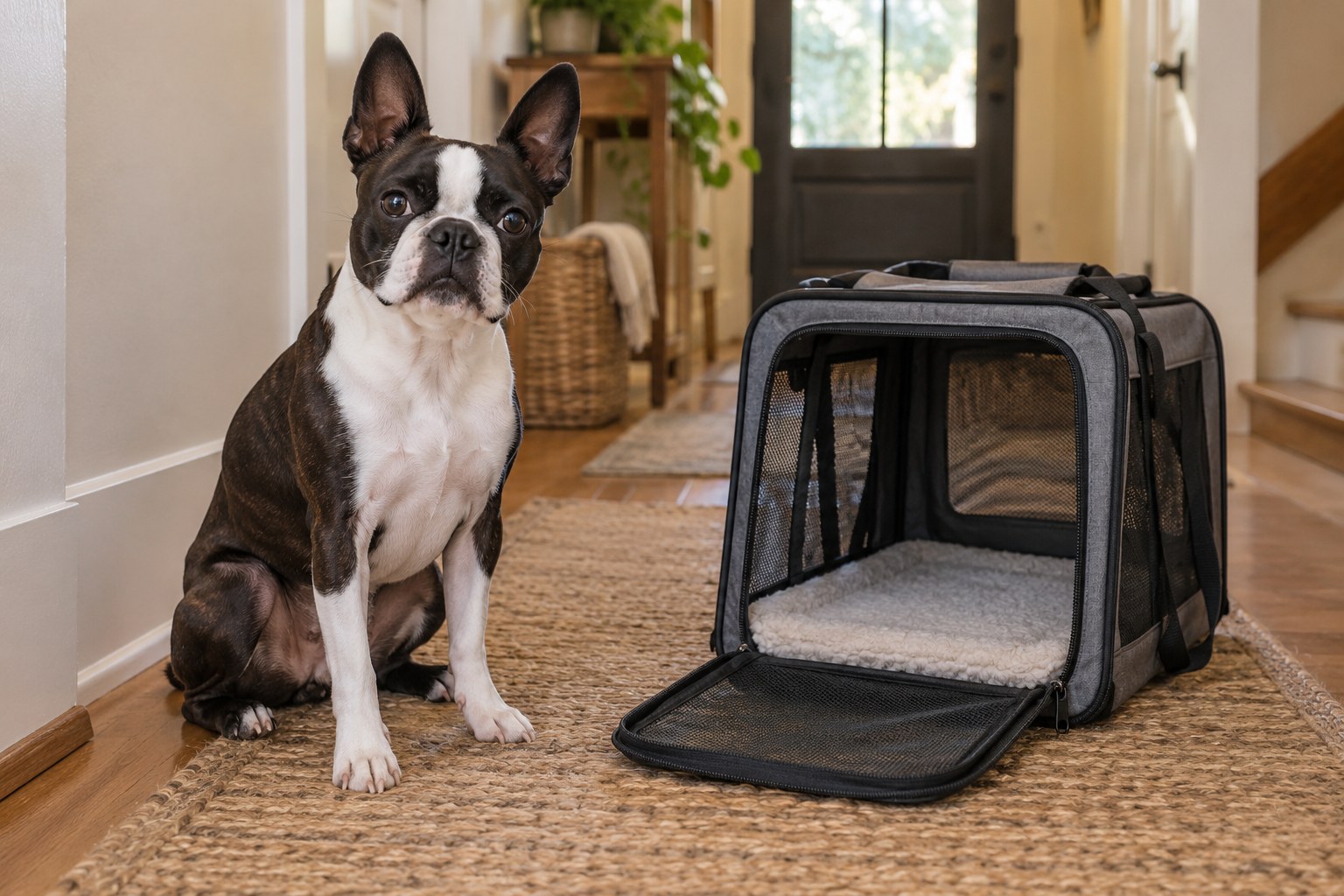
Follow the carrier maker's measurement guide and compare internal usable space, not only external dimensions. Padding, rounded corners and sloping walls can reduce the area inside. Check the stated weight limit separately from the size: being below that limit does not establish that the dog can fit comfortably. Ask about the intended positions and ventilation rather than assuming a soft bag stretches to accommodate any dog.
Examine the entrance. A wide opening can simplify a calm introduction, while a narrow end opening may require more manoeuvring. Check where the closure finishes and whether the dog can reach it from inside. Look for a clear explanation of any internal attachment; do not improvise by connecting a short strap to a collar or changing the supplied fittings.
Practise a complete short sequence
Introduce the carrier in a familiar space with its base supported. Let the dog investigate and practise entering before asking for longer periods inside. When the dog is comfortable with the steps permitted by the instructions, rehearse lifting, putting the bag down and opening it in a controlled place. Carrying practice should reveal whether the base sags or the bag tilts against your leg.
Plan a place to set the carrier down without blocking a passage. Keep ventilation panels clear of coats and luggage, and check that pockets cannot push objects against the dog. Have a lead ready for the transition out of the bag at the destination. If a short rehearsal is difficult, change the arrangement before attempting a crowded journey.
Give liners a place to dry
Finally, check the cleaning procedure for the base, liner and outer fabric. A removable insert only helps if it can be dried and refitted before the next outing. Store the carrier open and dry when the maker permits, with the manual available for anyone who may use it.