Look at the path to the food
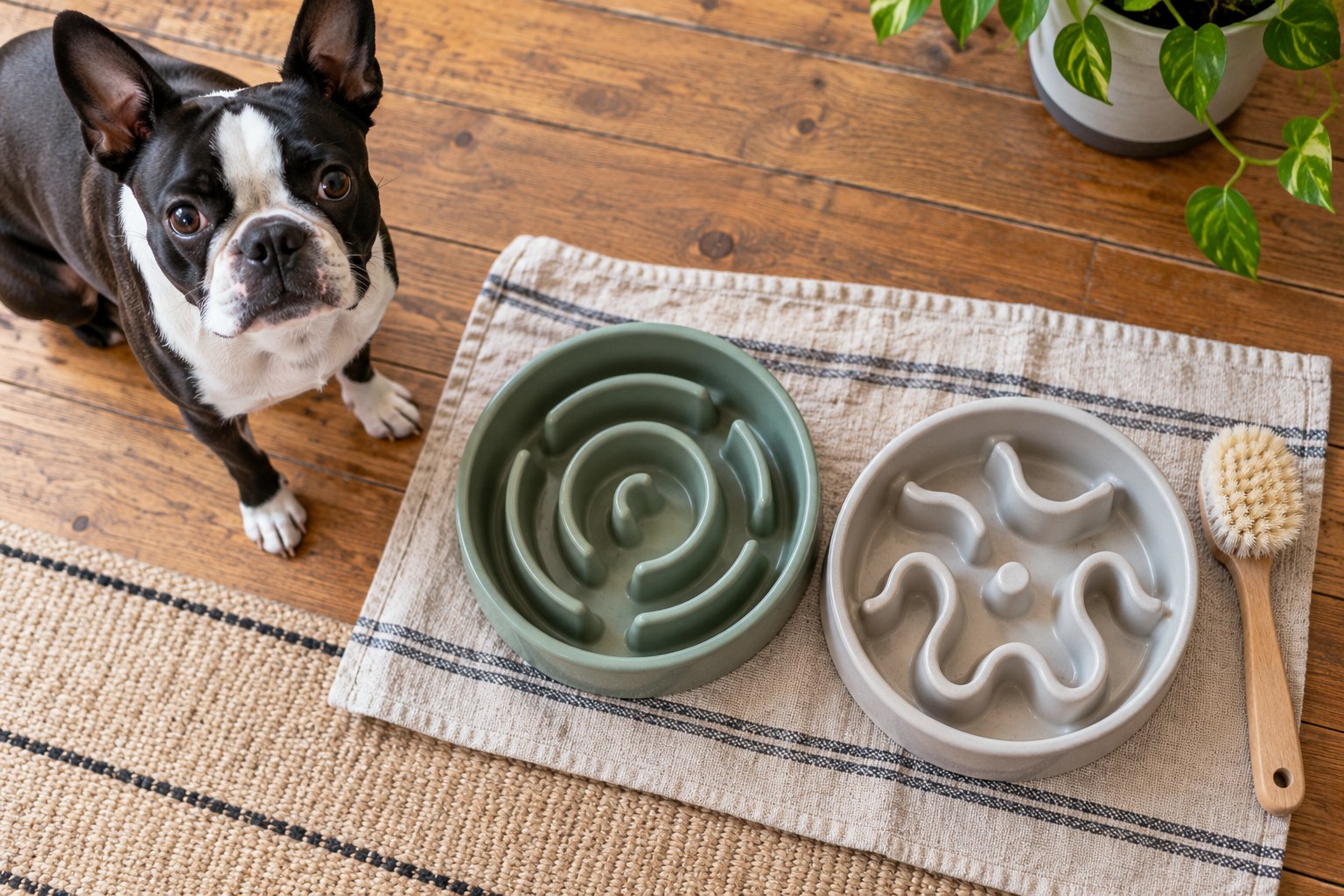
Examine the channels, raised sections and the distance between them. A photograph from above may hide deep narrow corners. Ask for dimensions and a side view if the listing is unclear. Consider your dog's muzzle and how they approach an ordinary bowl rather than choosing solely by the amount of food the product claims to hold.
Check the type of food the bowl is intended to accommodate. A channel that works with one shape or texture may be difficult to portion or clean with another. Do not use the container's maximum capacity as a feeding recommendation. Keep your dog's established feeding plan separate from the bowl comparison, and ask your veterinarian if you have concerns about eating speed, discomfort or swallowing.
Try the cleaning route and observe a meal
Before ordering, imagine reaching every channel with the cleaning tools you own. Look for removable parts, sealed edges and surfaces hidden beneath a base ring. A complex pattern can demand more careful washing than a smooth bowl. Check whether the item is dishwasher safe and whether parts must be removed; CDC advises using a dishwasher only for items labeled suitable.
Once it arrives, clean it according to the instructions and inspect it dry under good light. You should be able to see and reach where food will sit. Check the underside as well as the decorative face. Avoid stacking the bowl while wet if this leaves water trapped between components or against the storage shelf.
Introduce the bowl while you can remain nearby. Use the food and portion already appropriate for the dog, without packing extra food into every recess to make the pattern look full. Watch how the dog reaches the channels and whether the bowl stays in its intended position. Difficulty reaching food is a reason to reassess the shape, not to leave the dog struggling until they finish.
Record a specific observation, such as food remaining in a narrow corner or the bowl moving across the floor. That helps you compare a different shape without making a broad claim about all slow feeders. Inspect for chips, splits and worn surfaces during washing, and stop using a damaged item. The useful choice is one the dog can use comfortably and the household can keep clean.