Give the evening a short sequence
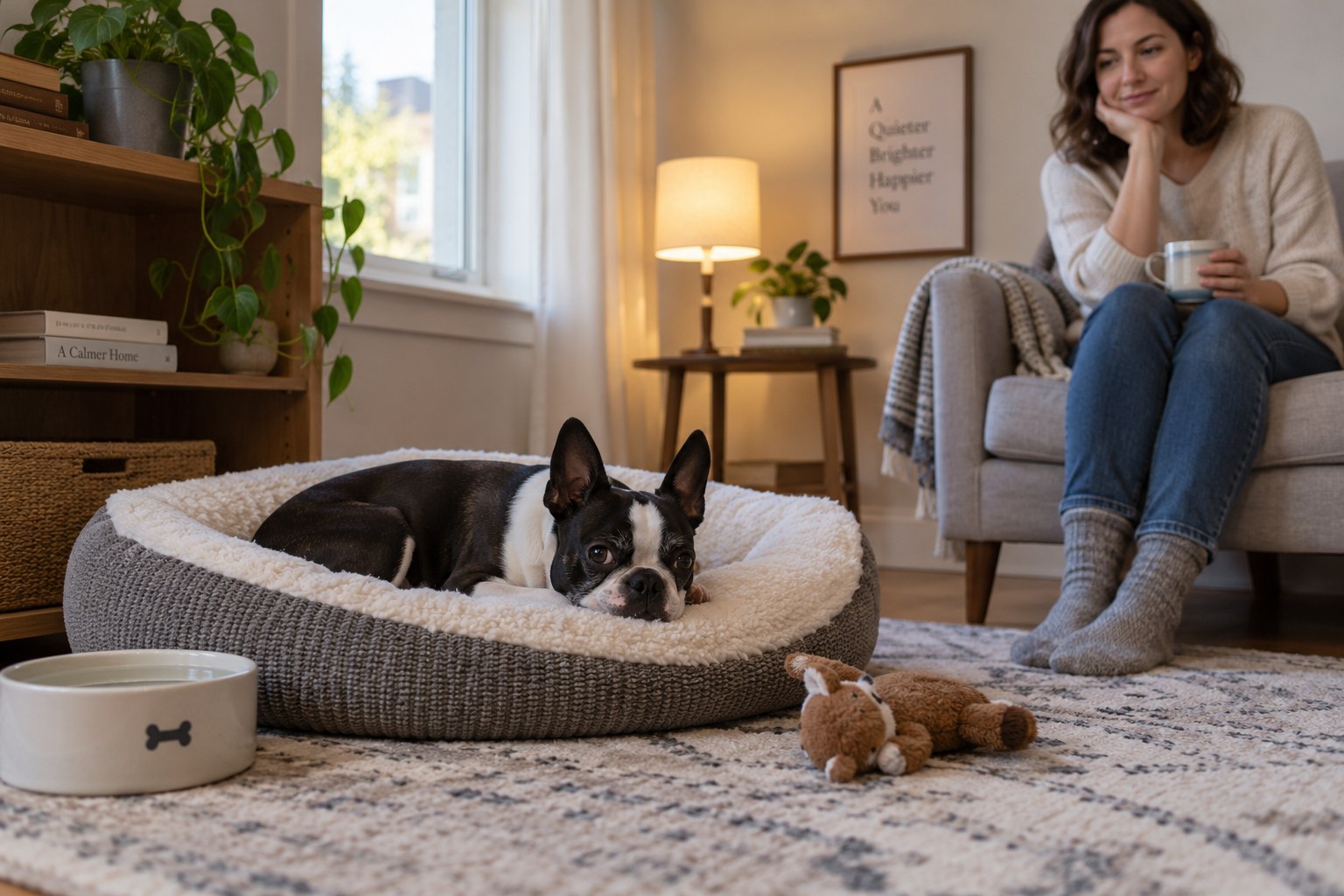
Before collection, choose the route from the entrance to the dog's agreed space and remove obstacles. Set out water and a familiar or suitable resting surface, and keep resident animals separately managed according to the plan discussed with the rescue. Put food and walking equipment where the responsible adult can reach them without leaving doors open.
On arrival, offer an appropriate supervised toilet opportunity, then enter calmly and let the dog explore the agreed area. Keep the leash or other management consistent with the rescue's instructions and the environment. Avoid opening every room at once merely to show the dog around. They can learn the household gradually while you establish how doors and boundaries work.
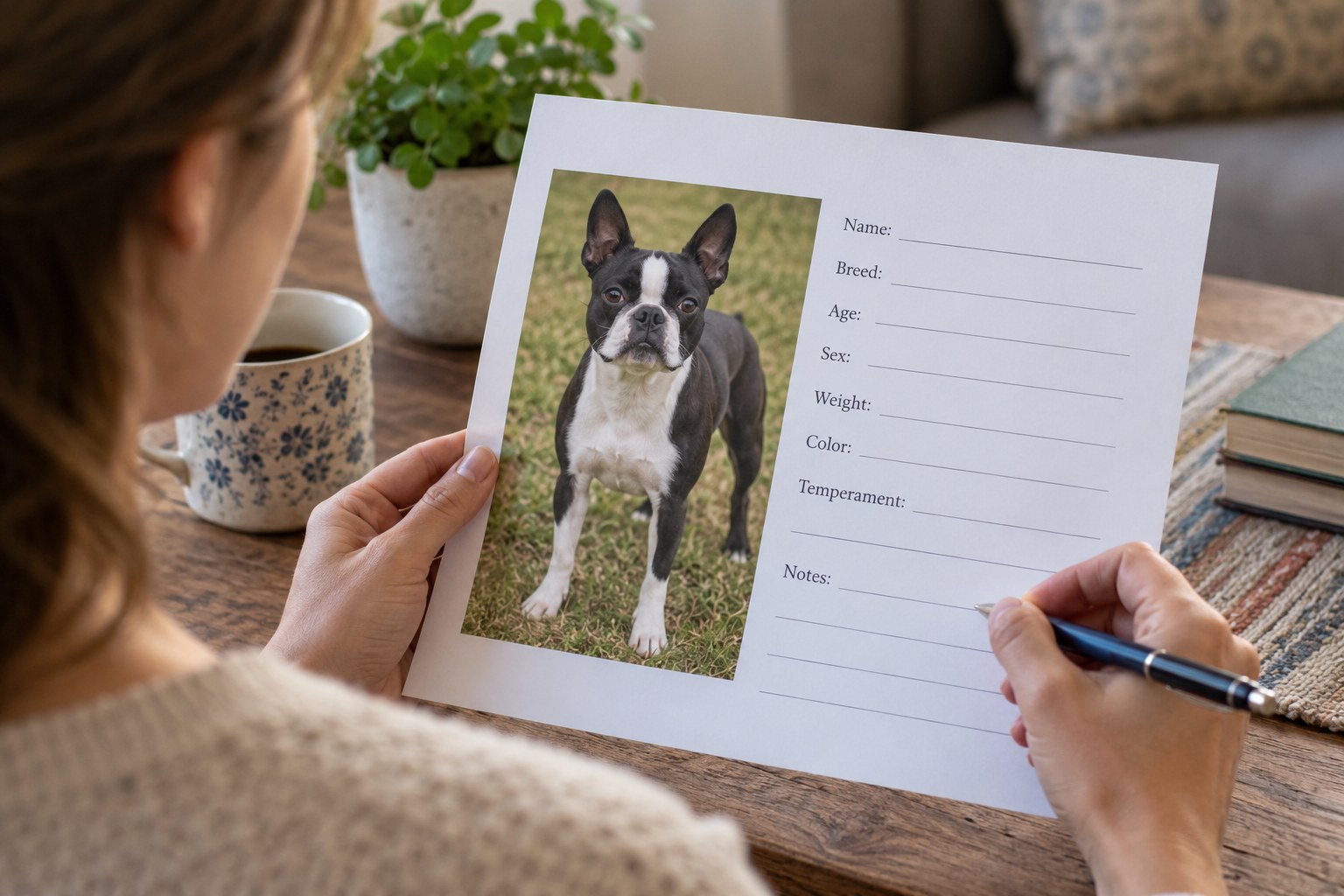
Serve the agreed food according to the current care information. Check who has already fed the dog during the handover or journey so the first meal is not accidentally duplicated. Follow prescribed medication directions exactly and contact the responsible clinic if information is unclear. Put completion times in the care record for the next person.
Allow rest without asking for repeated cues or contact. The RSPCA's safe-space guidance supports leaving a resting dog undisturbed. Sit at a comfortable distance if that suits the dog, and let them move away rather than following them from bed to bed. Quiet company does not require continuous stroking.
Keep the household's expectations small
Tell friends and relatives that visits can wait. Take a photograph only if it does not interrupt the dog, and avoid a stream of introductions by video call. Children should have an adult-directed activity away from the resting area and clear instructions about leaving the dog space. The adults remain responsible for supervision and barriers.
Do not interpret the evening as a test of the dog's permanent personality or training. A different home, journey and unfamiliar people create a new context. Record what you actually see and use the rescue's support route for questions. Contact a veterinarian promptly for health concerns rather than attributing every change to settling in.
Before bedtime, agree who handles the next toilet outing and where the dog will sleep under the current plan. Keep equipment ready and secure external doors. If the arrangement is not working, prioritize safe management and ask the rescue for advice rather than inventing a rigid timetable the dog must follow.
Check the record once more before handing over to another adult. What was eaten, when the dog went out and any question needing follow-up are the useful facts. A first evening can end with uncertainty and still be well managed if the dog has care, space and a clear plan for the night.