Look for the features that carry the likeness
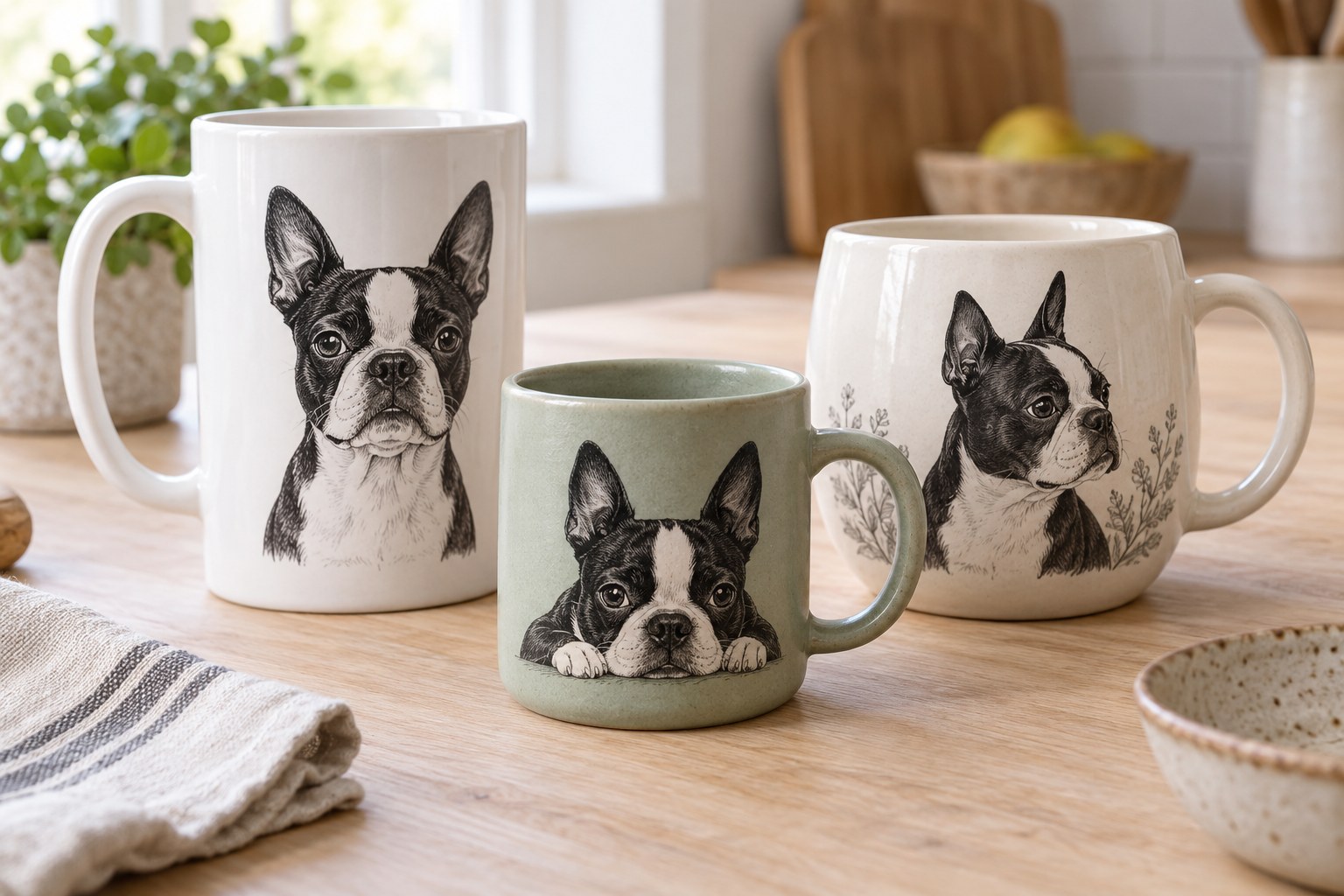
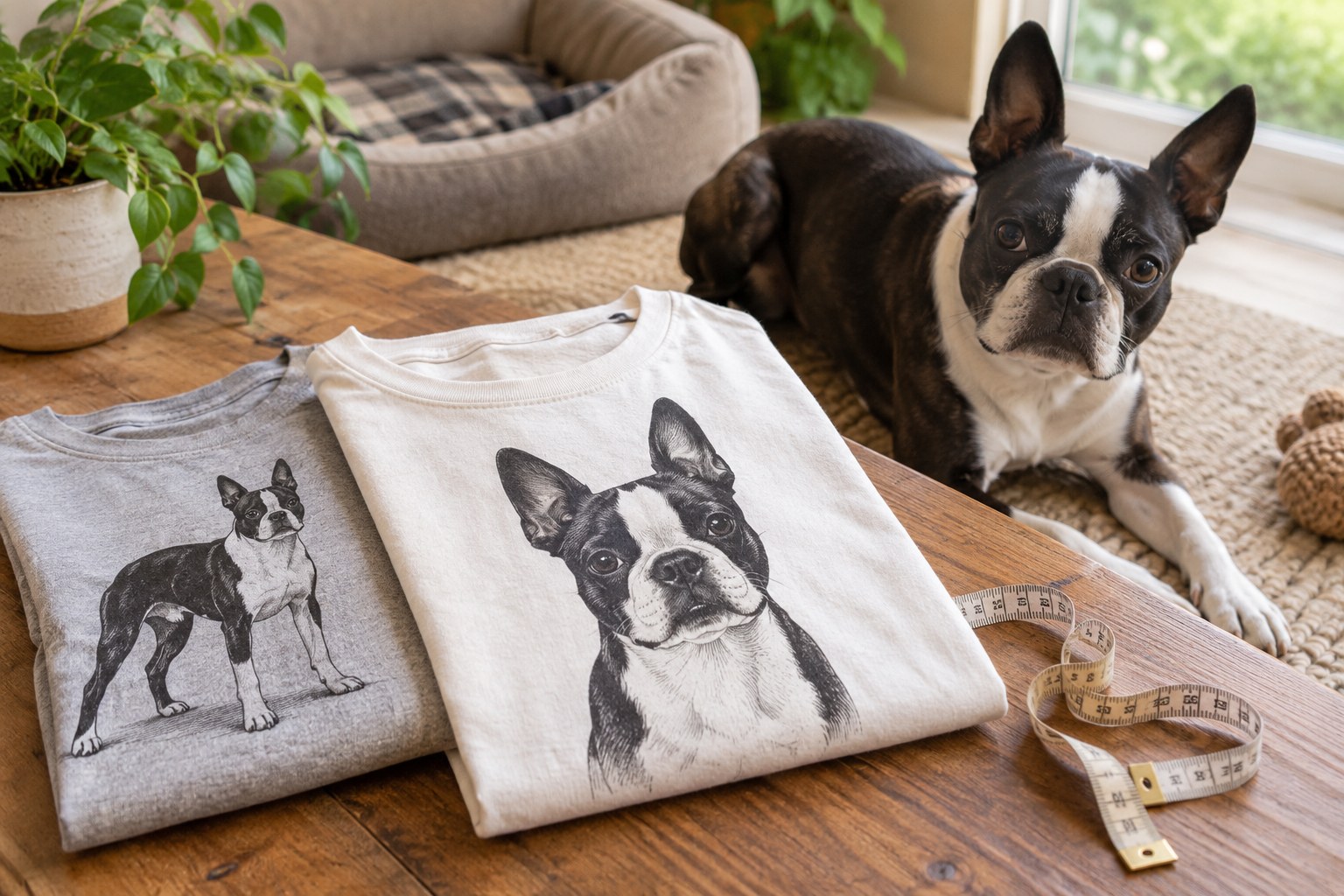
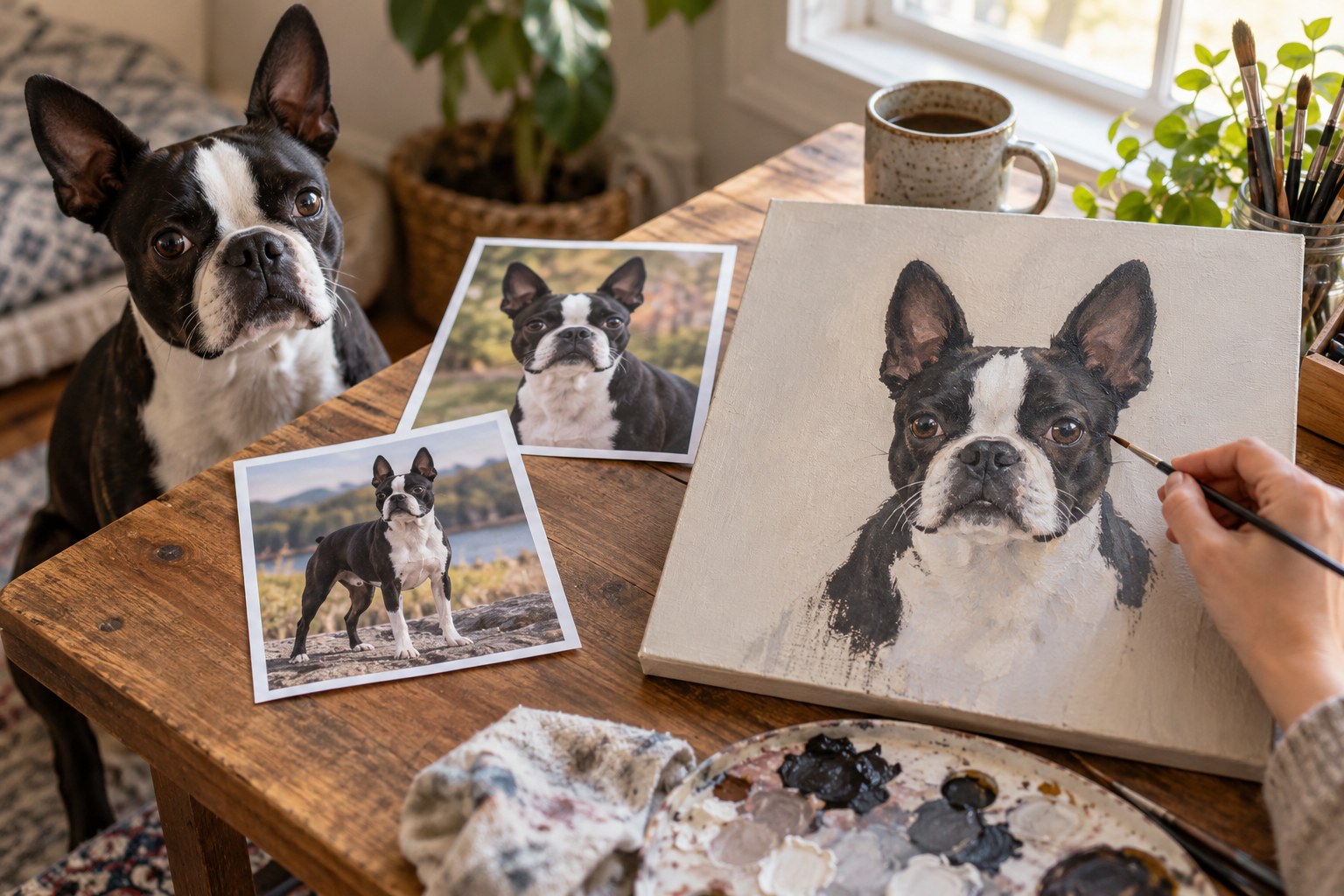
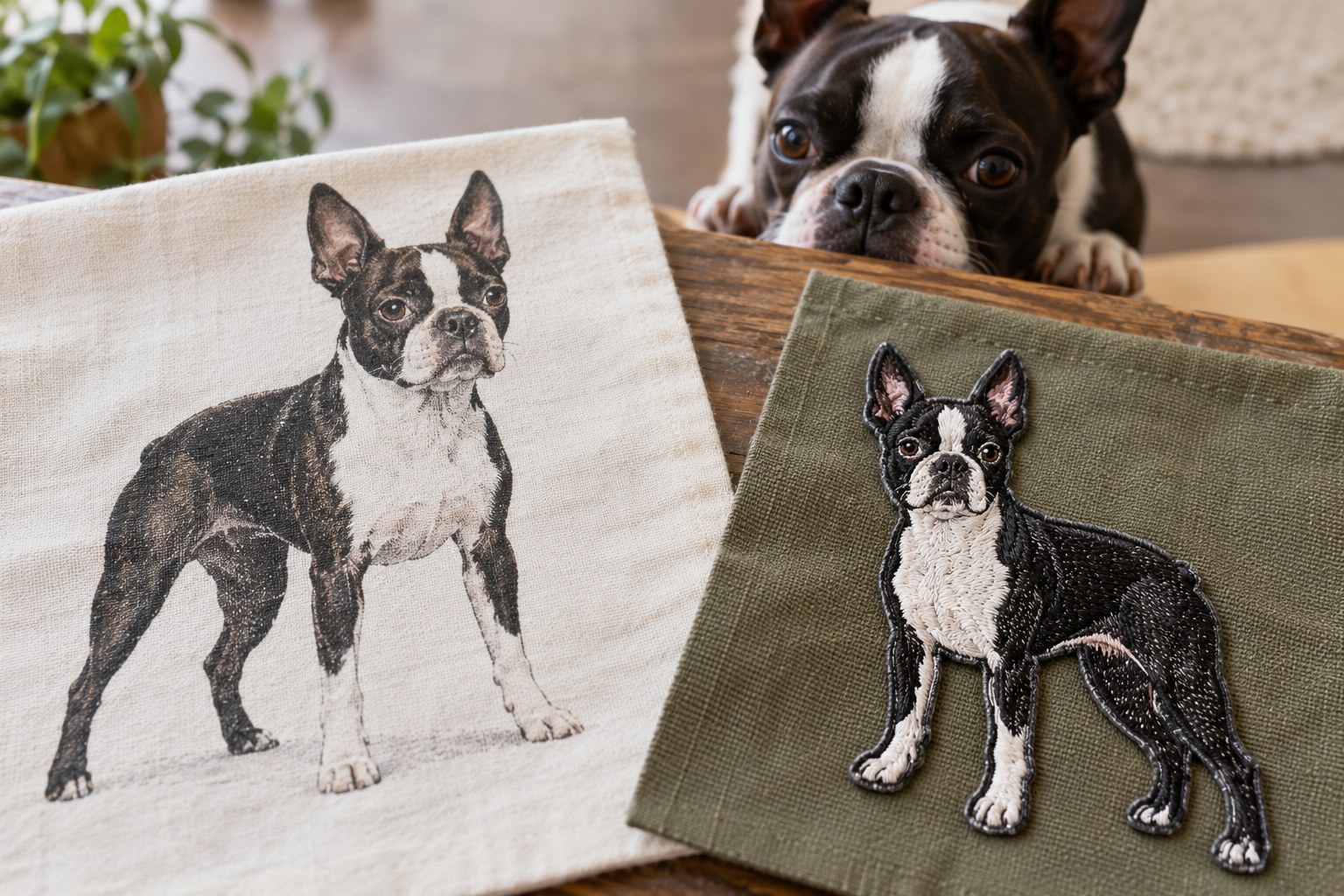
Identify what makes the image recognisable: the outline of the ears, the muzzle, a white blaze or the relationship between head and body. Then examine how those features are represented in the listing. A design may depend on soft shading and fine whisker lines, or on a few solid shapes. Those different drawing choices matter when the artwork becomes thread or ink.
Printing can encompass several processes, so read which one is offered rather than assuming all printed objects share the same surface. For embroidery, look for an actual stitched photograph with a close-up and a full-item view. A digital mock-up can show placement but may conceal how small facial details are resolved in the final stitching.
Ask about detail at the intended size
Printful's embroidery guidance recommends simplifying fine detail and avoiding very small, thin lettering. The useful principle for a buyer is to inspect the actual result: can you distinguish the eye, ear and muzzle without zooming in? Do not apply one supplier's numerical design limits to every embroiderer, fabric and machine. Ask the seller about their own sample and specifications.
Compare the design dimensions, not only the garment size. A small stitched chest emblem may suit a bold silhouette, while a larger panel offers more room for detail. Check lettering separately from the dog. A name that looks readable in an enlarged preview may become cramped in the offered physical area, especially if it is longer than the sample name.
For a personalised design, request a proof of your exact name in the chosen technique and location. A short sample name does not show what happens to a long one. Ask whether lettering is resized, rearranged or placed on a second line. Consider the whole dog-and-text relationship: making the name larger may leave less room for the ears or body. Review the layout once as a whole object and once close up, using both views to identify a specific change.
Consider placement, texture and care
Think about where the decoration touches or folds. Ask about the reverse of an embroidered area if it will contact skin, and check the garment's own construction information. For a bag or cushion, look at the finished seam and closure as well as the illustration. A decoration technique cannot compensate for a product whose shape does not suit its job.
Read the exact care instructions and save them with the order. Do not choose one technique on an unsupported promise that it always lasts longer. The material, design, manufacturing and use all remain relevant. If you are ordering several items or an expensive personalised piece, ask whether a sample or finished example is available before committing to the full order.