Watch the room before moving the bed
Spend part of an ordinary evening noticing where people walk. The space beside the sofa might look secluded until someone goes to the kitchen every few minutes. A corner behind a dining chair may become inaccessible when everyone sits down. Choose a position with an open approach that stays clear during the activities you actually do.
Check the spot at different times. A sunny window in the morning may become uncomfortably warm later; a quiet study may contain a loud printer during work hours. Put your hand on the floor, look for loose cables and check that curtains or doors cannot fall across the bed. Keep water accessible without putting a bowl where a sleepy dog has to step through it.
Make leaving as easy as arriving
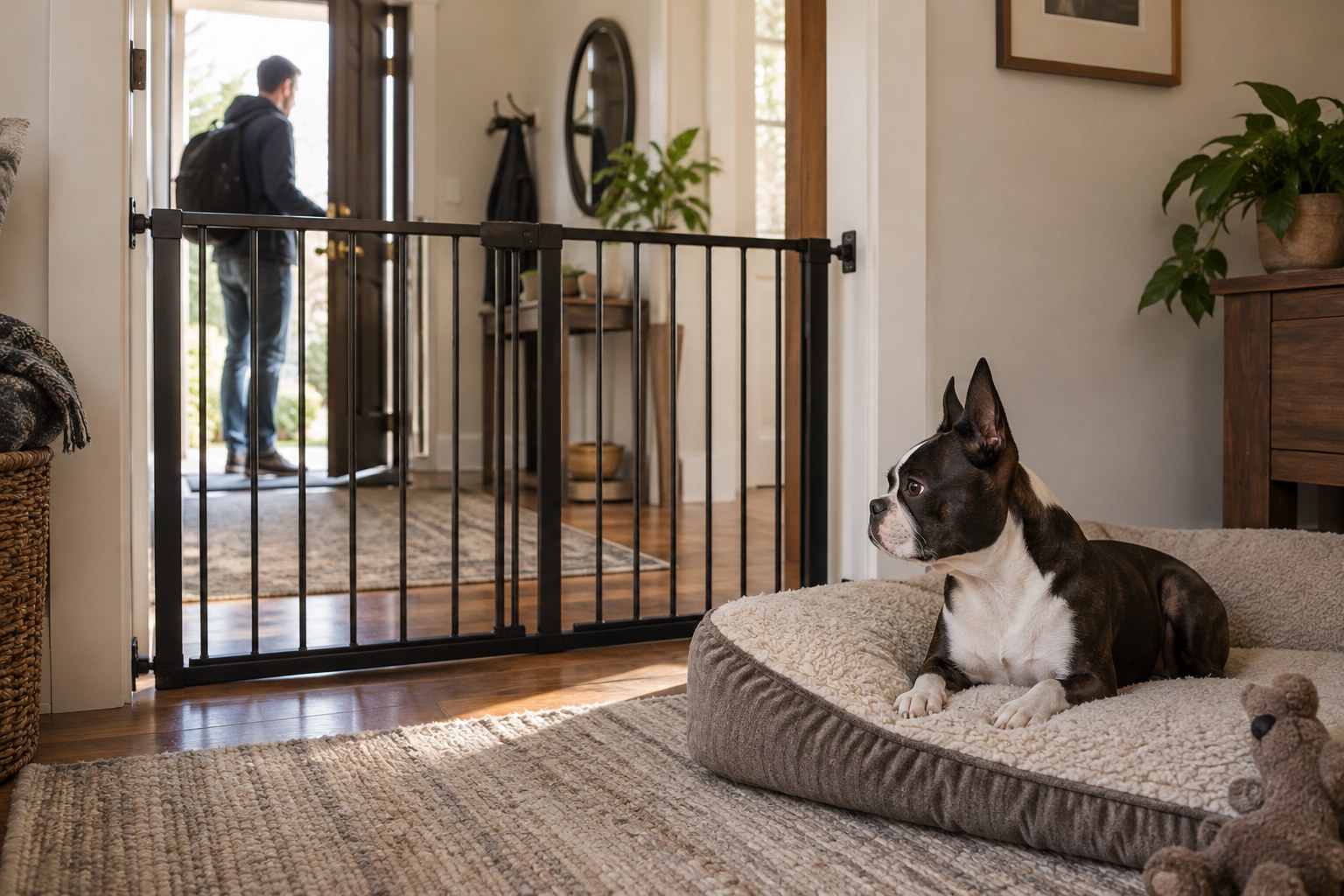
The RSPCA's safe-space guidance emphasizes voluntary access and undisturbed rest. For an open bed, leave enough floor around it for the dog to stand and turn without squeezing between furniture. If your Boston already uses an open crate comfortably, position it with ventilation and a clear exit; covering it should not make the interior hot or stuffy.
Invite exploration with a familiar blanket or a reward placed nearby, then leave the decision to the dog. Do not repeatedly carry them into the new spot, close them in to make them accept it, or pull them out to greet visitors. A dog who chooses another quiet place may be giving you useful information about your first choice. Try changing the location before buying another bed.
Give the people one clear rule
Agree that a dog resting in this area is left alone. Children can tell an adult if the dog needs attention rather than approaching the bed themselves. Explain the same rule to visiting adults who might otherwise lean over to stroke a sleeping dog. Put toys for shared play somewhere else so the resting corner does not become the center of every game.
Clean the space when it is unoccupied and return its familiar items afterward. If several dogs live together, provide separate options so one animal cannot block another's access. Review the arrangement after moving furniture or changing work hours. A short note such as 'the vacuum stays outside this room during afternoon rest' can solve a recurring interruption more effectively than moving the bed again.