Describe the action before choosing the word
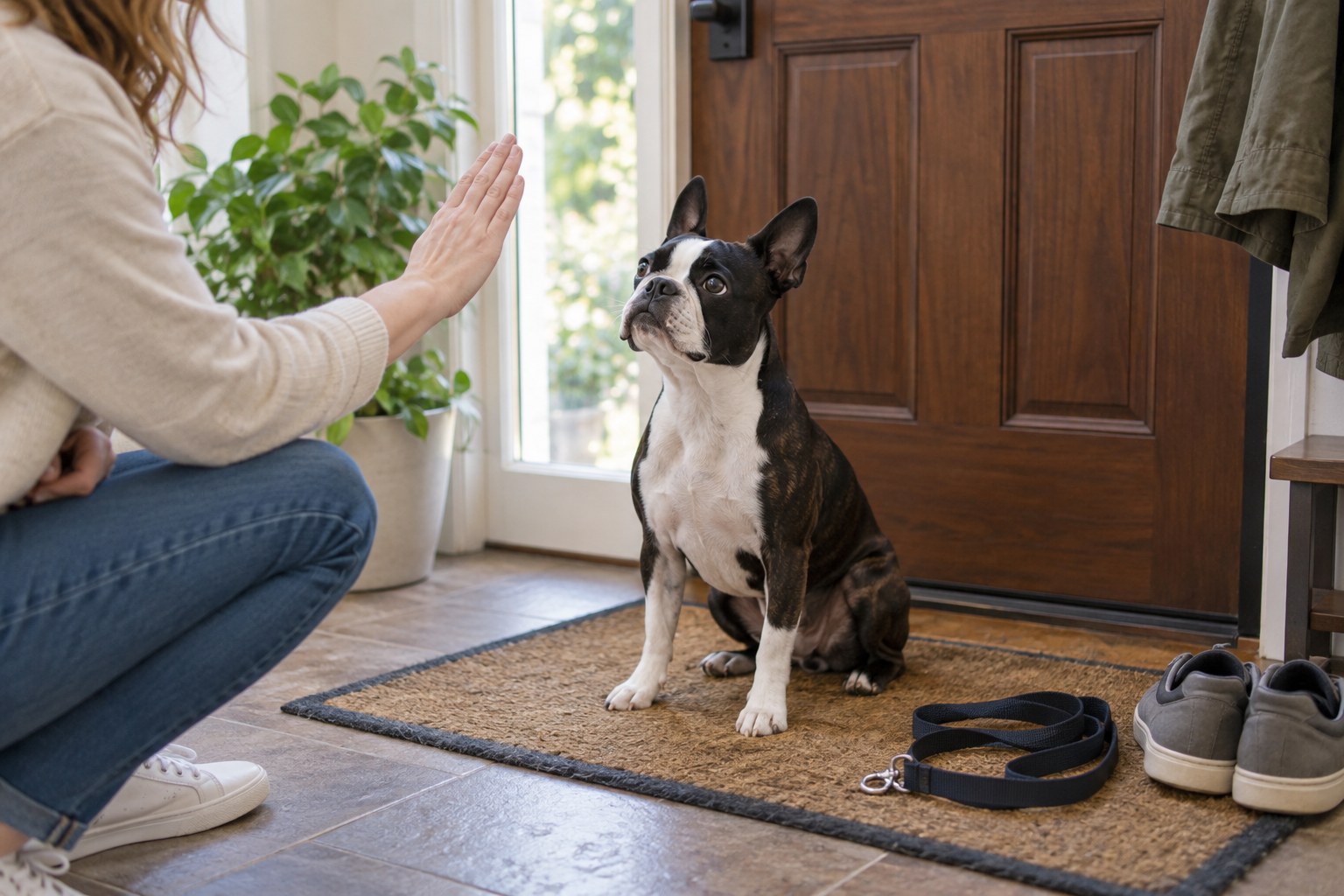
Write what you want the dog to do in observable terms. 'Be good at the door' is vague; 'stand on this mat while the harness is picked up' gives people something specific to teach. Decide where the mat goes, which person handles the equipment and how the dog is released to move again. Keep the first version short enough for your Boston Terrier to succeed.
Choose a cue the household can use consistently. If 'down' means lying on the floor to one person and getting off the sofa to another, choose separate words for those actions. Include the hand movement if you use one. A written note helps a new sitter understand what the dog has learned without guessing from your vocabulary.
Practice before the busy moment
Work on the action when nobody is rushing out. Start in an easy setting, use a reward your dog values and reward the part they can already manage. The RSPCA recommends reward-based training in short sessions with few distractions. Keep that principle while adapting the exercise to your actual hallway rather than expecting a demonstration from a video to fit your home exactly.
Let the dog move away between attempts. If reaching for the leash causes excited jumping, begin with a smaller movement and reward the moment your chosen behavior happens. Do not keep repeating a cue louder while the dog does something else. Pause, make the setup easier and work out which part has become difficult. A qualified reward-based trainer can help when you cannot find a manageable starting point.
Teach the humans the same sequence
Give each caregiver the same three pieces of information: the cue, the action and the reward or release. Someone who rewards before the dog reaches the mat is teaching a different sequence from someone who waits there. Practice together once so these differences are visible before they become daily frustration.
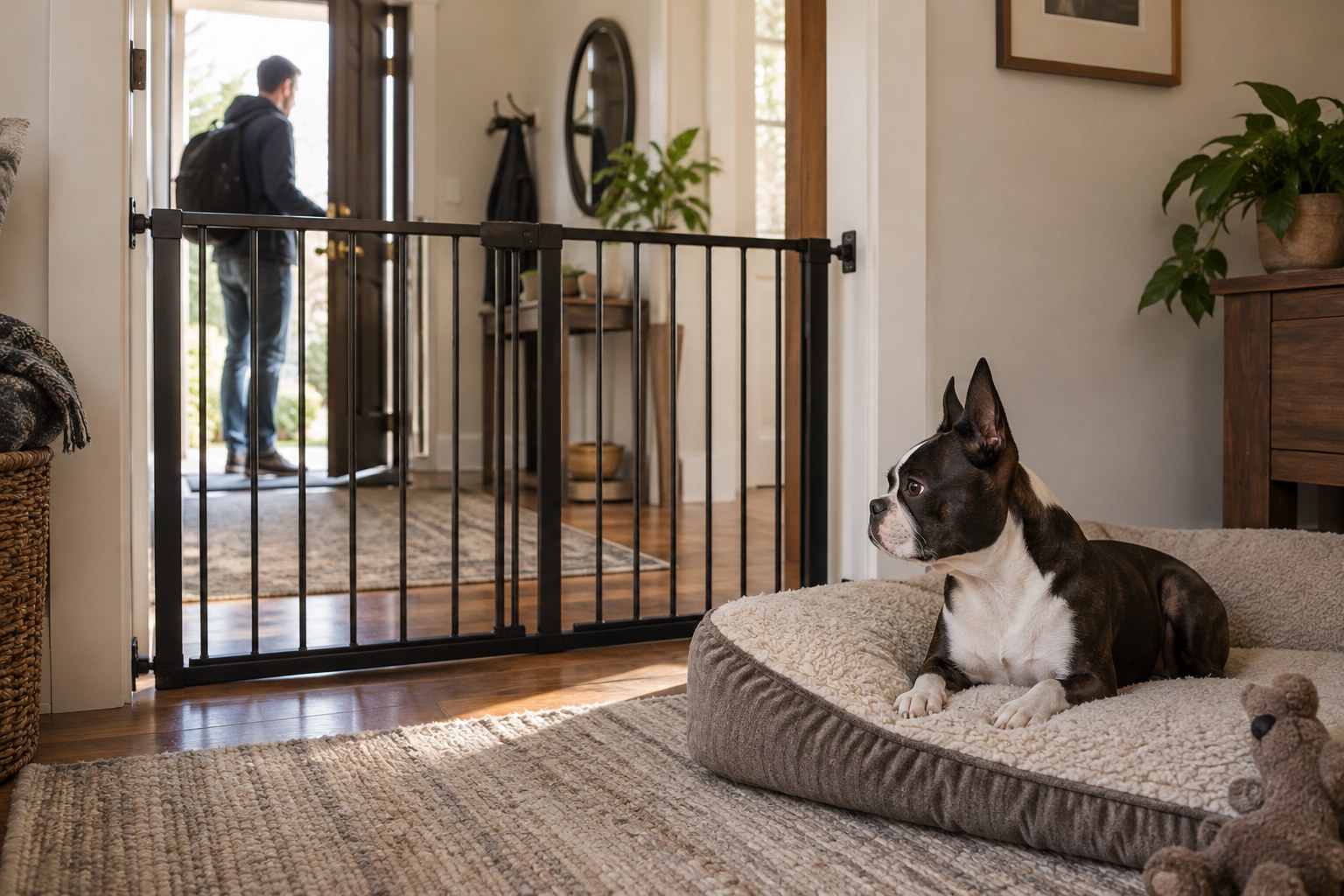
Keep physical management separate from training. Closing a secure interior door while you answer the entrance can prevent an escape while the new routine is still being learned; a cue alone should not carry that responsibility. Add distractions gradually, such as a coat being picked up, rather than testing everything at the busiest hour.
After a week of use, ask which step people skip and why. If the mat obstructs a cupboard or rewards are stored upstairs, change the arrangement. A workable routine supports consistent behavior from both dogs and people; it should not require a perfectly staged household every time someone leaves.