Walk the boundary before opening the door
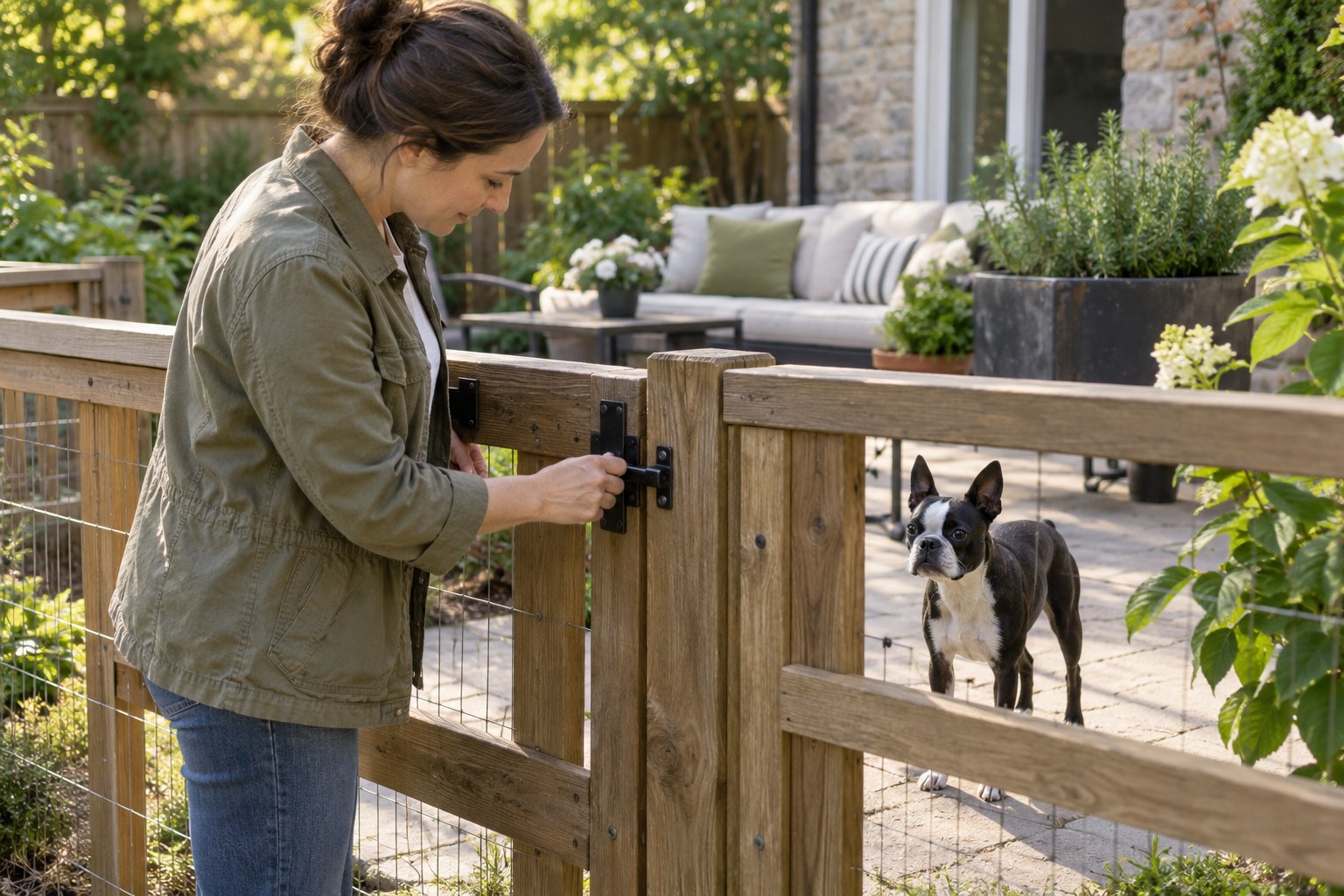
Check gates, latches, fence bases and gaps behind stored objects. A delivery, repair or gardener's visit may have changed something without leaving an obvious sign from the house. Look from your Boston Terrier's height, including under steps and around drain openings. Move furniture that creates an easy route over a low barrier.
If the boundary is uncertain, use an appropriate leash and stay with the dog rather than testing whether they will leave. A hedge or an open driveway is not a secure enclosure. Tell everyone who uses the gate how it must be closed and check that a latch can actually be operated from both sides when needed.
Check the surface and what is within reach
Remove dropped food, sharp fragments and loose rubbish. Check stored tools, cords, plant supports and containers that can tip. Cover or prevent access to pools, ponds and other water hazards with appropriate physical arrangements; being small or shallow-looking does not make an unknown water feature suitable for play.
Identify plants before allowing access rather than assuming an ornamental planting is pet-safe. Store garden chemicals securely, and follow product directions about keeping pets away from treated areas. The AVMA specifically advises checking plants and observing garden-product safety instructions. Ask the person doing the work what was used and when the area can be entered; a dry-looking surface is not a substitute for that information.
Plan shade, water and an exit
Watch how sun and shade move across the area. A shaded corner at breakfast may be fully exposed by lunchtime, and paving can feel different from the air. Keep water accessible and allow the dog to return indoors. Arrange furniture so the way back does not pass through a closed gate or around a crowded table.
Keep activity appropriate to the conditions and the individual dog. A garden is not automatically gentler than a walk if the dog is racing around or becoming overheated. Follow veterinary advice for your Boston's health and contact a veterinary service promptly for concerning changes in breathing or comfort.
Repeat the short check when circumstances change
Supervision means someone is able to watch and act, rather than noticing the dog occasionally through a window while cooking. Keep an appropriate leash nearby and decide where the dog will be during deliveries, maintenance or visitors arriving with their own animals.
After strong wind, building work or an outdoor meal, repeat the boundary and surface check. Keep a small list of recurring concerns, such as the gate that rebounds or the planter guests move aside. Fix the cause where possible. An outdoor space becomes easier to manage when the household knows which checks matter and does them before the dog reaches the area.