Match the reward to the action
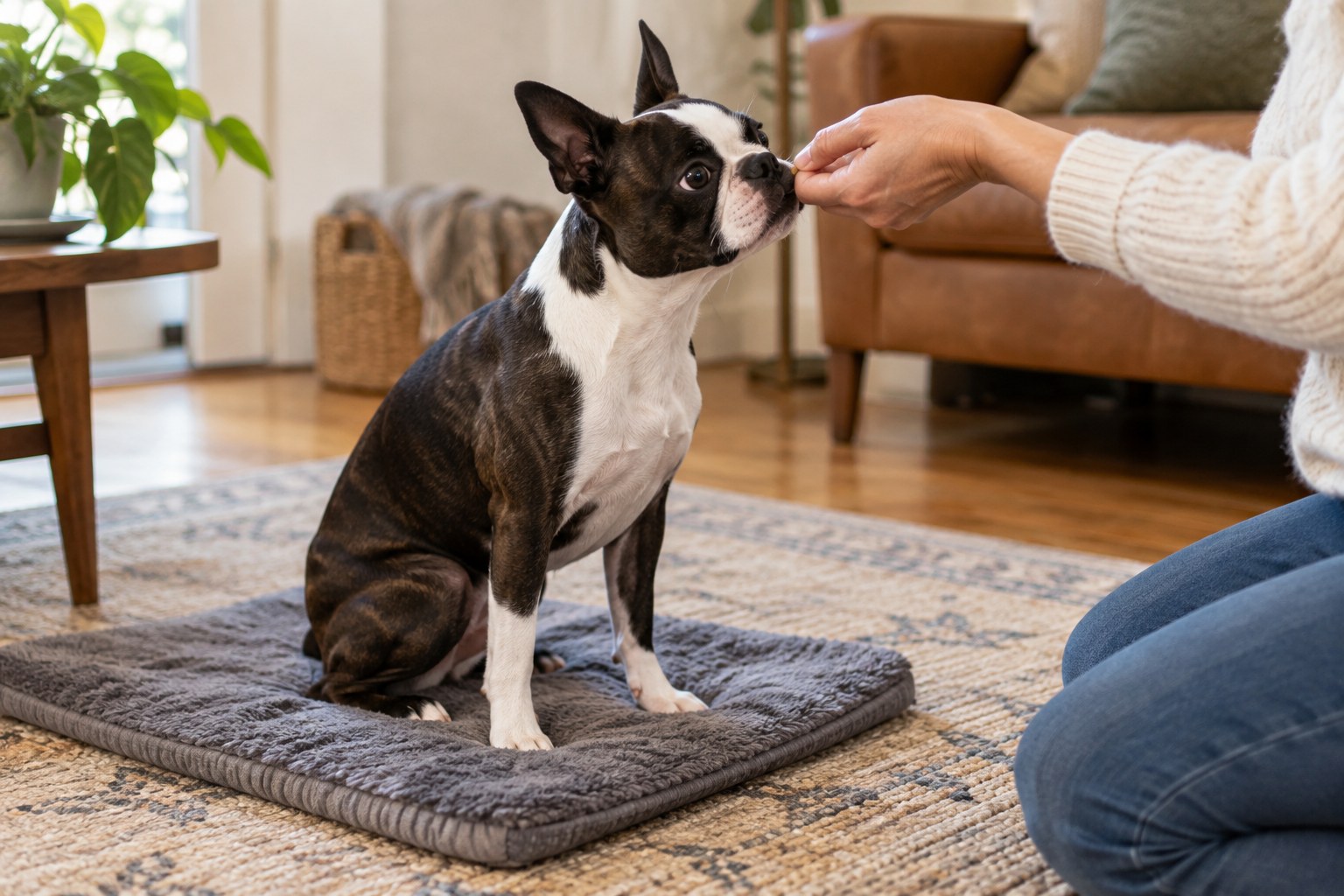
If you are rewarding standing on a mat, offer the reward where the dog can receive it while remaining there. Reaching well outside the mat can encourage stepping off, even though your intention was to reward staying. For an exercise that ends with moving away, use a clear release before placing a reward elsewhere. Separate those two jobs so the dog is not asked to guess which applies.
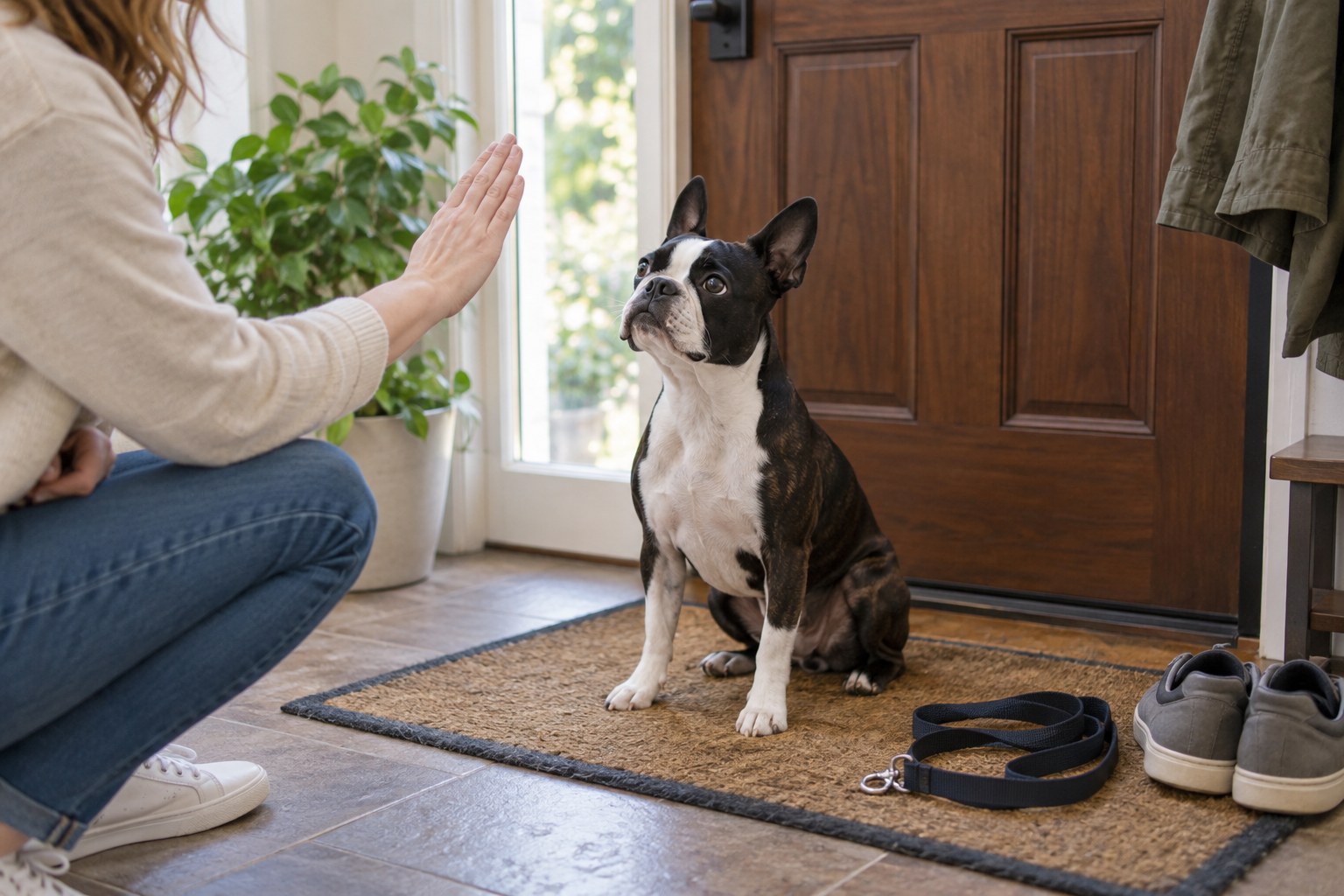
Watch your own hands before blaming the dog for a changed position. A raised hand may invite jumping; a hand that retreats can produce following. Practice the movement without the dog once or twice to see whether it is comfortable and repeatable. Use an appropriate reward size and keep fingers positioned safely.
Begin where the floor helps you
Choose a familiar quiet area with a surface that allows comfortable movement. Avoid narrow furniture gaps, slippery flooring or a place beside another dog's food. Position yourself so you can deliver the reward without leaning over or cornering your Boston Terrier. Keep the reward container reachable but closed enough to prevent the dog helping themselves.
The RSPCA recommends short, reward-based sessions with few initial distractions. Set up only what you need for the current exercise. If food on the floor disappears under a cabinet, change your position rather than sending the dog after it repeatedly. Remove leftovers before another pet enters.
Change the delivery deliberately
Once the dog understands the basic task, consider whether another reward location serves your next goal. A reward near your leg may support returning to that position; a tossed reward may reset the dog for another repetition if movement away is part of the exercise. Make a small change and observe rather than introducing distance, a new surface and a busier room together.
Do not use placement to lure a worried dog into contact they would otherwise avoid. A visitor offering food from their hand can bring a dog closer than they are comfortable being once the food is gone. Give space and seek qualified guidance for fear or aggression instead of treating reward location as a universal solution.
End with information you can reuse
A session can stop after a few clear repetitions. Note what you rewarded, where you delivered it and whether the dog could remain comfortable. That small record is useful when another caregiver takes over or when you cannot remember why an exercise worked last time.
If your hands are full, pause before starting another cue. Training does not improve through frantic delivery. Put equipment away, allow the dog to rest and ask a reward-based trainer for help if the exercise remains confusing. The useful position is the one that supports the behavior without creating another demand the dog cannot manage.