Separate the pieces before planning the wash
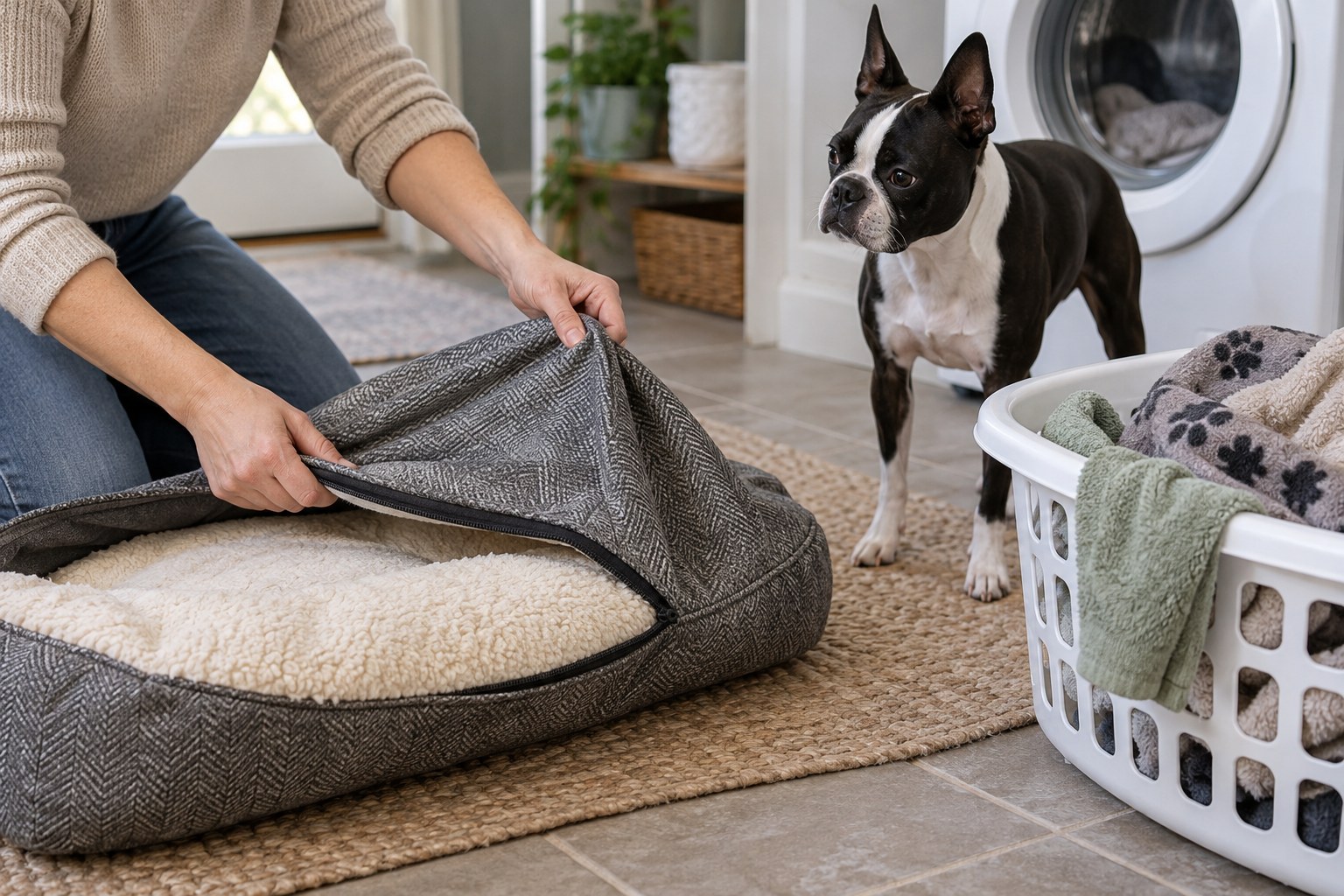
Identify the outer cover, inner cushion, waterproof layer and any removable insert. Check each label because one washable component does not make the entire bed machine washable. Photograph instructions that are likely to fade, and note whether zips should be closed or fillings removed. Look at the maximum load your machine can handle before forcing a large padded cushion into it.
Shake or remove loose debris in an appropriate place and inspect for damaged seams. A tear that was small before washing may release filling during the cycle. Repair it if that is suitable for the product, or replace the damaged part before returning it to a dog who might pull the filling out.
Keep a spare that the dog can actually use
Set out the alternative resting surface before you remove the main bed. A familiar clean blanket on a suitable cushion may be enough; a very thin towel on a hard floor may not serve the same purpose. Place the spare where the dog normally rests, with a clear route around it.
For a household with more than one dog, avoid turning wash day into a competition for the only remaining bed. Rotate the cleaning or provide enough separate resting options. If a dog has specific support, skin-care or post-operative instructions, ask the veterinary team what substitutions and cleaning products are appropriate rather than improvising from general laundry advice.
Make drying part of the schedule
Follow the care directions for water temperature, cleaning product and drying method. Measure detergent rather than adding extra to cover an odor, and avoid fragranced additions simply to make the bed smell freshly cleaned. Keep detergents and wash water away from the dog. Check that any washable protective layer is returned in the right orientation when you reassemble the bed.
An outer fabric can feel dry while thick filling remains damp. Allow enough drying time for the entire item, opening or separating components as instructed. Do not put a damp cushion back inside a closed cover because the surface seems acceptable. If your home has limited drying space, cleaning smaller components on different days may be more workable than washing everything together.
Use a trigger you will remember
Choose a regular check alongside another household task, and wash sooner after accidents or heavy soiling as needed. Inspect the underside, the floor beneath the bed and the corners where hair collects. Keep a clean blanket available for the occasions when the planned wash cannot wait.
Persistent odor, repeated unexplained soiling or a change in your dog's comfort deserves investigation rather than stronger perfume. Note what changed and seek veterinary advice for health concerns. A useful laundry routine leaves the dog with clean, dry bedding and leaves you enough time to complete the job without rushing the final stage.