Inspect it before asking the dog to play
Read the intended use and supervision instructions, then examine seams, attachments and any opening where food is inserted. Compare the actual object with your dog's mouth and way of playing, rather than relying on a breed label printed on the package. Remove packaging, tags and fasteners completely. Keep the receipt and product details until you know the item is suitable.
Test any movement or sound yourself at a distance from the dog. A toy that suddenly rolls across hard flooring or makes a loud noise can produce a different response from the same item resting still on a rug. You do not need to demonstrate every feature in the first minute.
Let one dog explore one item
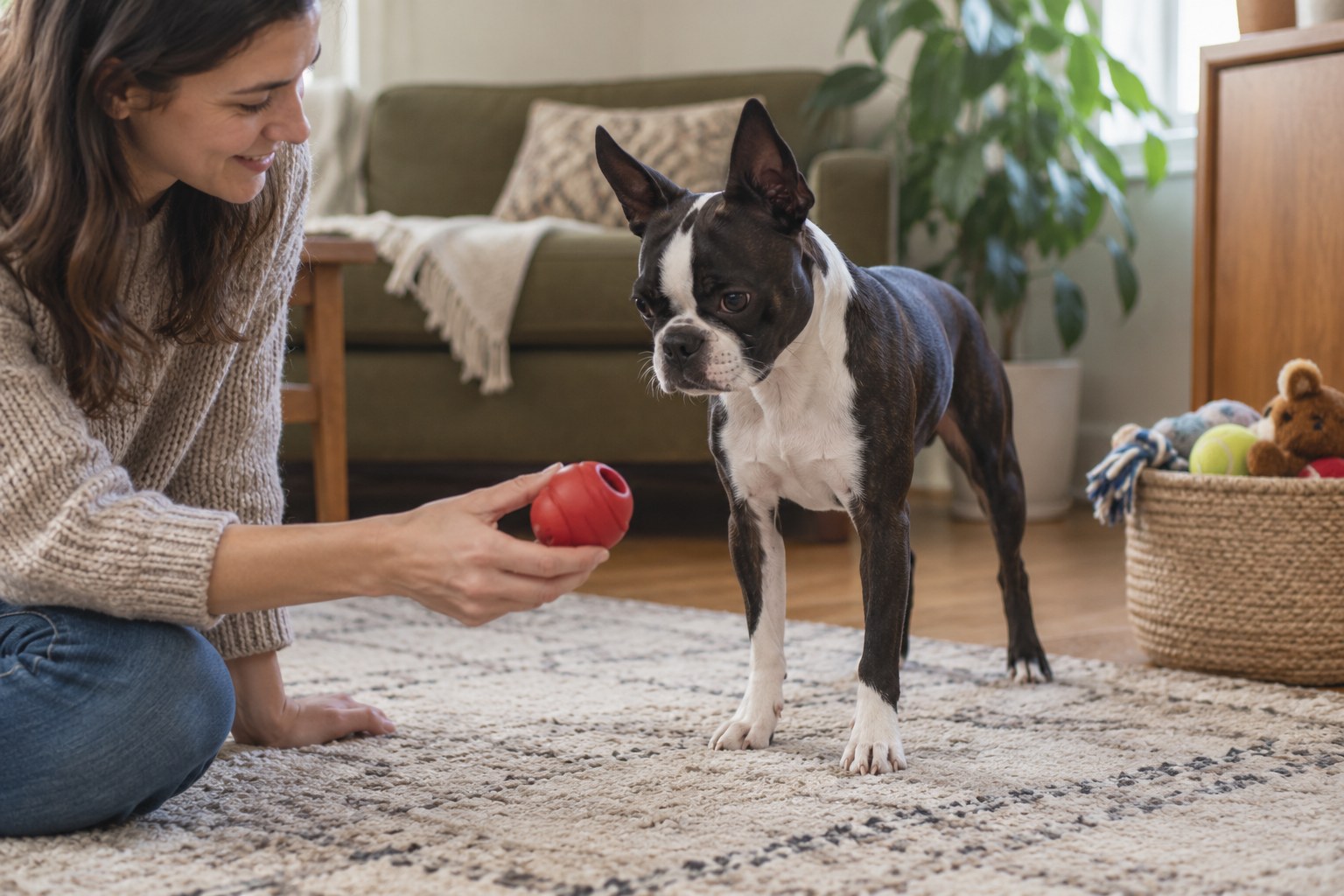
Choose a quiet area with room to step away. Keep other pets separately occupied so the new object does not immediately become something to compete over. Put the toy down or offer it calmly, then observe. Sniffing, watching and leaving it alone are information, not failures to play correctly.
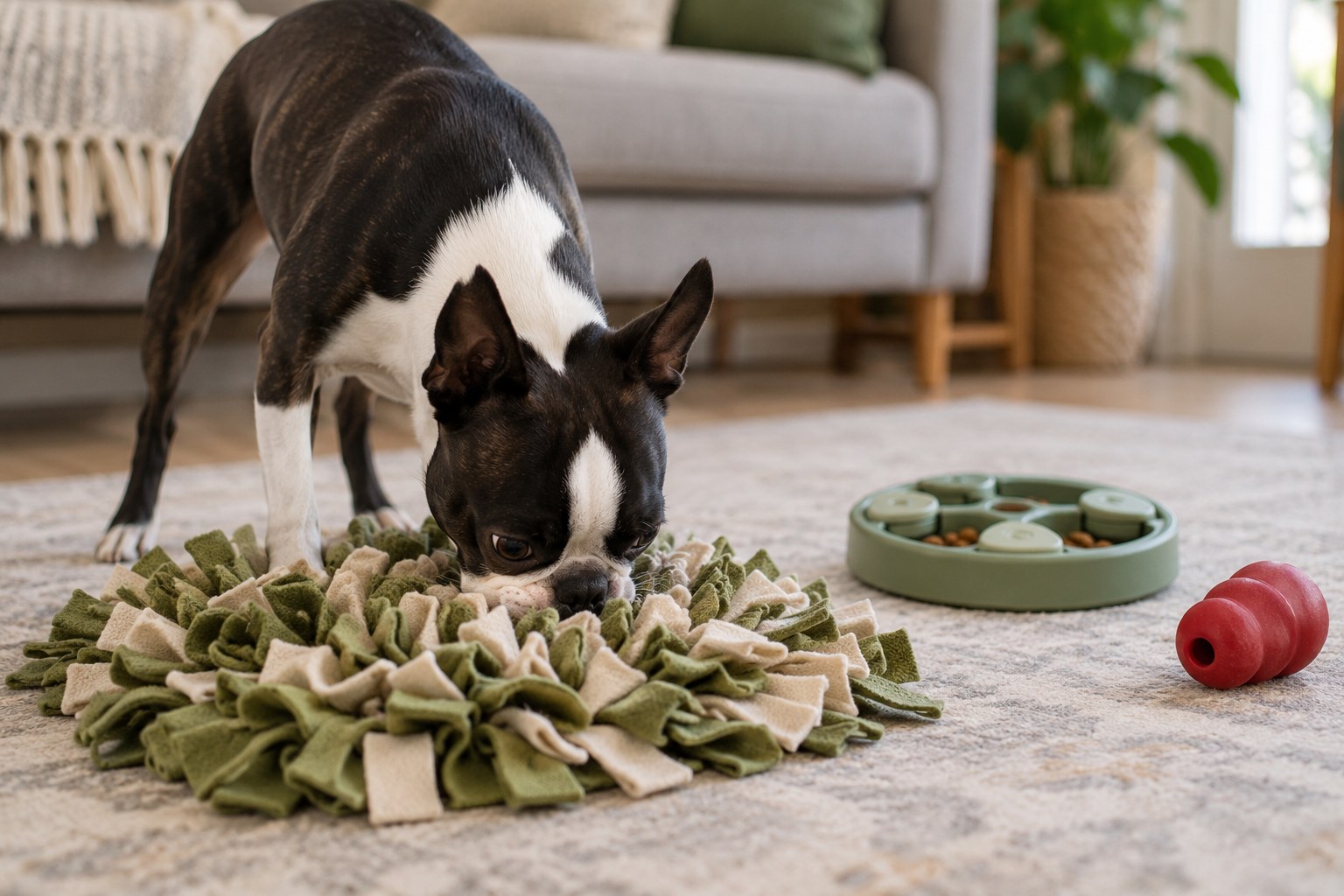
If the dog is comfortable, try a small change: move the toy slowly, add a little of their usual food where the instructions permit, or invite a brief game. Choose one change and wait. Throwing it, squeaking it and waving food simultaneously makes it harder to know what worked. Keep fingers away from places where the dog may bite down.
Write down the mismatch, not a verdict
A dog who likes carrying a soft toy may have no interest in making a plastic dispenser roll. Record the action you saw: 'carried it to the bed,' 'pushed it once,' or 'chewed the narrow corner.' That description is more useful for the next purchase than deciding your dog dislikes all puzzles.
Stop the session if the dog is repeatedly frustrated, worried or damaging the item. Remove an item safely rather than pulling it from a dog who is guarding it; ask a qualified professional for help with guarding behavior. Dogs Trust's enrichment guidance recommends watching individual responses and choosing suitable difficulty. It does not mean every toy can be made suitable through persistence.
After a successful first session, inspect the toy again and clean it according to its instructions. Try it later in the same setting before adding another dog, a noisier room or longer play. You may discover that the best role for the purchase is a short supervised game, rather than an object left available all day. If it remains unsuitable, retire it instead of repeatedly recreating the same difficult encounter.