Keep the exit kit near the exit
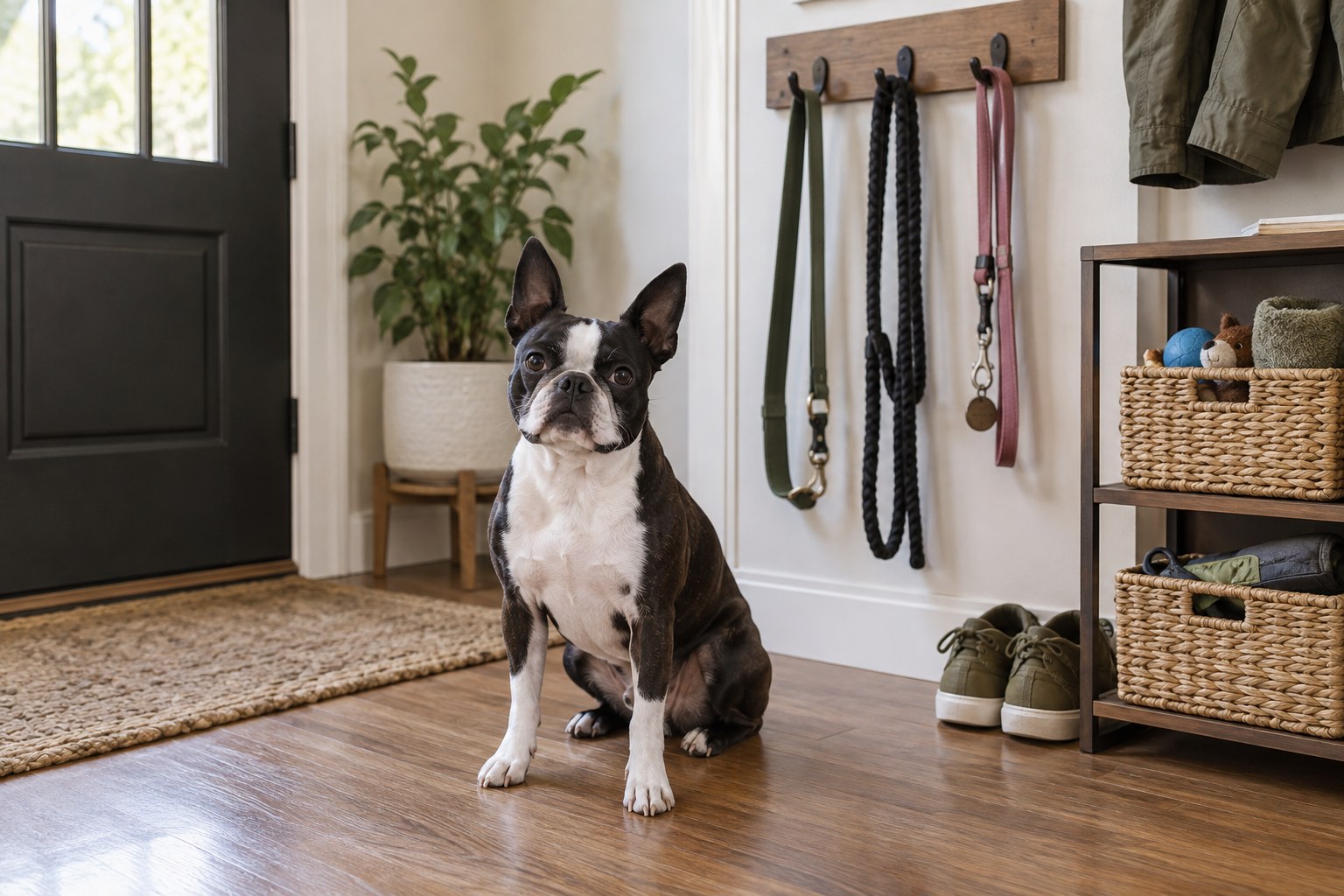
Give the leash, checked walking equipment and waste bags one reliable home near the door. Choose hooks or a shallow box that does not obstruct the door swing or create a snag at dog height. Keep keys where you can collect them before clipping the dog on. A compact arrangement works better than several attractive baskets if each walk still starts with a search.
Store rewards and other edible supplies in a closed container the dog cannot access. If the hallway is shared, check building rules before adding anything outside your own door. Keep the route clear for everyone using it, including a person carrying groceries or using a mobility aid. The dog's storage should not reduce the usable exit width.
Separate the clean shelf from the return area
A used towel needs a different destination from a clean blanket. Place a washable tray or open drying arrangement where wet items can drain without reaching books, electrical fittings or bedding. Avoid sealing damp harnesses inside a decorative box. When dry, inspect and return them to the clean storage area.
Choose a laundry container that can be emptied and cleaned easily. Keep food equipment apart from used outdoor gear, and follow the label for each item's cleaning method. If one storage space must serve several purposes, use removable labeled sections so a visitor can distinguish the clean bowl from the one waiting to be washed.
Use the dog's reach as a design constraint
An apparently high shelf may still be reachable from a sofa. Check the room from several positions before storing medication, cleaning products or food. Secure furniture and containers appropriately, and keep chewable cables or dangling straps away from the resting space. A closed cupboard is useful only if its latch stays closed when bumped.
Do not put every toy out at once merely because there is a low basket. Keep a manageable selection of suitable items available and store the rest where they remain clean and easy to inspect. Retire damaged items promptly. Make the dog's resting area a usable space rather than the last gap between storage containers.
Let the apartment limit duplicate purchases
Before buying another accessory, decide where it will live and what it replaces or adds. Measure storage as well as the product. A folding bowl may fit the outing bag, while a large rigid dispenser might need counter space you cannot spare. Keeping fewer items accessible is often easier than building a larger system around seldom-used gear.
Review the setup after a normal week. Move the item you reach over every day and remove the one nobody uses. Tell other caregivers where things belong so the arrangement survives a handoff. The goal is a home where the dog can rest and people can move, with equipment close to the task that needs it.