Confirm the room, not just the booking
Ask the host or accommodation provider to confirm where the dog is permitted, whether there are additional charges and whether the dog may ever remain in the room without you. Check any size, number or equipment conditions directly. Record the answer alongside the booking so you can refer to it if staff change between reservation and arrival.
If you are staying with family, discuss resident animals and sleeping spaces. 'We love dogs' does not settle whether a cat needs a separate room or whether your Boston Terrier can rest downstairs. Agree on exterior-door handling, food storage and the morning toilet route before arriving tired with several bags.
Pack by the first tasks you will do
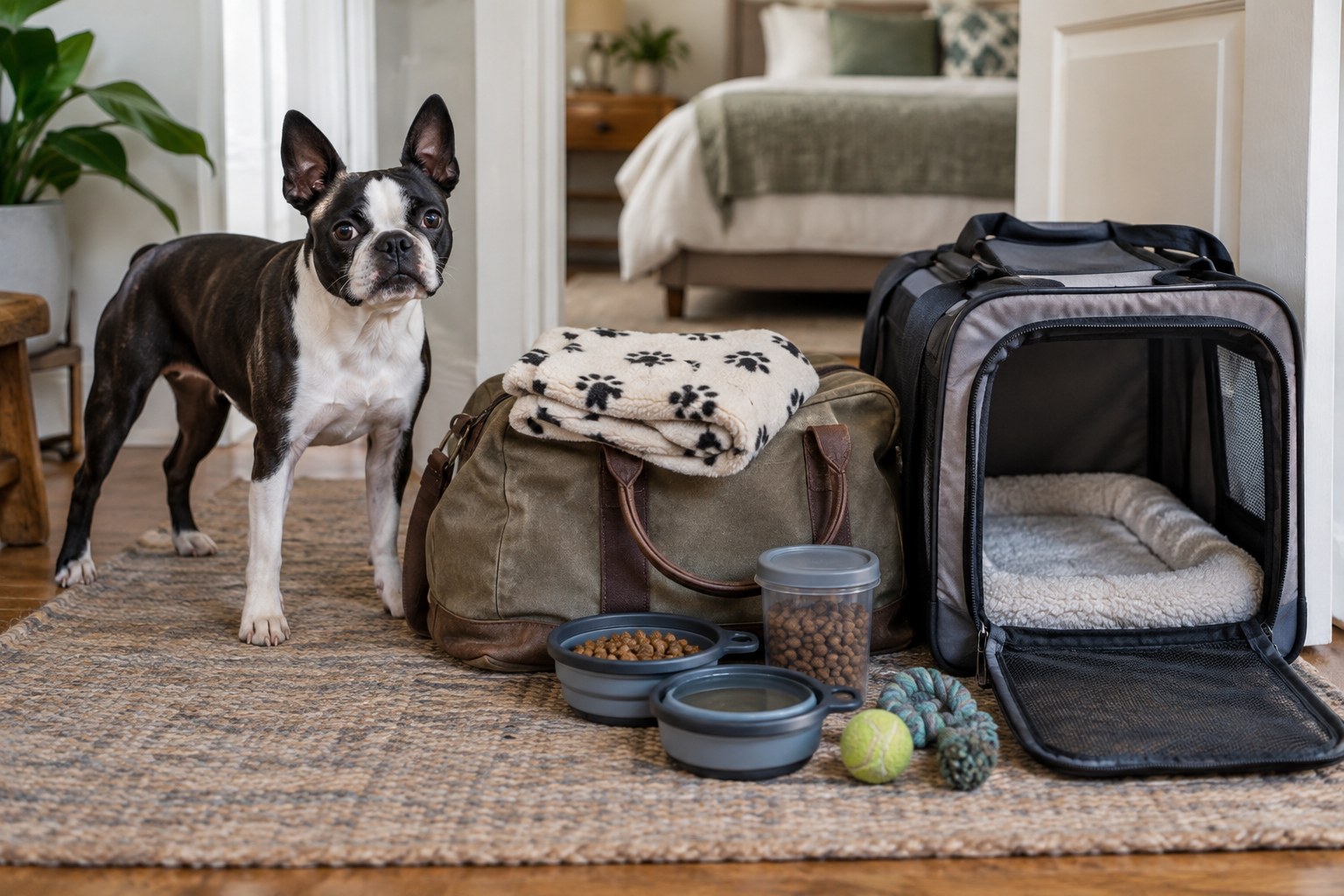
Keep the leash, waste bags, water and a towel accessible during the journey. Pack measured food in suitable packaging with its identifying information, the usual bowl and any prescribed medication in its labeled container. Bring a familiar washable resting surface and enough clean material to handle an accident without using the host's bedding.
Keep records and contacts on your phone and in a form another traveler can access. Include the regular veterinarian and a nearby emergency service whose opening arrangements you have checked. Discuss travel with your veterinary team if your dog has ongoing health needs. The National Weather Service warns against leaving pets in parked vehicles, so plan stops where the dog stays with a responsible person.
Inspect before releasing the leash
On arrival, check accessible bins, cleaning products, low windows and gaps behind furniture. Look for food or medication left by previous occupants. Close external doors and establish the dog-permitted area before putting bags down everywhere. A private garden still needs checking for boundaries and hazards; do not assume the accommodation's description means it is secure for your dog.
Allow a quiet toilet opportunity and time to explore the agreed space under supervision. Put the bed where it will not block the door, and make water easy to find. Keep introductions to resident pets separate from unpacking and follow any existing professional introduction plan.
Protect the ordinary parts of the evening
Use familiar meal and settling cues where possible while accepting that the surroundings are different. Avoid adding a restaurant visit, long walk and noisy gathering simply because you are away. Check the dog's comfort and keep the next activity adjustable.
Before sleeping, make the overnight boundary clear to everyone. Place equipment ready for the first morning outing, including a key if the entrance locks behind you. Leave the space clean, report damage honestly and take used bedding home in a separate bag. Note what you actually needed so the next stay's packing list becomes shorter and more accurate.