Start with a dated change
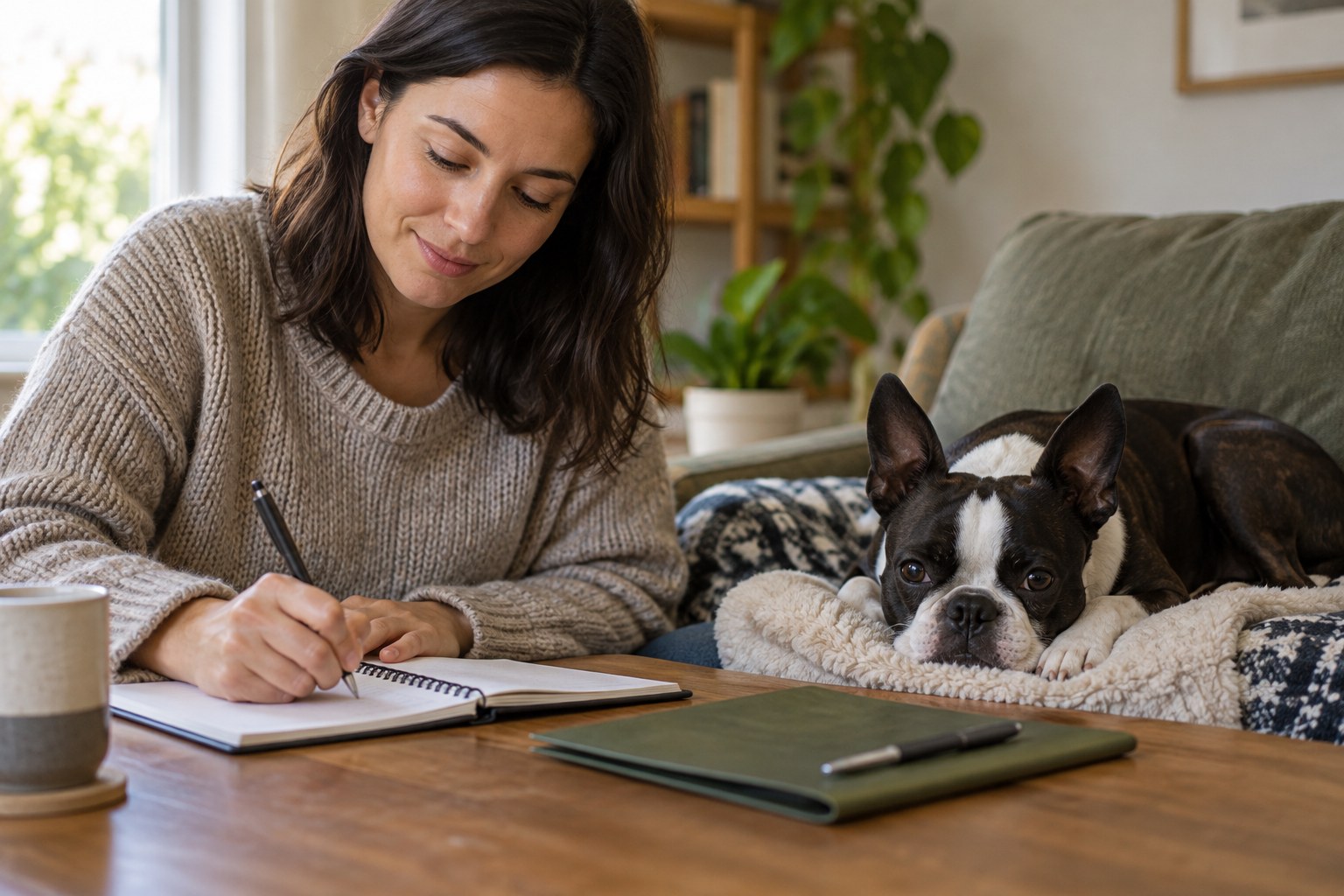
Record the first time you noticed the issue and whether it has happened again. 'Paused twice on Tuesday's usual walk' is clearer than 'seems lazy lately.' Include what the dog was doing, the conditions and how long the event lasted as accurately as you can. If you do not know when it began, write that rather than supplying a guessed date.
Use comparisons the clinic can understand. Note a meal left unfinished compared with the usual measured portion, a different sleeping position or a new reluctance on the same step. Avoid labeling the observation as stubbornness, anxiety or pain; those interpretations may overlook other explanations. A record can contain uncertainty without being unhelpful.
For an event that happens around a routine, record both the event and its timing relative to that routine. For example, note whether you observed it before the walk, while the harness was being fitted or after returning. Include which equipment was in use. This helps the clinician distinguish circumstances without requiring you to decide which detail caused the change.
Bring the context with the observation
Make a current list of food, supplements and medications, including parasite prevention, with packaging or labels available. VCA's first-visit guidance specifically asks for medical records and current medication information. Add recent changes such as a different product, a journey, a move or altered walking conditions. Do not stop a prescribed treatment solely to make your notes simpler; ask the prescribing team what to do.
If several people care for the dog, collect their observations separately before combining them. Two accounts may refer to different times or activities. Preserve the distinction rather than turning them into a single confident story. Note whether a change occurred once or was independently observed several times.
Use a small timeline if several things changed together. Put a food change, journey and first observation on separate dated lines. Mark uncertain dates as approximate. Bring any previous advice you received about the same concern so the clinician can see the sequence, and tell them if an instruction was difficult to follow. That is relevant information, not something to hide to make the record look tidy.
Use a video only when safe
A short clip can show movement or an intermittent event that might not happen at the clinic. Film from a useful distance without provoking the behavior, making the dog repeat an uncomfortable movement or delaying help. Save the original and label it with the date and circumstances. Ask the clinic how it prefers to receive files; a large attachment sent to an unattended address may not be reviewed.
Do not wait for the appointment to collect a complete record if the dog appears seriously unwell. Contact a veterinary service promptly for concerning changes, and seek emergency help for breathing difficulty or collapse. Tell the clinic what is happening now and follow its directions.
Leave the visit with a usable plan
Put your most important questions at the top of the page. Ask which observations to continue recording, what changes should trigger another call and when follow-up is expected. Repeat back any instruction you are unsure about before leaving.
Afterward, save the clinician's written plan beside your notes and date any changes. Keep your observations distinct from the diagnosis and treatment instructions. That separation makes the folder easier to use at the next visit and helps another caregiver follow the current plan accurately.